___________________________________________________
1882-1956
the corpse vanishes review
scared to death review
-
key dates
-
Invisible Man, The (1966)
- Dracula (1966/I)
- Son of Frankenstein, The (1966)
- Plan 9 from Outer Space (1959)
- Black Sleep, The (1956)
- Bride of the Monster (1955)
- Glen or Glenda (1953)
- Mother Riley Meets the Vampire (1952)
- Bela Lugosi Meets a Brooklyn Gorilla (1952)
- Phantom Creeps, The (1949) (TV)
- Bud Abbott Lou Costello Meet Frankenstein (1948)
- Scared to Death (1947)
- Genius at Work (1946)
- Body Snatcher, The (1945)
- Zombies on Broadway (1945)
- One Body Too Many (1944)
- Return of the Ape Man (1944)
- Voodoo Man (1944)
- Return of the Vampire, The (1944)
- Ghosts on the Loose (1943)
- Ape Man, The (1943)
- Frankenstein Meets the Wolf Man (1943)
- Bowery at Midnight (1942)
- Night Monster (1942)
- Corpse Vanishes, The (1942)
- S.O.S. Coast Guard (1942)
- Ghost of Frankenstein, The (1942)
- Black Dragons (1942)
- Wolf Man, The (1941)
- Spooks Run Wild (1941)
- Black Cat, The (1941)
- Invisible Ghost (1941)
- You'll Find Out (1940)
- Devil Bat, The (1940)
- Black Friday (1940)
- Saint's Double Trouble, The (1940)
-
Dark Eyes of London, The (1940)
- Ninotchka (1939)
- Gorilla, The (1939)
- Son of Frankenstein (1939)
- Phantom Creeps, The (1939)
- S.O.S. Coast Guard (1937)
- Shadow of Chinatown (1936/I)
- Shadow of Chinatown (1936/II)
- Postal Inspector (1936)
- Invisible Ray, The (1936)
- Chandu on the Magic Island (1935)
- Murder by Television (1935)
- Raven, The (1935)
- Mystery of the Marie Celeste, The (1935)
- Mark of the Vampire (1935)
- Best Man Wins, The (1935)
- Return of Chandu, The (1934/II)
- Mysterious Mr. Wong, The (1934)
- Return of Chandu, The (1934/I)
- Gift of Gab (1934)
- Black Cat, The (1934)
- Devil's in Love, The (1933)
- International House (1933)
- Night of Terror (1933)
- Whispering Shadow, The (1933)
- Island of Lost Souls (1933)
- Death Kiss, The (1932)
- Chandu the Magician (1932)
- White Zombie (1932)
- Murders in the Rue Morgue (1932)
- Broadminded (1931)
- Black Camel, The (1931)
- Women of All Nations (1931)
- Fifty Million Frenchmen (1931)
- Dracula (1931/I)
- Oh, for a Man (1930)
- Viennese Nights (1930)
- Renegades (1930)
- Wild Company (1930)
-
Such Men Are Dangerous (1930)
- Thirteenth Chair, The (1929)
- Prisoners (1929)
- Veiled Woman, The (1929)
- How to Handle Women (1928) (uncredited)
- Punchinello (1926)
- Daughters Who Pay (1925)
- Midnight Girl, The (1925)
- He Who Gets Slapped (1924)
- Rejected Woman, The (1924)
- Silent Command, The (1923)
- Ihre Hoheit die Tänzerin (1922)
- Johann Hopkins, der Dritte (1921)
- Nat Pinkerton (1921)
- Fluch der Menschheit - 1. Die Tochter der Arbeit, Der (1920)
- Frau im Delphin, oder 30 Tage auf dem Meeresgrund, Die (1920)
- Lederstrumpf, 1. Teil: Der Wildtöter und Chingachgook (1920)
- Lederstrumpf, 2. Teil: Der Letzte der Mohikaner (1920)
- Teufelsanbeter, Die (1920)
- Todeskarawane, Die (1920)
- Fluch der Menschheit - 2. Im Rausche der Milliarden, Der (1920)
- Januskopf, Der (1920)
- Tanz auf dem Vulkan - 1. Sybil Young, Der (1920)
- Tanz auf dem Vulkan - 2. Der Tod des Großfürsten, Der (1920)
-
Hypnose (1920)
- Álarcosbál (1918)
- Casanova (1918) (as Olt Arisztid)
- Küzdelem a létért (1918) (as Arisztid Olt)
- Lulu (1918)
- Tavaszi vihar (1918)
- 99 (1918)
- Élet királya, Az (1918) (as Arisztid Olt)
- Lili (1918) (as Arisztid Olt)
- Ezredes, Az (1917)
- Leoni Leo (1917) (as Arisztid Olt)
- Nászdal (1917)
-
Régiséggyüjtö, A (1917) (as Arisztid Olt)
- Boris Karloff
- James Whale
- Ingmar Bergman
- Frank Capra
- Charlie Chaplin
- Jean Cocteau
- Clark Gable
- D.W. Griffith
- Alfred Hitchcock
- Buster Keaton
- Fritz Lang
- Buster Keaton
- Marx Brothers
-
G.W. Pabst
- Louise Brooks
- Madeleine Carroll
- Bette Davis
- Marlene Dietrich
- Rita Hayworth
- Grace Kelly
- Margaret Lockwood
main site
- Leninimports.com
1882:
-
Born Béla Ferenc Dezső Blaskó in Lugos, Hungary
1917:
- Makes his film debut in A Régiséggyüjtö
1919:
-
Moves to Germany. Appears in Der Wildtöter und Chingachgook the following year
1921:
-
Moves to US
1923:
-
Appears in The Silent Command. Struggles to find work
1927:
-
Appears in the Broadway stage production of Dracula for three years
1929:
-
Marries Beatrice Weeks but the union last three days
1931:
-
Appears in Dracula. Place among the screen immortals assured
1948:
-
Career in decline for many years mainly because he's only too happy to accept any part going. Appears in the appalling Abbott & Costello Meet Frankenstein
1953:
-
Ends his career working for the worst director of all time, Ed Wood
1956:
-
Dies of a heart attack on August 16. Is buried in his Dracula cape
filmography

triviaAccording to Vincent Price, when he and Peter Lorre went to view Bela's body during Bela's funeral, Lorre, upon seeing Lugosi dressed in his famous Dracula cape, quipped, "Do you think we should drive a stake through his heart just in case?"
links
_______________________________________________________________________

-
Bela Blasko
- The Corpse Vanishes Dvd Review
- Scared to Death Dvd Review
b. Lugos, Hungary
Bela Lugosi autographs, photographs and more @ ebay.com (direct link to signed items)
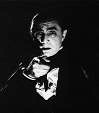
While everyone knows that the Boris Karloff who played Frankenstein's monster was an upright Englishman, amused by the genre, Bela Lugosi was a captive of horror. Small, dark, and severe in features, his acting was so florid and yet so macabre that only some fanciful notion of Hungarian mythology could explain it. He could be frightening in a way that other actors in horror never achieved: because he appeared to believe in the literal meanings of the films, and because it was possible to be persuaded that he was himself possessed. "I am Dracula" his first words, were less intoduction than assertion. While later in Dracula there is a moment when Lugosi's daringly slow delivery admits to his philisophy:
"To die, to be really dead, that might be glorious."
There is the man tortured by half-life. His Dracula was an original that the cinema never attempted to match after Lugosi. The Count became tall and handsome, as likely to kiss as to bite. Yet Lugosi's pinched lips and his skullcap of hair were as black as congealed blood and his pallor was that of imminent extinction.
Just as the great Peter Lorre, another Hungarian, became trapped by Hollywood in squalid spoofs of his earliest successes, so Lugosi lived on, tormented by the Ritz brothers, Abbott and Costello, and Old Mother Riley. The dross never affected his place in the history of cinema: for when the bell tolls and the door creaks, Lugosi is the one to be feared.
Béla Ferenc Dezső Blaskó was born in Lugos, Hungary, on October 20, 1882. After seeing a touring repertory company as they passed through town, he became fascinated by acting, and began spending all of his time mounting his own dramatic productions with the aid of other children. Upon the death of his father in 1894, Lugosi apprenticed as a miner, later working on the railroad. His first professional theatrical job was as a chorus boy in an operetta, followed by a stint at the Budapest Academy of Theatrical Arts. By 1901, he was a leading actor with Hungary's Royal National Theatre, and around 1917 began appearing in films (sometimes under the name Arisztid Olt) beginning with A Régiséggyüjtö.
Lugosi was also intensely active in politics, and he organized an actors' union following the 1918 collapse of the Hungarian monarchy; however, when the leftist forces were defeated a year later he fled to Germany, where he resumed his prolific film career with 1920's Der Wildtöter und Chingachgook. Lugosi remained in Germany through 1921, when he emigrated to the United States.
He made his American film debut in 1923's The Silent Command, but struggled to find further work, cast primarily in exotic bit roles on stage and screen. His grasp of English was virtually non-existent, and he learned his lines phonetically, resulting in an accented, resonant baritone which made his readings among the most distinctive and imitated in performing history.
In 1924, Lugosi signed on to direct a drama titled The Right to Dream, but unable to communicate with his cast and crew he was quickly fired; he sued the producers, but was found by the court to be unable to helm a theatrical production and was ordered to pay fines totalling close to 70 dollars. When he refused, the contents of his apartment were auctioned off to pay his court costs -- an inauspicious beginning to his life in America, indeed.
Lugosi's future remained grim, but in 1927 he was miraculously cast to play the title character in the Broadway adaptation of the Bram Stoker vampire tale Dracula; reviews were poor, but the production was a hit, and he spent three years in the role.
In 1929, Lugosi married a wealthy San Francisco widow named Beatrice Weeks, a union which lasted all of three days; their divorce, which named Clara Bow as the other woman, was a media sensation, and it launched him to national notoriety. After a series of subsequent films, however, Lugosi again faded from view until 1931, when he was tapped to reprise his Dracula portrayal on the big screen. He was Universal executives' last choice for the role -- they wanted Lon Chaney Sr., but he was suffering from cancer -- while director Tod Browning insisted upon casting an unknown. When no other suitable choice arose, however, only Lugosi met with mutual, if grudging, agreement. Much to the shock of all involved, Dracula was a massive hit. Despite considerable studio re-editing, it was moody and atmospheric, and remains among the most influential films in American cinema.
Dracula also rocketed Lugosi to international fame, and he was immediately offered the role of the monster in James Whale's Frankenstein; he refused -- in order to attach himself to a picture titled Quasimodo -- and the part instead went to Boris Karloff. The project never went beyond the planning stages, however, and in a sense Lugosi's career never righted itself; he remained a prolific screen presence, but the enduring fame which appeared within his reach was lost forever. Moreover, he was eternally typecast: throughout the remainder of the decade and well into the 1940s, he appeared in a prolific string of horror films, some good (1932's Island of Lost Souls and 1934's The Black Cat, the latter the first of many collaborations with Karloff), but most of them quite forgettable. Lugosi's choice of projects was indiscriminate at best, and his reputation went into rapid decline; most of his performances were variations on his Dracula role, and before long he slipped into outright parodies of the character in pictures like 1948's Abbott & Costello Meet Frankenstein, which was to be his last film for four years.
As Lugosi's career withered, he became increasingly eccentric, often appearing in public clad in his Dracula costume. He was also the victim of numerous financial problems, and became addicted to drugs. In 1952, he returned from exile to star in Bela Lugosi Meets a Brooklyn Gorilla, followed later that year by the similarly low-brow My Son, the Vampire and Old Mother Riley Meets the Vampire.
By 1953, Lugosi was firmly aligned with the notorious filmmaker Ed Wood, widely recognized as the worst director in movie history; together they made a pair of films -- Glen or Glenda? and Bride of the Monster -- before Lugosi committed himself in 1955 in order to overcome his drug battles.
Upon his release, he and Wood began work on the infamous Plan 9 From Outer Space, but after filming only a handful of scenes, Lugosi died of a heart attack on August 15, 1956; he was buried in his Dracula cape.
In the decades to come, his stature as a cult figure grew, and in 1994 the noted filmmaker Tim Burton directed the screen biography Ed Wood, casting veteran actor Martin Landau as Lugosi; Landau was brilliant in the role, and won the Oscar which Lugosi himself never came remotely close to earning -- a final irony in a career littered with bittersweet moments.

books | dvds | posters |
videos