Biography

Erik Satie — The Eccentric Composer of Montmartre
Erik Alfred Leslie Satie was born on May 17, 1866, in Honfleur, Basse-Normandie, France. A music composer and performing pianist, Satie would become one of the most eccentric and influential figures in French avant-garde music, though recognition came late in his life.
His compositions are original, humorous, often bizarre, and remarkably minimalistic. Satie's music is sometimes called "furniture music"—music supposed to exist in the background of everyday life. It is evidently anti-romantic and also anti-impressionistic, standing apart from the dominant musical movements of his time.
"It is a well-documented fact that every day of his working life, Satie left his apartment in the Parisian suburb of Arcueil to walk across the whole of Paris to either Montmartre or Montparnasse before walking back again in the evening."
Satie performed mainly for café and cabaret audiences throughout his early career, composing theatre and ballet music as well as piano works. He gave his piano pieces whimsical names like Unpleasant Glimpses, Genuine Flabby Preludes (for a dog), and Old Sequins and Old Breastplates. He accompanied the scores with all kinds of written remarks, though he insisted these should not be read aloud during performance.
Known as an eccentric, Satie famously started his own church with himself as the only member. He lived a life of deliberate simplicity and routine, maintaining his daily walks across Paris regardless of weather, dressed always in identical grey velvet suits.
Complete works, recordings, and biography collections
Music & Major Works

Reversed Image Drawing of Satie by Jean Cocteau
Satie eventually became a leading figure of the French avant-garde, though he did not begin to be taken seriously as a composer by his contemporaries until he was in his forties. Debussy and Ravel were among his friends and admirers, even as he positioned himself against their impressionistic style.
Notable Compositions
- Trois Gymnopédies (1888) — Piano
- Messe des Pauvres (1895) — Sacred Music
- Trois morceaux en forme de poire (1901) — Piano Four Hands
- Descriptions Automatiques (1913) — Piano
- Parade (1917) — Ballet with Cocteau and Picasso
- Sonatine Bureaucratique (1917) — Piano
- Socrate (1918) — Symphonic Drama
- Relâche (1924) — Ballet
His Gymnopédies remain among the most recognizable pieces of minimalist piano music, influencing generations of composers from ambient music pioneers to contemporary minimalists. The sparse, haunting melodies seem to exist outside of time—perfect expressions of Satie's aesthetic philosophy.
The Scandal of Parade

Contemporary Sketch of Erik Satie
In 1917, the first performance in Paris of the ballet Parade caused a scandal that finally established Satie's name as a composer. The orchestration included parts for typewriter, foghorn, and rattle—revolutionary instrumentation that shocked audiences.
Satie wrote this groundbreaking ballet together with Jean Cocteau (scenario) and Pablo Picasso (sets and costumes) for the Russian impresario Diaghilev, leader of the Ballets Russes. The collaboration brought together three of the greatest artistic minds of the era, creating a work that defined modernist theatre.
The premiere of Parade at the Théâtre du Châtelet was met with riots. Critics were scandalized by the realistic sounds, the Cubist costumes, and the deliberate rejection of traditional ballet aesthetics. Yet this scandal marked Satie's emergence as a major figure in the avant-garde.
Rare sheet music, vintage recordings, and collectibles
Les Six & Legacy
Satie was not hailed by the masses, but was deeply admired by many young composers and musicians. He became the spiritual center of the Groupe des Six, a collective of six French composers: Georges Auric, Louis Durey, Arthur Honegger, Germaine Tailleferre, Darius Milhaud, and Francis Poulenc.
The group advocated for clear musical language and opposed impressionism (exemplified by Debussy and Ravel), Slavism (Stravinsky), and post-Wagnerism (Schönberg) in music. They sought a distinctly French, modern aesthetic—one that Satie had pioneered decades earlier in obscurity.
Satie's influence extended far beyond his lifetime. His concept of "furniture music" (musique d'ameublement) anticipated ambient music by half a century. His minimalist approach influenced composers from John Cage to Philip Glass, while his absurdist humor and unconventional notation inspired experimental musicians across all genres.
Erik Satie died on July 1, 1925, and is buried in Cimetière d'Arcueil, Arcueil, France. When friends finally entered his apartment after his death—a place no one had visited in decades—they found it filled with umbrellas, empty bottles, and unpublished manuscripts. The room was exactly as eccentric and mysterious as the man who had lived there.
Today, Satie is recognized as one of the most original and influential composers of the 20th century. His music continues to enchant listeners with its simplicity, humor, and haunting beauty—sounds from the foggy streets of Belle Époque Paris, forever preserved in notes.

Recommended Recordings
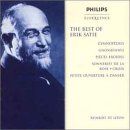
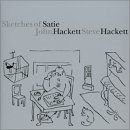

Essential Sheet Music



Discover Satie's most iconic compositions
All images © Estate of Jean Cocteau
"Before I compose a piece, I walk around it several times, accompanied by myself." — Erik Satie