Ingrid Bergman

Ingrid Bergman

Ingrid Bergman
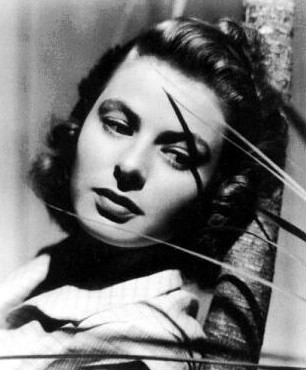
Ingrid Bergman
Biography / Gallery
Ingrid Bergman — Actress & Hollywood Legend
Date of Birth: 29 August 1915 — Stockholm, Sweden
Birth Name: Ingrid Bergman
Height: 5' 8"
Marriages
- Peter Lindström (1937–1950), 1 child
- Roberto Rossellini (1950–1957), 3 children
- Dr. Lars Schmidt (1958–1975), 1 child
Date of Death
29 August 1982 — London, England, UK (breast cancer)
Quote
“I don't mind getting older, but I don't want to be old.” — Ingrid Bergman
Legend
-
Discovered in Sweden in the earlyThirties, Ingrid Bergman rose to the rank of international star in the Forties, proving herself a brilliantpartner to Bogart, Cooper, Grant and Tracy. For many years the seductions of stardom left her unmoved and she never allowed herself to becomestereotyped. Today, even after a series of uneven films through the later years of her career, her legacy still commands respect and admirationin the industry and to the public alike.
Born in Stockholm, Sweden, on August 29, 1915, Ingrid Bergman was brought up by her elderly uncle after the death of her parents, and at 17 joined Stockholm's Royal School of Dramatic Art where she was soon being chosen for the major roles. In 1933, she signed a contract with the Svenskfilmindustri and made her first screen appearance in Mimkbrogrevcfi (1935, The Count of the Monk's Bridge). By her fifth film, Pa Solsidan (1936, On the Sunny Side), she had become a star in Sweden. On this and several other occasions she worked under the direction of Gustaf Molander, who managed to bring out the full range of her talents.
Then, in 1939, David 0. Selznick, to whom her growing reputation had been pointed out, brought her to Hollywood and cast her in the remake of Intermezzo: a Love Story, (she had already starred in the Swedish version) alongside Leslie Howard. Selznick, a great discoverer and modeller of actresses, was aware of the problems inherent in trying to 'sell' foreign stars to the American public, and astutely decided to place his bets on a fresh, natural and healthy image, relying on, in Intermezzo, the sort of story that he knew the public would accept. The gamble paid off and Bergman became an instant success in Hollywood.
However, after only a couple more roles as a pure and loyal woman, Bergman rebelled. Conscious of her potential, she refused to be typecast and fought for the part of Ivy, the barmaid of easy virtue, in Victor Fleming's DrJekyll and Mr Hyde (1941).
This complete role-change, however, served only to 'enrich' her screen image. Many of the subsequent Bergman heroines were two-faced and their moral irresolution made them fascinating to watch. This was true of SaratogaTrunk (1943), in which she played an illegitimate Creole adventuress in engaging manner, Notorious (1946), in which she was a lady of loose morals but admirable intentions, and Under Capricorn (1949), in which, while eloping, she murdered her brother who was following her. These films represent the 'black'aspect of her Hollywood character. The heroines are thrown into a booby-trapped, nightmarish world and their physical ormental degradation is all the more suggestive and convincing because the appearance of the actress seems to contradict it.
On the other hand For Whom the Bell Tolls (1943), Spellbound, The Bells of St Mary's (both 1945) and Joan of Arc (1948) - all roles in which she was taking a stand - summarize the positive aspect of the Bergman character. They highlight her idealism, her sincerity and altruism, all of which Selznick had been sensitive to. And yet the ambiguous Bergman characters are preferable to her rather 'toneless' and angelic presentations. In Casablanca (1942),the pull of two men, Rick Blaine (Humphrey Bogart) and Victor Laszlo (Paul Henreid), unearths a shaky division of loyalties - on the one hand there is her husband and on the other her commitment to the past.
In spite of the diversity of the studios she worked for and the types of characters she played, Bergman's American career retained a certain unity through the influence of the ever-present Selznick, whose contradictory tastes enabled him to create icy neurotics, fading madonnas and nymphomaniacs. After the break with Selznick in 1946 something was definitely lost from Bergman's style, and nothing new appeared to take its place.
The man who had finally persuaded her to make the break from Selznick was Peter Lindstrom, a Swedish dentist to whom Bergman had been married since the beginning of her career. His intelligent advice in Sweden became sadly misguided in Hollywood. Arch of Triumph (1948) sustained considerable losses.In the same year, Bergman saw Roberto Rossellini's Roma, Citta Aperta (Rome, Open City) and, greatly impressed, wrote to him offering her services.
Curiously, films of the Rossellini period in the Fifties, in spite of some complex narratives, were not so much a denial of the 'Bergmanmyth' of virginal purity than a change in its essential qualities. Stromboli (1950, God's Land), was slightly exceptional in that it still partly stemmed from Rossellini's earlier neo-realistic style. Bergman played an unhappy wife escaping from the island of the title.
However, all her later films in Italy formed a link with her earlier American films. The temptations of sainthood in Europa '51 (1951, The Greatest Love) are reminiscent of the religious inspiration of The Bells of St Mary's and Joan of Arc; and the marital hell Stromboli harks back to the tormented wife in Gaslight (1944, The Murder in Thornton Square) - the film for which she won her first Academy Award, playing a woman blindly in love with a contemptible adventurer. But the more naturalistic approach of Rossellini was not compatible with either actress or theme.
In 1950 Bergman finally divorced Lindstrom and married Rossellini, thereby legalizing a relationship that had caused a public outcry against her 'scandalous' behaviour and seriously damaged her career prospects in Hollywood. But when the strain of a series of unsuccessful films proved too much and Bergman decided to return tothe stage for a while, Rossellini went to make a film in India and returned with the wife of an Indian director. In 1957, with another divorce,the 'Rossellini period' was over.
20th Century-Fox had offered her the chance of an international comeback with Anastasia in 1956, a story about the escape of the Tsar's daughter in 1918. It was a tremendous success, winning Bergman her second Academy Award. There followed a series of roles devised to regain her internationally popular image. In Anastasia, Indiscreet (1958, again teamed with Cary Grant) and Inn of the Sixth Happiness (1958, as a missionary in China), Bergman achieved respectability. Several later films, of which> A Walk in the Spring Rain (1970) - an intimate composition in halftones, about the affair of a married and middle-aged woman - was no exception, were not suitable material and did not allow her to attain her true potential, but in 1974 she won another Academy Award, this for Best Supporting Actress, in Murder on the Orient Express in which she played a timid and devout missionary.
In 1978, Bergman was cast in Autumn Sonata as the self-obsessed mother who is totally involved in her career - the first role worthy of her since the end of the Selznick period. She bravely exposed herself to Ingmar Bergman's scrutinizing eye and achieved, with his complicity, a character of great depth andnuance: this was probably one of the most complete, moving and intelligent creations of the actress' career.
Throughout her years in the cinema, she maintained regular contact with the stage, playing in about ten plays between 1940 and 1967, including Joan of Lorraine (1946), for which she was awarded the Tony Award. Tea and Sympathy (1956), Hedda Gabler (1962), and A Month in the Country (1965), directed by Sir Michael Redgrave at the Yvonne Arnaud theatre in Guildford. In 1958 she married atheatrical impresario, Lars Schmidt.
She gave an outstanding TV performance in the mini-series A Woman Called Golda (1982) (TV), a film about the Israeli prime minister, Golda Meir. For this she won an Emmy Award as Best Actress, but, unfortunately, she didn't live to see the fruits of her labor. Ingrid had died on her birthday, from cancer, on August 29, 1982 in London, England. She was 67.
Ingrid Bergman's career spanned a remarkable number of years; they divided into four distinct periods - Sweden, Hollywood, Rossellini and the International period. She survived the disappearance of the Hollywood studios and the Rossellini experience. She also emerged well from several miscasts, thanks to her adaptability and to a thorough discipline that even her least interesting roles exhibited. She remained a combination of femininity, distance,honour and vulnerability, that still seduces all who see her on screen to this day.
Trivia
All the Ingrid Bergman facts you will need! Trivia has been sourced from the definitive book Ingrid: Ingrid Bergman, a Personal Biography
Ingrid Bergman left Los Angeles in early August 1939 to return to Sweden. Since Intermezzo - A Love Story had not yet opened, she was not certain she would be coming back.
In The Four Companions (1938), she played a German girl, and she spoke her own lines. Had she chosen to she could have been a star in German films.
According to Leni Riefenstahl, it was Goebbels who had first recognized the great potential in the young Swedish actress. She said that when Goebbels saw Ingrid Bergman on the set for the first time, he had a change of mind, and said, 'Too Tall'. Riefenstahl said Magda, Goebbels' wife, was the source for the comment.
Gaslight was the first of three films in which she co-starred with Charles Boyer. She won her first Oscar as best actress for her performance.
She was positive her performance in For Whom the Bell Tolls (1943) would be remembered long after Casablanca was forgotten. How wrong she was on that score!
Originally, two different endings were to be shot for Casablanca.
'Here's looking at you, kid', the famous Casablanca line, which writer Julius Epstein told the author was actually suggested by Humphrey Bogart.
It was Intermezzo that led David O'Selznick to bring her to Hollywood.
Ingrid studied singing and piano and was an accomplished musician.
Because of Ingrid's popularity Rage in Heaven (1941), which had gone unnoticed when it was first released, was reissued, with many people regarding it as a new film in 1945.
Ingrid's mother died in 1918 when she was two. She could not remember anything about her mother.
Cary Grant was a leader in lobbying for Ingrid Bergman's return to Hollywood when it seemed everyone had turned against her, and then in welcoming her back to Hollywood.
In Notorious, Alfred Hitchcock sidestepped the Production Code's limit on how long a kiss may be held by breaking the one between Cary Grant and Ingrid Bergman into many short segments.
Under Capricorn was one of Ingrid's most difficult films because of Hitchcock's continuous 10-minute takes.
Stromboli (1950) marked not only Ingrid's first non-Hollywood film in a decade but her first film with Roberto Rossellini. It became the symbol of the scandal that changed her name and career.
Ingrid's son, Robin, was usually called Robertino.
She cut her last husband, Lars Schmidt, out of her will.
Her co-star in The Inn of the 6th Happiness (1958), Robert Donat, died shortly after the picture wrapped. He was 53.
Helen Hayes was chosen for the part of the dowager Empress Marie in Anastasia (1956) because someone had confused her with Helen Haye, the British actress who had created the part on stage. Ingrid won her 2nd Oscar as best actress for the role.
It was Liv Ullmann's idea to wear glasses in Autumn Sonata (1978) and Ingrid's and Liv's idea to play against dialogue they didn't think suited their characters.
Ingrid wore no make-up to play Golda Meir, only a grey wig.
Ingrid chose Danholmen as the place from which her ashes would be strewn into the water beyond the island. The ashes, mixed with wildflowers, were scattered amidst the waves.
The urn that had contained the ashes was buried in Norra begravningsplatsen (Northern Cemetery) in Stockholm, next to the graves of her parents. It is surprising to this day that it is recorded that at least some of her ashes are contained there.
Links
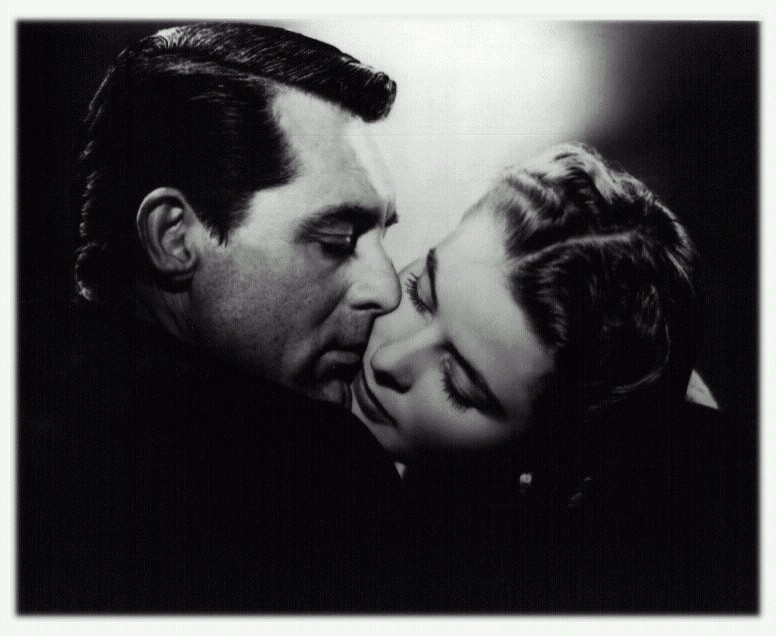
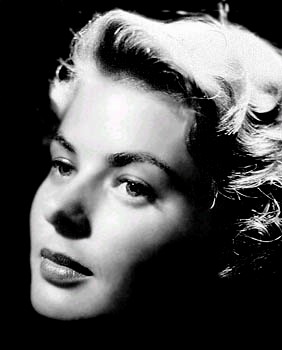
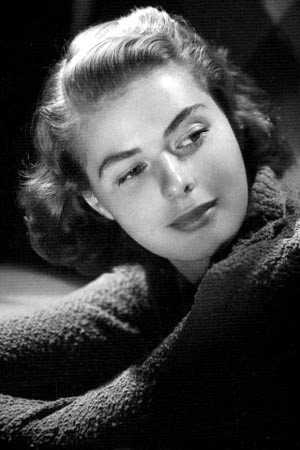
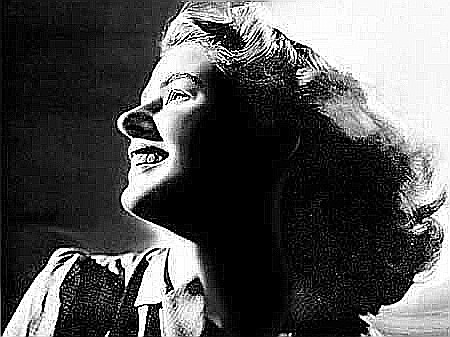
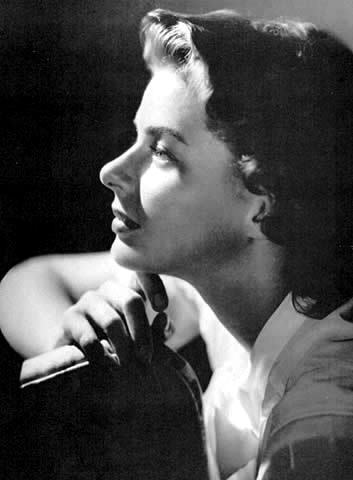
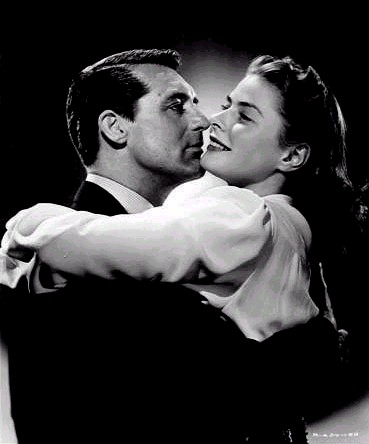
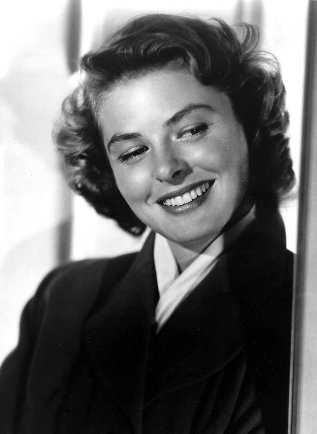
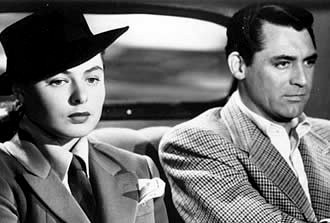


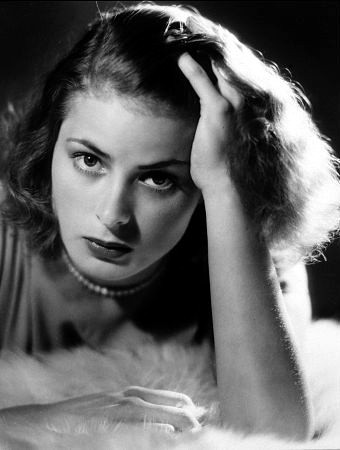

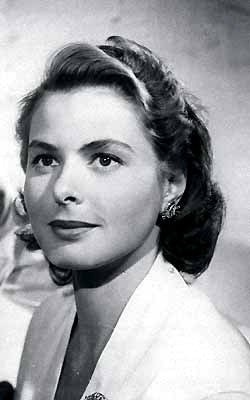


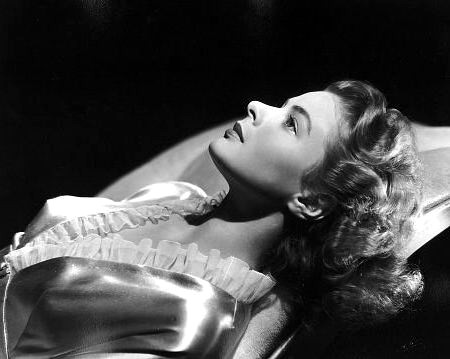
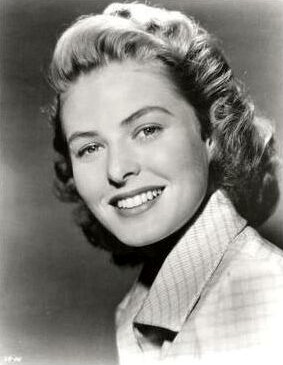

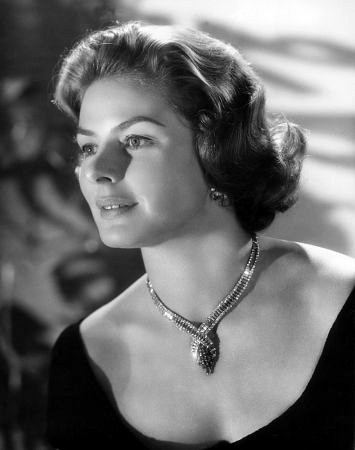


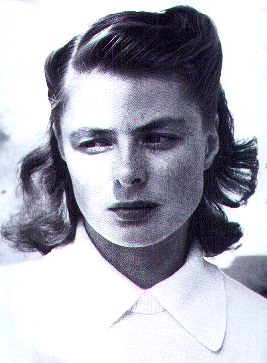
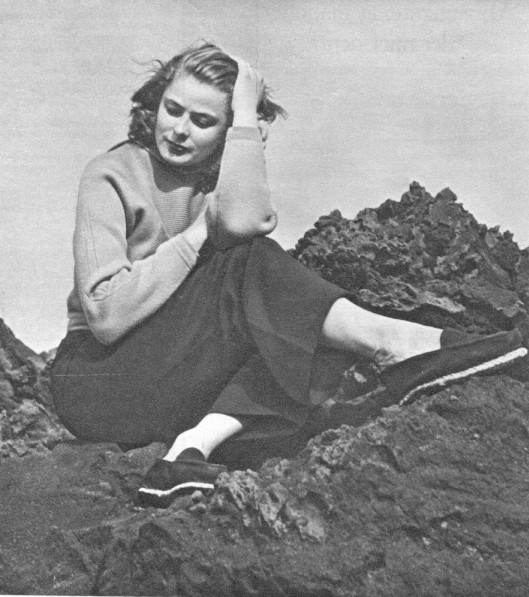
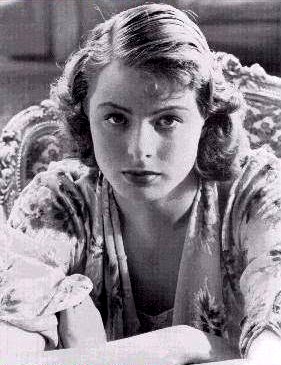
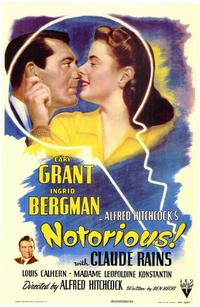


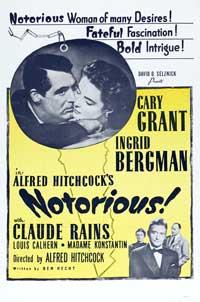


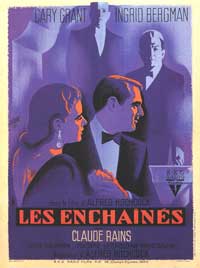


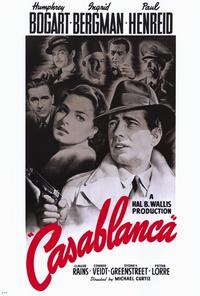


Photo copyright belongs to the respective photographers.
Ingrid Bergman signed memorabilia @ eBay UK (direct link)