Biography
Leon Kossoff (1926–2019) was one of the defining figures of post-war British painting, an artist whose work remained fiercely committed to the people and places of London. Born in the city to Russian-Jewish parents, Kossoff spent his life observing and reworking its shifting landscape, returning again and again to familiar streets, stations and building sites. His early paintings emerged from the aftermath of the Second World War, capturing a city marked by destruction and transformation, and throughout his career he continued to record its rhythms of change with unrelenting focus.
Kossoff’s paintings are distinguished by their physical intensity. Built up through layers of thick paint that were often scraped back and reworked, his canvases carry a sense of time embedded within them. This process—repetitive, demanding, and deeply attentive—allowed him to move beyond description, transforming everyday scenes into images charged with weight, movement and emotional resonance. Railway lines, swimming pools and crowded streets become, in his hands, sites of lived experience rather than mere views.
At the heart of Kossoff’s practice was the human figure. His portraits, most often of family members, close friends and long-standing sitters, are marked by a rare combination of intensity and intimacy. Painted over extended periods, they do not seek a fixed likeness but instead register the act of looking itself—an accumulation of encounters that gives rise to a powerful sense of presence. These works stand among the most searching explorations of the human condition in modern British art.
Closely associated with contemporaries such as Frank Auerbach, Kossoff remained committed to figuration during a period dominated by abstraction, forging a distinctly personal path defined by persistence, observation and place. His achievement was recognised in 1996 when the Tate Gallery presented a major retrospective spanning his career.
Uncompromising in vision and method, Kossoff’s work offers a profound meditation on memory, perception and the experience of modern urban life. His paintings do not simply depict the world—they insist on it, rendering the familiar with a depth and urgency that continues to resonate.
Gallery
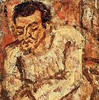
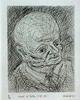
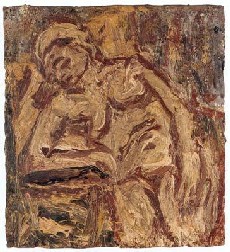
Just some thumbnails of classic Kossoff pieces. Ones I've loved over the years... Totally random.



Kossoff Prints & Works on eBay
Official Reference
Leon Kossoff — Catalogue Raisonné
The definitive, fully documented record of Kossoff's paintings and works on paper. Coming shortly.
View Catalogue Raisonné →Key Dates
Find Leon Kossoff Items on eBay
Trivia & Working Methods
- In the 1960s Kossoff worked at only two paintings at a time — a portrait and a landscape — and once embarked he would work obsessively, not stopping, to finish a work for which there was an end in sight. By the 1970s he was working on five or six paintings together.
- He works quickly using a limited number of colours which he mixes that day; a large painting may be the result of only a few hours' work — however, that painting may have been begun and destroyed many times before.
- For Kossoff, drawing is a necessary prelude to painting; all his drawings are working ideas enabling him to move into the painting and bring the presence of the motif or subject into the studio.
- It is not unusual for a day's work to end in seeming failure — a "grey mass". If so, it is scraped off and started again. Sometimes he is not sure whether to continue with a particular work and it may be left in the studio. Some decisions can only be made after weeks or months have elapsed.
- Kossoff has never drawn or painted from photographs.
Leon Kossoff — Exhibition Catalogues & Rare Books
Solo Exhibitions
2002
2000
1996
1995–96
1993
1988–89
1984
1983
1982
1981
1980
1979
1975
1973
1972
1968
1957–64
Public Collections
Prints & Books
Art Books & Catalogues
For rare exhibition catalogues, out-of-print monographs and art books across all artists, visit the site's comprehensive art books section.
Browse Art Books →