
judy garland
(1922-1969)
biography
gallery
books
dvds
posters
videos
fred astaire
ray bolger
james mason
ursula andress
james caan
charlie chaplin
robert de niro
johnny depp
robert duvall
john gielgud
trevor howard
diane keaton
vivien leigh
karl malden
james mason
david niven
al pacino
eva marie saint
rod steiger
tennessee williams
- judy
garland
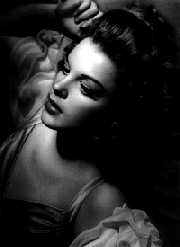
"Being Judy Garland—sureI've been loved by the public. I can't take thepublic home with me."
[ j u d y g a r l a n d : b i o g ]
- Judy Garland
biography | gallery
books | dvds | posters | videos
judy garland
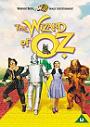
the wizard of oz
fred astaire | ray bolger | james mason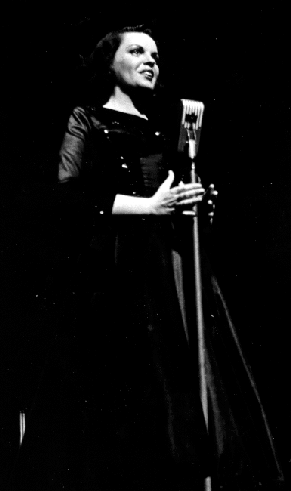
'I'm sick and tired of being called "poor Judy Garland".Maybe this will distress a lot of people but I've got anawfully nice life. I really have. I like to laugh. I like tohave a bag of popcorn and go on a roller-coaster now andthen. I wouldn't have been able to learn a song if I'd beenas sick as they've printed me all the time' Judy Garland is one of the great legends of themovies; yet paradoxically, considerably lessthan half of her professional career - whichoccupied the best part of 44 of her 47 years of life- was spent in films. The intervening pppeeeeriodswere taken up with her ever-growing andunkindly publicized personal problems. Shewas impatient with the view, constantly expressed by the popular press, that she was ashow business tragedy. On one occasion sheconfided: She was born Frances Gumm in GrandRapids, Minnesota, on June 10, 1922. Herparents, Frank and Ethel Gumm, had had avaudeville act for a while before they settled inthe movie business. Her father became acinema proprietor and her mother - bent perhaps on fulfilling her own thwarted ambitionsthrough her children - had formed the twoolder daughters into a sister act that performedin the vaudeville part of the cinema's shows. Aslegend has it, Baby Gumm (as the adored andspoiled youngest child was known) made herdebut when she was around two and a halfyears old, bringing the house down with arendering of Jingle Bells; with great delight .she encored repeatedly until she was draggedoff, struggling, by her father. She had tasted,for the first time, the adulation of audienceswhich was, it seemed, eventually to become anecessary drug like all the rest. Unsatisfied, shewas later to confide: When they moved to California, the wholefamily had to work in vaudeville - the parentsas Frank and Virginia Lee and the children asthe Gumm Sisters - to eke out the meagretakings of the new cinema. It soon became clear that Baby Gumm wasthe star, even though one unfeeling manageradvised her: At six she had a solo spot at Loews'State Theatre in Los Angeles, singing I Can'tGive You Anything but Love, dressed asCupid. With so precocious a repertoire andtechnique and so loud a voice, it was hardlysurprising that audiences paid her the dubiouscompliment of suspecting she was a midget. When she was 11 she changed her name.The Gumm girls had been rushed into avaudeville bill in Chicago to replace a drop-outact - and arrived to find that they had beenbilled as 'The Glum Sisters'. The compere of theshow was George Jessel, who persuaded them that it was not a good stage name anyway andproposed Garland instead. A little later, Frances took the name Judy from a current HoagyCarmichael hit song. Mrs Gumm had battled, without success, toget her children into movies. Their only appearance had been with a troupe of otherinfant performers, the Meglin Kiddies, in a1929 short - The Old Lady and the Shoe. In 1934, however, Judy Garland acquired an agent, AlRosen, and at least one admirer within MGM, Joseph Mankiewicz. Between them they managed to arrange an audition. The story is ashow business legend - how Judy was summoned at such short notice that she had noteven time to change out of her play clothes ordo her hair. No doubt this impromptu and informalappearance enhanced the child's open andappealing personality. She made sufficientimpression on Ida Koverman, Louis B. Mayer'sinfluential secretary, and Jack Robbins, thecompany's talent chief, for them to bring in thestudio rehearsal pianist, Roger Edens, and sendfor Mayer himself. Mayer, who was harassedby the current internecine struggles of thecompany, came reluctantly. He listened without a word and a few days later offered acontract - unprecedentedly without asking fora screen test. The MGM days began inauspiciously withthe sudden death of Frank Gumm, which canhardly have helped Judy Garland's emotionaland psychological development. Despite this,she was later to say that the first days were 'alot of laughs'. Labour laws required the studioto give its children adequate schooling and Garland found herself in a class-room with Lana Turner, Jackie Cooper, Deanna Durbin, Freddie Bartholomew and other youthfulactors. With Durbin she was teamed in a short, Every Sunday (1936), which was so unpromising that Durbin's option was dropped (she wastriumphantly snatched up and made into astar by Universal) and Garland was loaned to20th Century-Fox for Pigskin Parade (1936), acollege musical in which she sang three songs,hated herself for looking like 'a fat little pigwith pigtails', and won one or two favourablenotices. The studio still had no plans for her; it was Roger Edens who conceived the ruse thatfinally convinced MGM what a treasure theyhad on their hands. Clark Gable's thirty-sixthbirthday was celebrated with a studio party onthe set of Parnell (1937) and Edens devised aspecial treatment of You Made Me Love You with Garland doing a monologue, Dear MrGable, in the character of a devoted admirerwriting a fan letter. Gable was greatly touchedand Garland was launched. MGM at once puther - and Edens' Dear Mr Gable number -into Broadway Melody of 1938 (1937). She then co-starred with Mickey Rooney, with whom she found an instant sympathy, in Thoroughbreds Don't Cry (1937) and with another school-fellow, Freddie Bartholomew, in Listen, Darling (1938) - in which the twoyoungsters kidnap the widowed Mary Astor and take her on a search for a suitablehusband. In Everybody Sing (1938) she appeared alongside the great Broadway veteran, Fanny Brice. In all of these films Garland sang, for thepublic had already succumbed to the extraordinary voice. It was thrillingly strident (asa child she had been disrespectfully dubbed Little Miss Leather Lungs) with a heartrending catch, miraculously expressive and,even in those early days, so mature that shewas able to give convincing interpretations ofthe great torch songs like Fanny Brice's MyMan. The musical staff at MGM, where thegifted Arthur Freed was already the dominantinfluence, wisely preferred to exploit the vivacity and humour of her gifts in songs like Swing, Mr Mendelssohn and Zing Went theStrings of My Heart. Garland was teamed with MGM's mostpopular juvenile, Mickey Rooney, in the AndyHardy series which acquired a new musicalflavour. Garland acted and sang in three of theseries - Love Finds Andy Hardy (1938), Andy Hardy Meets Debutante (1940) and Life Beginsfor Andy Hardy (1941) - although the studiosaw fit to remove Garland's songs from therelease print of the last of these. This series was interrupted by the filmwhich firmly and finally established Garland asa major star, brought her icon status and a place among the immortals and gave her the theme tunewhich she sang and continually enriched untilthe end of her life - Over the Rainbow. Frank Baum's series of Oz books for children had begun to appear in 1900 and had becomebest-sellers. A silent version of The Wizard of Oz had been made in 1925 with Larry Semon andOliver Hardy. MGM were prepared to lavishcolour and S2 million on a new version. Theyalso intended to lavish Shirley Temple on itbut, when she was not available. Garland wasaccepted as a second choice. There was difficulty and indecision over directors, but creditfor The Wizard of Oz (1939) finally went to Victor Fleming as it did for Gone With the Wind (also 1939 and isn't Victor Fleming one of the most underrated directors in the history of cinema?). The script was intelligent, thetechnical achievement high and the cast distinguished: but it was Judy Garland's picture. Audiences adored Garland - as they were togo on doing - for her vitality, her gaiety, heropenness, her intimacy and the generous, friendly, loving nature in her. But behind thescenes life was taking on a darker aspect. Herirrepressible joie de vivre included a heartyappetite: but the malted milks and Hersheybars to which she was addicted made her fat. At only 4' 11˝" she found it easy to put on weight. Mayer himself laid down what she might eat(mostly chicken soup) and what she might not.She discovered, among other evidence of thestudio's parental care for her, that the lifelongfriend with whom she had moved into abachelor apartment, had become a companyspy, paid to report on her every move. So, ittranspired, was her own mother. To help her fight off the pangs of hunger shewas given the newly fashionable drug Benzedrine. To counteract its over-stimulant effects, she was given sleeping pills: to wake herup again, more stimulants and then other pillsto calm her nerves. Despite all the later effortsof her friends and publicists to play down theinevitable effects of all this 'medication', thedependence was to become a nightmare andculminated in her death due to an accidentaldrug overdose. The public could not have enough of her andthe company worked her mercilessly. She wasthreatened with the fate that had afflicted Mary Pickford 20 years before: public andstudio would not let her grow up. When sheplayed the dual role of a girl and her mother in Little Nellie Kelly (1940), Mayer is said to havegone around wailing: Mayer and the studio did nothide their displeasure when, in 1941, Garland married orchestra leader David Rose and it iscertain that they did nothing to ward off therapid break-up of the marriage. In the next three years Garland appeared ina number of attractive musicals - Ziegfeld Girl (1941), For Me and My Girl (1942), Presenting Lily Mars and Thousands Cheer (both 1943). In 1944 came Meet Me in St Louis, still themost cheering and charming of all the MGMmusicals, in which Garland sings some of hermost memorable songs. Her dramatic talent -about which she continued to have doubts -had become much more refined: her greatachievement in this film is to subsume herselfinto the whole ensemble of finely cast actorsportraying an ordinary family of 1904 and theexcitements of the great St Louis Exposition. The director of Meet Me in St Louis was Vincente Minnelli, whom she married - thistime with the studio's delighted approval - inJuly 1945. In March of the following year theirdaughter Liza was born. She was delivered byCaesarian section. From that point on, Garland was involved in many well-publicized lawsuits, breakdowns, and suicide attempts. But it took quite a while before her spectacular unhappiness actually showed itself onscreen. In such period musicals as the aforementioned Meet Me in St Louisand The Pirate (1948) - also directed by Minnelli - and Easter Parade (1948), as well as dramas like Minnelli's The Clock (1945), she was never anything less than charming. After hitting rock bottom in the early 1950s after Summer Stock (1950) - that year she was even replaced as the star of Annie Get Your Gun - Garland bounced back, all vibrant and vulnerable, as aspiring actress Vicki Lester in Cukor's 1954 remake of A Star Is Born, a hand-tailored comeback vehicle she produced with then husband Sid Luft. It earned her an Oscar nomination (she lost the Best Actress Award by the smallest known margin to Grace Kelly), but sadly, there were no follow-ups. She was excellent in later straight dramatic roles in Judgment at Nuremberg (1961 also Oscar-nominated) and A Child Is Waiting (1963), but the singing sequences in her last film, I Could Go On Singing (also 1963), show the emotionally turbulent performing style she developed in her adult years, a style that apparently corresponded perfectly to her own state of inner turmoil. She experienced financial difficulties in the 1960s due to her overspending, periods of unemployment, owing of back taxes and embezzlement of funds by her business manager. The IRS garnished most of her concert revenues in the late 1960s. Garland's final years were spent going from disappointment to disappointment: losing film roles, helplessly turning in shoddy live performances, marrying one younger man and divorcing him six months later when she discovered his affairs with other men, and so on. A "comeback" TV variety show gave her one last burst of glory in 1963-64, but though she recorded tracks and filmed costume tests for Valley of the Dolls she had to be replaced by Susan Hayward when shooting began. An accidental overdose of sleeping pills took her life in 1969; her Wizard of Oz co-star Ray Bolger commented sadly: Her funeral was held 27 June 1969 in Manhattan at the Frank E. Campgell funeral home at Madison Avenue and Eighty-first Street. Twenty-two thousand people filed past Judy's open coffin over a twenty-four hour period. Judy's ex-husband, Vincente Minnelli did not attend her funeral. James Mason delivered the eulogy. Judy's body was then stored in a temporary crypt for over one year. The reason for this is that no one came forward to pay the expense of moving Judy to a permanent resting spot at Ferncliff Cemetary in Ardsley, New York. Liza had the impression that Judy's last husband, Mickey Deans had made the necessary arrangments but Deans claimed to have no money. Liza then took on the task of raising the funds to have Judy properly buried.
biography
- Judy Garland'People say and print and believe - thestupid ones, and that's the minority - that I'meither a drunk or a drug addict. It's a goddamwonder I'm not.'
'Being Judy Garland—sureI've been loved by the public. I can't take thepublic home with me . . .'
'You may sing loud but you don'tsing good'.
'We can't let that babyhave a baby'.
"She just plain wore out."
books | gallery
dvds | posters | videos
judy garland
the wizard of oz
fred astaire | ray bolger | james mason
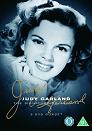
Judy Garland
Signature Collection
6 Disc Set incl.
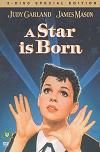
a star is born (2 disc), love find andy hardy, ziegfeld girl, for me and my gal, harvey girls, in the good old summer time
uk dvd set reviewed & in stock
the most important garland boxset ... ever!


Page created by: ihuppert5@aol.com
Changes last made: 2021
