2nd World War & The Truth Behind His Flight to Britain
Objectives: To look into the backgrounds of as many of the key players in the Second World War as time permits. To try to convey the history of the 2nd World War in a concise and easy - to - read way as possible and how such War Crimes came about and the men responsible for those War Crimes.
Flight To Britain 1941 >> Full Biography
Adolf Hitler >> Heinrich Himmler >> Josef Goebbels >> Triumph of the Will >> Triumph of the Will 2 Dvd >> Leni Riefenstahl >> Rudolf Hess >> Martin Bormann >> Herman Goering >> Who Helped Hermann Goering Escape The Hangman? >> Josef Mengele >> Adolf Eichman >> Irma Grese
Kristallnacht >> The Final Solution >> Auschwitz >> Nuremberg Party Rallies >> Nuremburg War Trials [DVD Docu] [2005] - Dvd Scans/About/Buy
Daily Mail - 2nd May 1945 >> Daily Mail - 3rd May 1945 >> Daily Mail - VE Day - It's All Over >> Scans added of the best books of Germany duringthe war and after incl. definitive guide onThe Nuremberg Rallies - Smartphone Page >> Best 2nd World War Book Scans Added >> British War Dvds >> Winston Churchill >> France During WWII
Advertise >> 2nd World War Dvds & Books available @ amazon.com
Rudolf Hess ~ Flight To Britain
Source: Myths and Legends of the Second World War
Want 1 random Rudolf Hess fact per week? Then e-mail me here at ihuppert5@aol.com and sit back and wait for it. Get a rare piece of trivia until you e-mail me to say 'I want no more'! And 1 fact per week is the only e-mail you'll get unless, of course, there's something else you want to know.
The bizarre arrival of Rudolf Hess by parachute near Glasgow on the night of10 May 1941 has given rise to more outlandish myths and legends than anyother single event during the Second World War. Since 1946, more than twentybooks dealing with the Deputy Fuhrer's mysterious 'peace mission' haveappeared in print, spawning a thriving worldwide Hess conspiracy industry torival those surrounding Jack the Ripper and the Kennedy assassination. Amongthe many contentious issues are whether Hitler approved of the ill-starred plan,whether Hess was expected by a well-connected peace lobby in Britain, or elselured to Britain as part of an elaborate intelligence sting, whether the Alliesreplaced Hess with a double, and whether he was murdered at Spandau Prisonin 1987, or died by his own hand. Although few if any of these questions arelikely to be resolved to the satisfaction of every Hess investigator, some of themore outlandish theories can today be safely dismissed.
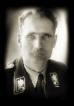
Rudolf Hess
The established facts of the Hess affair run as follows. At 5.45 pm on Saturday 10 May Hess, a pilot for more than twenty years, took off from theMesserschmitt works airfield at Augsburg, Bavaria, in a twin-engined Bf 110fighter-bomber. After a journey of almost 1,000 miles lasting four hours, Hesscrossed the British coast over Ainwick in Northumberland, then flew ontowards his objective, Dungavel House, eventually baling out at 11 pm to landnear the village of Eaglesham. Detained by the local Home Guard, Hess gavehis name as 'Alfred Horn' and asked to see the Duke of Hamilton, then aserving RAF officer. After being transferred into army custody Hess wasunmasked, and explained to various interrogators that the purpose of his flyingvisit was to seek peace between Britain and Germany. In this he failedmagnificently: Hitler quickly issued a statement which alleged that Hess wasmentally disordered and 'a victim of hallucinations', while Hess was detainedin Britain as a prisoner of state until his conviction for conspiracy and crimesagainst peace at Nuremberg in 1946. Thereafter Hess was held as a PrisonerNo. 7 at Spandau Prison in Berlin, always denied parole, and died on 17August 1987 at the age of ninety-three.
Myth and falsehood surround his epic flight even before Hess set foot onBritish soil. In his controversial account The Murder of Rudolf Hess (1979),Dr Hugh Thomas reproduced a series of photographs said to record Hessdeparting from Augsburg on 10 May. The Bf 110 shown was not equippedwith long range drop-tanks, leading Thomas (and others) to surmise that theaircraft lacked sufficient fuel to reach Glasgow, and would therefore have hadto land to refuel en route, or that two aircraft were involved. According toThomas, Hess was shot down by the Luftwaffe, and replaced by a double for theflight to Scotland. However these various suppositions are based on carelessresearch. Hess flew to Scotland in a Bf 110E, which with drop-tanks boasted amore than adequate range of 1,560 miles, and which bore the works number3869 and the radio code VJ+OQ. The machine shown in the photographscarries the works number 3526, while Thomas managed to misquote the radiocode as NJ+OQ. Although reports that a drop-tank was later recovered fromthe Clyde have never been verified, the simple fact is that the photographs weretaken on one of the twenty-odd training flights Hess made from Augsburgbefore 10 May, using a completely different machine.

Map
Some accounts offer that Hess must have landed and refuelled at anintermediate airfield such as Schiphol or Aalborg, but this would not have beennecessary. Nor is it true that Hess flew from Calais, as reported from Sweden in1943, or that for part of his flight Hess was escorted by no less a dignitarythan the future SS Reichsprotektor of Bohemia, Reinhard Heydrich, in a Bf 109fighter. A postwar claim by the Luftwaffe fighter ace Adolf Galland should alsobe treated with caution. In his memoir The First and the Last (1955), Gallandclaimed that 'early in the evening' of 10 May he received an agitated call fromGoring, ordering his entire group into the air to bring down the Deputy Fuhrer.A dubious Galland responded by sending up a token force. However, the claimis only credible if Goring and others had advance knowledge of the Hess flight,and opposed it, which raises the question of why Hess was allowed to take offfrom Augsburg in the first place. In the same vein, some have claimed that itwould not have been possible for Hess to have flown over German territorywithout prior authorisation, but this is convincingly countered by Roy Nesbitand Georges Van Acker in their book The Flight of Rudolf Hess (1999).Suggestions by Richard Deacon that the Bf 110 flown by Hess was fitted withAmerican parts are plainly nonsensical.
The account given by Hess of his route to Scotland is also suspect. Hess wassaid to have been very proud of his achievement in flying from Augsburg toEaglesham, a distance of almost 1,000 miles, the last 400 over water andenemy territory. On a map drawn by Hess on 8 August 1941 (click here to see enlarged map), while a prisoner,he claimed to have flown north-west from Augsburg to Den Helder in Holland,then north-east for 70 miles, and then north-west again to a point above themiddle of the North Sea. Here, at 8.52 pm, he made another 90 degree turn toport in order to approach the British coastline from the east. Hess claimed hethen realised he had an hour to kill, since at this more northerly latitude thesun set later than in southern Germany, whereas he wished to fly overland atdusk, and as a result executed several complicated zig-zag manoeuvres to killtime. But as Picknett, Prince and Prior argued in their highly detailed study Double Standards (2001), there is good reason to doubt this account. WhenHess left Augsburg he was observed heading north, not north-west, while apart of his later zig-zag manoeuvres were carried out within range of BritishChain Home radar, who instead recorded Hess (designated Raid 42J) as flyingstraight in from the east. Hess, at bottom an amateur pilot, claimed to havebeen navigating alone, which makes it highly unlikely that he could havefollowed such a complicated course over open water, yet still managed to landjust eleven miles from his intended destination, Dungavel House. Given thatHess had been considering his mission since at least September 1940, and mayhave made several previous abortive attempts, it is unlikely he would haveoverlooked the fact that dusk fell later in the north. Instead, the authors of Double Standards guess that Hess made use of a then-secret German radio-navigational system, broadcast from the station at Kalundborg on the westcoast of Zeeland in Denmark. Kalundborg lies precisely due north of Augsburg,and due east of Alnwick and Dungavel House, thus making Hess's journey farmore simple, but 250 miles - and one tell-tale hour - longer.
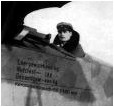
Rudolf Hess
It is abundantly clear from the timing of his flight that the Hess mission wasclosely linked to the impending German invasion of the Soviet Union, whichwas launched just six weeks later, on 22 June 1941. This much was confirmedby Lord Beaverbrook on several occasions after the war. The conquest of Russiaby Germany, never viable under any circumstances, would certainly be madeharder by fighting a war on two fronts. The Russian factor would also explainwhy Hitler might deny all knowledge of the mission if it failed, assuming hewas privy to the plan from the outset. Had Stalin discovered that Germanywished to make peace with Britain, he would have deduced immediately thatan attack on Russia was close at hand. Instead, Germany sought to lull hernotional Soviet ally into a false sense of security by continuing to threatenOperation Sealion, the seaborne invasion of Britain. Furthermore Hitler mightnot have wanted his Axis partners, chiefly Mussolini, to think that he wasnegotiating behind their backs. While this hypothesis does nothing to proveHitler knew and approved of the Hess peace mission, it does show that hewould hardly have admitted so even if he did.
On being informed of the Hess flight, Hitler is reported by some (includingAlbert Speer) to have flown into a paroxysm of rage, although other accounts(Hess adjutant Karl-Heinz Pintsch) relate that he received the news calmly.Some are of the opinion that what followed was part of a German strategy ofplausible denial. Surprisingly, the first public announcement about the affaircame not from London but Berlin, in the form of a radio bulletin broadcast on12 May at 8 pm:
- A letter which he left behind unfortunately shows by its distractedness tracesof a mental disorder, and it is feared he was a victim of hallucinations. TheFuhrer at once ordered the arrest of the adjutants of party member Hess, who alone had any cognizance of these flights, and did not, contrary to theFuhrer's orders, of which they were fully aware, either prevent or report theflight. In these circumstances, it must be considered that party member Hesseither jumped out of his plane or has met with an accident.
While it is true that his driver, bodyguard and two adjutants were arrested, little punitive action was taken against others close to Hess. Karl and AlbrechtHaushofer, his trusted geopolitical advisors, were arrested and detained, butneither was ill-treated and both were released without penalty. The aircraftdesigner Dr Willi Messerschmitt was merely rebuked by Goring, and no actionat all taken against his chief test pilot Helmut Kaden (who had given Hessintensive instruction), or against Ernst Bohle, the chief of Hess's own foreignintelligence bureau, the Auslandorganisation. His wife Use and son Wolf wereallowed to remain in their villa in the Munich suburb of Harlaching, andawarded a pension. Had Hess really acted alone, and against the express wishesof Hitler and the party in general, one might have expected the outcome tohave been very different.
It has often been claimed that Hess was deliberately lured to Britain as partof an elaborate intelligence sting. This theory has spawned a number of booksin recent years, including Hess: Flight for the Fuhrer by Peter Padfleld (1991), Ten Days That Saved the West by John Costello (also 1991), Churchill's Deception by Louis Kilzer (1994) and Hess: The British Conspiracy by John Harris and M.J.Trow (1999). Certainly this chimes with the theory favoured by Stalin, whoinitially believed that Britain was in league with Germany to destroy the SovietUnion, and that the Hess mission was engineered by British intelligence withthe Duke of Hamilton as a go-between. Moreover the Russians had somedifficulty in understanding why Hess was not immediately prosecuted as a warcriminal, and instead detained in comfortable quarters to await a postwar trial.In October 1942 the party newspaper Pravda (Truth) declared:
- It is no coincidence that Hess's wife has asked certain British representativesif she could join her husband. This could mean that she does not see herhusband as a prisoner. It is high time we knew whether Hess is either acriminal or a plenipotentiary who represents the Nazi government inEngland.
Several days later Pravda published a photograph of 'Mrs Hess' giving a pianorecital in London. However this turned out to be Myra Hess, the well-knownpianist who boosted wartime morale in London by playing lunchtime concertsto packed houses at the National Gallery. Indeed Churchill and Stalin arguedover the point when they met for the Moscow conference in October 1944.Churchill recorded in a later memorandum:
- The Russians are very suspicious of the Hess episode and I have had alengthy argument with Marshal Stalin about it at Moscow in October, he steadfastly maintaining that Hess had been invited over by our Secret Service.It is not in the public interest that the whole of this affair should be stirred atthe present moment.
The intelligence sting theory is superficially attractive, if only because it wouldexplain the dense veil of official secrecy which still surrounds much of theHess affair. According to Padfield and Costello, MI5's Double Cross Committeemasterminded the affair, while Harris and Trow favour the Special OperationsExecutive. Anthony Cave Brown concluded that the Secret Intelligence Service(MI6) was behind the trap, while it has been suggested by Philip Knightleythat MI6 induced Hess to come to Britain as they too favoured a negotiatedpeace with Germany. According to KGB sources, the traitor Kim Philby laterrevealed that SIS lured Hess to Britain by means of forged letters from theDuke of Hamilton, although Philby made no mention of this in his memoir My Secret War.
The greatest problem with the sting theory is that it is not supported by theconduct of the British authorities after Hess landed at Eaglesham. Had Hessbeen expected by the intelligence services, and by extension the military, itseems unlikely he would have been detained in a number of scout huts by theHome Guard for four hours until transferred to Maryhill Barracks in Glasgow.Even if the confusion on the ground in Scotland is explicable in the fog of war,the fact remains that Britain did nothing to exploit the windfall as a politicaland propaganda coup, or announce to the world that Hitler was suing forpeace. Instead the flight of the Deputy Fuhrer to Scotland was announced tothe world by Berlin, and only afterwards admitted by the British authorities onthe most neutral terms. Far from being paraded before the world media, Hesswas kept under close confinement for the next five years, and not seen inpublic until Nuremberg. If any photographs of Hess were taken between May1941 and October 1945, not a single one has been released into the publicdomain. Even Joseph Goebbels, Hitler's propaganda minister, expressed hisbafflement. Moreover Hess himself seems never to have indicated that he waslured to Britain.
Probably the most outlandish variation on this theme is the proposition thatHess was lured to Britain by bogus astrology. This fantastical notion was afavourite of spy writer Richard Deacon (alias Donald McCormick), whodeveloped it at considerable length in books such as British Secret Service and 17F: The Life of lan Fleming, despite the fact that there is no verifiable (or evencircumstantial) evidence to support it. According to Deacon, the luring of Hesswas 'a brilliant coup' for which Fleming, the creator of James Bond, deservedfull credit:
- Hess, however, presented a somewhat easier target. Vanessa Hoffman'sinformation convinced Fleming that while Canaris could not be won over byany faked horoscopes, Hess might well be exploited in this way . . . Therewas everything to be gained and nothing to be lost by planting faked horoscopes on Hess. Fleming had discovered through various of his occultistfriends such as Aleister Crowley and Ellic Howe that Hess regularlyconsulted astrologers, and that one of these was Karl Ernst Krafft. . . Exactlyhow the bogus horoscopes were worded, or the advice they gave to Hess,remains a mystery.
According to Deacon, Fleming, in wartime a serving officer in the NavalIntelligence Division, was acquainted with infamous occultist Aleister Crowley, and with Dennis Wheatley became involved in a 'very hush-hush' assignmentcalled Operation Mistletoe. This in turn involved nocturnal occult ritualsstaged in the Ashdown Forest, involving 'a dummy dressed in a Nazi uniform,sat on a throne-like chair', with the object of influencing Hess. Deacon alsostated that after Hess arrived, Fleming suggested he be questioned by Crowley.Others have cited the involvement of Maxwell Knight, Tom Driberg and Louisde Wohl in this same astrological plot. Deacon quoted with approval a claimby Nicholas Campion, cited as 'one of the founders of the Institute for theStudy of Cycles in World Affairs and a leading astrologer', who in 1984advised Deacon that he had:
- Cast the horoscope for the time at which Hess took off from Germany. It wasmost inauspicious. It transpires that this is a most evil horoscope in anytraditional sense, largely because six planets were in the house of death andtwo other points were strong: the fixed star Algol (which leads one to loseone's head) and the evil degree Serpentis, so called 'the accursed degree ofthe accursed sign.'
Aspects of this farrago of nonsense are repeated in books such as The Man WhoWas M (Anthony Masters, 1984) and The Occult Conspiracy (Michael Howard,1989). Yet in his own introduction Deacon had warned his readers that thistale of the luring of Rudolf Hess was 'far removed from reality' and 'totallybizarre'. In truth, the only contemporary references to Hess and astrologyappeared in newspapers in London and Berlin on the same day. 14 May 1941.According to an article in the Volkischer Beobachter:
- As is well-known in Party circles, Rudolf Hess was in poor health for manyyears and latterly increasingly had recourse to hypnotists, astrologers and soon. The extent to which these people are responsible for the mentalconfusion that led him to his present step has still to be clarified.
In London The Times published some highly speculative information supposedlyreceived from a correspondent in Switzerland:
- Certain of Hess's closest friends have thrown an interesting light on theaffair. They say that Hess has always been Hitler's astrologer in secret. Up tolast March he had consistently predicted good fortune and had always been right. Since then, notwithstanding the victories Germany has won, he hasdeclared that the stars showed that Hitler's meteoric career was approachingits climax.
The detail disclosed by The Times was almost certainly official disinformation,with both newspaper reports intended to discredit Hess as deluded ormentally unstable. Hitler's motive for a policy of plausible denial in relationto the Hess peace mission have already been discussed. In Britain, however,very different reasons may lie behind the official policy of silence and secrecysurrounding Hess.
There is a strong body of evidence, not all of it circumstantial, that RudolfHess came to Britain expecting to conclude ongoing peace negotiations withsenior officials, and then to fly back to Germany from Dungavel. In theirminutely researched account Double Standards, Picknett, Prince and Prior offerthe following facts in support of this argument. By May 1941 Britain was losingthe war: Greece had fallen. Rommel was winning in North Africa. U-boats weresinking a colossal tonnage of Allied shipping, and Britain's cities were beingheavily bombed from the air. At this time Churchill was by no means as popularas postwar myth suggests, having endured a vote of confidence on 7 May. InBritain there remained a strong peace lobby which included Lloyd George, LordHalifax, Rab Butler, Lord Beaverbrook, Sir Nevile Henderson and Sir SamuelHoare. It is also possible that senior figures within MI6, including Sir StewartMenzies, favoured peace. Moreover other senior establishment figures had beenpre-war members of the Anglo—German Fellowship, including the Duke ofHamilton. Hamilton later denied this, just as he denied meeting Hess at theBerlin Olympics in 1936, but in fact his own archives betray his membership ofthe Fellowship in 1936, while there is ample evidence of the meeting in Berlinfrom Henry Channon, Kenneth Lindsay and even Churchill. Hitler too wished toend the war in the west, as is clear from his 'last appeal to reason' of 19 July 1940, since the occupation and administration of Britain and the Empire wouldbe a complicated task, and deplete those resources required for the plannedattack on Russia. Against this background it seems more than likely that Hitlerknew of, and endorsed, the Hess mission.
According to the authors of Double Standards, their research suggests that theproposed terms of the armistice included a 25-year alliance between Britain andGermany, and the adoption by Britain of an attitude of 'benevolent neutrality'towards Germany's forthcoming war on the Soviet Union. Britain wouldcontinue to rule her Empire, while Germany would govern Europe. It is alsosuggested that there were detailed proposals regarding other issues, such as areduction in strength of the Royal Navy and RAF. The main obstacle to the planwas the staunchly anti-Nazi Churchill, as the prime minister himself admitted tothe Commons on 27 January 1942:
- When Rudolf Hess flew over here some months ago, he firmly believed that hehad only to gain access to certain circles in this country for what he described as 'the Churchill clique' to be thrown out of power and for a government tobe set up with which Hitler could negotiate a magnanimous peace.
Sir Patrick Dollan, a former editor of the Glasgow Daily Herald and the then LordProvost of Glasgow, seems to have been privy to inside information which he feltstrongly should be made public. During a series of lectures given around the cityin June 1941, Dollan made revelations which were summarised by the Bulletinand Scots Pictorial on 20 June, clearly having been missed by the censor:
- Hess came here an unrepentant Nazi. He believed he could remain inScotland for two days, discuss his peace proposals and be given petrol andmaps to return to Germany.
The precise identity of those within the 'certain circles' to which Churchillalluded remains the subject of fierce debate, and is unlikely now to beestablished with any certainty. A wide-ranging study of pro-peace groupings inBritain before and during the Second World War can be found in Profits ofPeace by Scott Newton, published in 1996. Some were pro-Hitler, but mostappeasers simply wished to avoid another European war which would have adevastating effect on economic and social stability.
It is clear from a letter which the Duke of Hamilton published in The Times of 6 October 1939 that he too remained pro-peace even after the outbreak ofwar. The Hess affair caused the Duke of Hamilton a great deal of personalembarrassment, and led to his uttering a number of libel writs againstjournalists and Hess commentators until his death in 1973. It is only sincethen that historians have been able to publish detailed research. According tothe authors of Double Standards, there is reason to believe that a receptioncommittee awaited Hess at Dungavel House, which may have included theDuke of Kent and a Polish contingent, and that the mission went awry onlyafter Hess failed to locate his destination and instead baled out overEaglesham. Hamilton, then a serving Wing Commander stationed at RAFTurnhouse near Edinburgh, remained a Privy Councillor and a Keeper of theRoyal Household. A former member of the Anglo-German Fellowship whohad hoped to avoid war, he was also a friend and sponsor of AlbrechtHaushofer, a close political advisor to Hess who had been privy to the flightfrom its inception.
On landing Hess asked to be taken to Hamilton, and although the officialversion holds that the Duke slept through the night and did not see 'AlfredHorn' until about 10 am the following day, at Maryhill Barracks, the evidenceof his widow supports the theory that Hamilton in fact left his bed and went tomeet Hess while the latter was being escorted to Maryhill. Indeed this wasreported as fact by the Glasgow Herald on 16 May 1941, who added that'representatives of the Intelligence Service and the Foreign Office were present'.Some have claimed that it would not have been possible for Hess to havelanded his Bf 110 on the small grass airfield at Dungavel, but the strip was adesignated Emergency Landing Ground and there is evidence that acomparable Bristol Beaufighter set down safely there the previous month.
What had initially been promoted as a crack in the Nazi regime was indanger of being recognised as a crack in the British hierarchy. Indeed rumoursof collusion between Hess and people in high places, and whispers thatHamilton was a Quisling, quickly entered into circulation in Britain, raising thedread spectre of a Hidden Hand or fifth column. Although Churchillsubsequently dismissed the Hess mission as merely an 'escapade', in truth hemust have recognised it as a potential turning point in the war. In May 1941the defeat of Germany hinged on two main factors: America joining theconflict, and Germany invading the Soviet Union, so that Stalin too wouldbecome a British ally. Little was revealed to the press about Hess, and Churchillmade no statement to the Commons until January 1942. Rather than exploitHess's arrival as propaganda for short-term gain, Churchill instead reversed thecrisis to further his own ends. By accident or design, the truth slipped intoprint in America later in 1941, in the somewhat mystic book That Day Alone by the Canadian commentator Pierre van Paassen. According to van Paassen,Churchill pretended to negotiate with Hess in order to ensure that Hitlerattacked the Soviet Union, to strengthen British ties with America, and tobring about the end of the Blitz. The book was published in abridged form inBritain in 1943, but with this passage deleted. It seems unlikely that vanPaassen was privy to inside information. Nonetheless, the devastating nightattack on London by 520 bombers on 10 May 1941 was the last significantGerman raid on the capital until the so-called Little Blitz early in 1944, whichagain suggests the complicity of Hitler in the Hess peace plan. In short.Churchill ruthlessly exploited the Hess affair to stifle the peace lobby, and thosewho wished to remove him from power.
Another persistent Hess legend is that the RAF did little or nothing tointercept Raid 42J, which in turn is offered as proof that Hess was expectedand protected. Here the evidence is confusing. Three Spitfires from 72Squadron based at Acklington attempted to intercept the Bf 110 as it crossedthe Northumberland coast, and as it approached Glasgow an airborne Defiantnight fighter from 141 Squadron at Ayr was alerted, although not scrambledas some accounts suggest. In Ten Days That Saved the West (1991), JohnCostello claimed that the Duke of Hamilton refused to allow fighters to attackHess, and that anti-aircraft defences in the areas he overflew were ordered notto open fire. Both statements are incorrect. The sectors over which Hess passedwere Ouston and Ayr, rather than Turnhouse, and both tried to shoot downthe intruder. Moreover, for obvious reasons it was common practice for AAbatteries to refrain from firing on enemy targets which were being pursued bythe RAF, since this carried the risk of bringing down friendly aircraft. In 1999it was claimed that two Czech Hurricane pilots from 245 Squadron, VaclavBauman and Leopold Srom, had been closing on Hess when their attack wasinexplicably called off. Soon after returning to their base at Aldergrove inNorthern Ireland, the two men were subjected to an intensive interrogation by several senior RAP officers who arrived in an Avro Anson. Their story possiblytallies with an article published in the American Mercury in May 1943, whichstated that 'two Hurricanes took off to trail the mystery plane with orders toforce it down but under no conditions to shoot at it'. However, there is norecord of Srom having flown that day in the Operations Record Book for 245Squadron, while the convoy patrol undertaken by Bauman between 9.35 and10.40 pm would not have taken him anywhere near Hess. In all likelihood thevarious other RAF pilots who claimed to have been scrambled to intercept Hesson 10 May were simply mistaken.
Several sources have claimed that Hess was the target of an assassinationattempt while at Mytchett Place. According to a former army intelligenceofficer named John McCowen, the three would-be killers were German andarrived by parachute near Luton Hoo on the night of 28 May 1941. Afterbeing captured and interrogated, the trio revealed that they had expected tofind Hess at the London Cage at Cockfosters, and to obtain help from Abwehr agents already in Britain. They were later executed without trial at the Towerof London. Predictably there is no record of any such agents being captured in1941, or executed, and the facts seem highly unlikely. In June 1942 Hess wasmoved from Mytchett to Maindiff Court near Abergavenny, apparently becauseit was feared that a group of Poles were planning to break into the camp,kidnap Hess, and beat or kill him by way of revenge for Nazi atrocities inPoland. Indeed in an MI5 file released by the PRO in 1999 there is an oddreference to a reported gun battle between Polish soldiers and guards atMytchett, although no precise details are given. However, as with so manyaspects of the Hess affair, the whole truth is never likely to emerge.
More imaginative even than the occult explanation of the Hess mission isthe theory that the real Rudolf Hess was replaced with a double, and that theman who died at Spandau in 1987 was not the Deputy Fuhrer at all. The mostcelebrated proponent of the so-called doppelganger theory is Dr Hugh Thomas,a former army surgeon who examined Hess in September 1973 while attachedto the British Military Hospital in Berlin. The publication of his book TheMurder of Rudolf Hess in 1979 prompted questions in the House of Commonsand the Bundestag, and generated further controversy in 1988 when itappeared in revised form under the title Hess: A Tale of Two Murders. Thomasrelied on his own medical expertise. During the First World War Hess wasknown to have been wounded twice: once by shrapnel in June 1916, followedby a more serious chest wound caused by a rifle bullet on the Romanian frontin July 1917. According to Thomas, the 'major scars on his chest and back'caused by both wounds should have been highly visible even after 60 years, yetwere not recorded by any one of the 58 doctors who examined Hess after1941. Thomas was unable to locate any detailed contemporary medical notes, but made a number of assumptions which hypothesised extensive tissuedamage and a large exit wound on the back. Thomas also accepted muddledassertions that Hess had been treated by the renowned chest surgeonFerdinand Sauerbruch, whose technique for treating gunshot wounds usually entailed the partial removal of a rib. The fact that Hess refused to see his wifeand son until 1969 was also cited as further evidence...cont.
Links
Flight To Britain 1941 >> Full Biography
Adolf Hitler >> Heinrich Himmler >> Josef Goebbels >> Triumph of the Will >> Triumph of the Will 2 Dvd >> Leni Riefenstahl >> Rudolf Hess >> Martin Bormann >> Herman Goering >> Who Helped Hermann Goering Escape The Hangman? >> Josef Mengele >> Adolf Eichman >> Irma Grese
Kristallnacht >> The Final Solution >> Auschwitz >> Nuremberg Party Rallies >> Nuremburg War Trials [DVD Docu] [2005] - Dvd Scans/About/Buy
Daily Mail - 2nd May 1945 >> Daily Mail - 3rd May 1945 >> Daily Mail - VE Day - It's All Over >> Scans added of the best books of Germany duringthe war and after incl. definitive guide onThe Nuremberg Rallies - Smartphone Page >> Best 2nd World War Book Scans Added >> British War Dvds >> Winston Churchill >> France During WWII
Advertise >> 2nd World War Dvds & Books available @ amazon.com

