2nd World War & The Truth Behind His Flight to Britain
Objectives: To look into the backgrounds of as many of the key players in the Second World War as time permits. To try to convey the history of the 2nd World War in a concise and easy - to - read way as possible and how such War Crimes came about and the men responsible for those War Crimes.
Flight To Britain 1941 >> Full Biography
Adolf Hitler >> Heinrich Himmler >> Josef Goebbels >> Triumph of the Will >> Triumph of the Will 2 Dvd >> Leni Riefenstahl >> Rudolf Hess >> Martin Bormann >> Herman Goering >> Who Helped Hermann Goering Escape The Hangman? >> Josef Mengele >> Adolf Eichman >> Irma Grese
Kristallnacht >> The Final Solution >> Auschwitz >> Nuremberg Party Rallies
Daily Mail - 2nd May 1945 >> Daily Mail - 3rd May 1945 >> Daily Mail - VE Day - It's All Over >> Scans added of the best books of Germany duringthe war and after incl. definitive guide onThe Nuremberg Rallies - Smartphone Page >> Best 2nd World War Book Scans Added >> British War Dvds
Advertise >> 2nd World War Dvds & Books available @ amazon.com
Rudolf Hess ~ Flight To Britain (Part II)
Source: Myths and Legends of the Second World War
After concluding that the man he had examined in Spandau in 1973 wasnot the real Hess, Thomas suggested a plot far stranger than fiction. By thisversion, Hess took off from Augsburg in a Bf 110 intending to fly to Sweden,but was shot down on the orders of rival Nazi leaders who opposed the peaceplan. A second Bf 110 coded NJ+OQ with an imposter at the controls was thendispatched from Aalborg in Denmark, although quite what the substitutionwas meant to achieve remains obscure. A no less convoluted version wasoffered by Professor Peter Waddell in 1999, in which Hess was kidnapped fromSweden by SOE agents. In order to prevent reprisals against British prisoners ofwar, an SOE agent impersonating Hess was made to bale out of an aircraft overScotland. The real Hess was later executed in Scotland in 1942 on the directorders of Churchill.
All of which is quite simply fantastic. It is abundantly clear fromcontemporary photographs, as well as from the wreckage on public display atthe Imperial War Museum, that Hess's aircraft was coded VJ+OQ, and that theBf 110 in which he flew from Augsburg to Scotland had the necessary range.The most damaging evidence against the doppelgdnger theory was unearthed in1989, when a BBC journalist named Roy McHardy located a copy of theoriginal Hess medical file in the Bavarian State Archives. The file includedseveral reports on the bullet wound sustained in 1917, including the followingdescription from December of the same year:
- Three fingers above the left armpit, a pea-sized, bluish-coloured, non-reactivescar from an entry wound. On the back, at the height of the fourth dorsal[thoracic] vertebra, two fingers from the spine, a non-reactive exit gunshotwound the size of a cherry stone.
No operation had been necessary. The wound had been a clean through-shotfrom a small-calibre rifle which left minor scarring, in a different location tothat suggested by Thomas. No amount of minor quibbling about ancillarydetails can hide the fact that Thomas had based his entire hypothesis onincorrect information. Furthermore his claim that he possesses a copy of aletter from Lord Willingdon to William Mackenzie, the Canadian PrimeMinister, discussing Hess and 'the problem we have with the double' cannot beverified since Thomas claims that the Official Secrets Act precludes him frompublishing it. His wife Use describedthe double allegation as 'ridiculous', while fellow prisoner Albert Speerdismissed it as 'utter nonsense.' And why on earth would Hess's double acceptan uncomfortable term of life imprisonment without disclosing his trueidentity? The notion is simply preposterous.

Rudolf Hess in later life
Yet another fanciful story emerged from Germany in 1987. According to theGerman historian Werner Maser, Hess was temporarily released from his cell on the night of 17/18 March 1952, during a Russian tour of duty at Spandau.Without the knowledge of the western powers, Hess was taken to a secretlocation where he met senior officials from the German Democratic Republic.On the instructions of Stalin he was offered his freedom and a leading positionin East Germany, on condition he declared himself to be a socialist. Hess.however, is said to have remained loyal to Hitler and turned down theproposal. The Russians in turn warned Hess to reveal nothing of his outing,and that he would remain in Spandau until his death. The story seemssomewhat far-fetched.
In the second version of his book, Hess: A Tale of Two Murders, Dr HughThomas put forward the proposition that the double who died in Spandau on theafternoon of 17 August 1987 was murdered. The official version holds that Hesshanged himself in a garden shed in the grounds of the prison, by looping theelectrical cord of a reading lamp around his neck and suspending this from awindow latch. After attempts were made to revive him in situ he was rushed tothe British Military Hospital, where, after further unsuccessful attempts atresuscitation, he was pronounced dead at 4.10 pm. A suicide note addressed tohis family was found in his jacket pocket, and the initial autopsy performed on19 August found that death had resulted from asphyxia, caused by compressionof the neck due to suspension. It is worth recording here that Hess had attemptedto take his own life on several previous occasions. In June 1941 he threw himselfover a balcony at Mytchett Place near AIdershot. breaking his left leg, andstabbed his own chest with a breadknife in February 1945. Even as late as 1977.at the age of eighty-three, Hess tried to cut his wrists with a table knife.
Thomas argues that the neck injuries were consistent with throttling, thatthe suicide note was forged, and that the Hess double was murdered by SASpersonnel on the orders of the British government, to whom Hess and/or hisdouble had been an embarrassment since 1941. His son Wolf Hess alsobelieves that his father was murdered, but dismisses the doppelgdnger theory.Quite why the authorities waited until 1987 to murder Hess is not explained.while some of the additional evidence cited by Thomas is flawed. He notes thatneither of the autopsies carried out in August 1987 noted the 'massive'gunshot wounds dating from 1917, although as we have already seen thistheory would be comprehensively demolished in 1989 when his completemedical file was unearthed in Munich. Thomas also found it suspicious thatthe corpse measured a height of 5 feet 9 inches (1.75 metres), whereas Hesswas said to have been a tall man who stood about 6 feet 1 inch (1.85 metres).Again, his original medical file reveals the truth, which is that Hess was 5 feet10 inches tall (1.77 metres), and that a reduction of 2 cm in height as a resultof stooping in old age is quite normal.
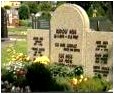
Rudolf Hess Grave
In 1989 the murder theory gained some support from the testimony of aTunisian medical orderly, Abdallah Melaouhi, who had acted as Hess's nursesince 1982. Melaouhi claimed that on the day in question he was delayed byguards, and that when he finally arrived at the garden summerhouse (in factan elderly Portakabin) there were two unfamiliar men present dressed in American uniforms. He also stated that furniture had been thrown about, as ifduring a struggle, and that there was no cord around Hess's neck, theelectrical flex still being attached to the lamp and plugged in. Melaouhi wasalso of the opinion that Hess was so debilitated and arthritic that he wasunable even to tie his own shoelaces, let alone knot a cord around his neck. Heeven stated that at the British Military Hospital the British, French and Americandirectors later toasted the passing of Hess with champagne.
This evidence was largely contradicted by Lieutenant-Colonel Tony LeTissier, the British Governor at Spandau. In his book Farewell to Spandau, LeTissier pointed out that the only delay in Melaouhi's arrival was caused bydifficulty in locating him, eventually in the mess, and that even then the log atthe main gate showed there was little delay before he arrived at thesummerhouse. There were four reading lamps in the Portakabin, and thereforemore than one cord. The two men in American uniform were medics who hadbeen called to assist with the resuscitation, and in fact continued in theseattempts with the help of Melaouhi. The furniture had been pushed aside inthe course of their previous efforts to revive Hess. As for his medical condition,Hess wore a truss and probably found bending to tie his shoelaces problematic,but he could write legibly and thus tie a knot.
Probably the last great Hess conspiracy theory emerged in 2001, again in Double Standards by Picknett, Prince and Prior. As well as postulating that thereception committee at Dungavel included the Duke of Kent, brother of KingGeorge VI, the authors also surmise that the Duke's death in a flying accidentin August 1942 was an assassination, in which the real Rudolf Hess alsoperished. For reasons of space it is not possible to explore this theory fully here,but in summary it runs as follows. The Duke of Kent remained in favour of anegotiated peace, and with others continued to work toward this end after Hessarrived in May 1941. Although Hess was officially held first at Mytchett Place,and then Maindiff Court in Wales, he was also confined at several locations inScotland, including Braemore Lodge near Loch More. Beyond doubt is the factthat on 25 August 1942 the Duke took off from Invergordon in a ShortSunderland flying boat. Officially he was on a morale-boosting visit to RAFpersonnel stationed in Iceland, although the memorial erected by his widowindicated that the Duke was engaged in an unspecified 'special mission'. About60 miles after take-off the Sunderiand crashed into a remote hilltop nearCaithness, some ten miles off course, killing everyone on board bar the reargunner. Various explanations have been offered through the years, includingpilot error, drunkenness, magnetic rocks, faked German radio messages, and acover-up to hide the fact that the Duke himself was at the controls.
The authors of Double Standards present a convincing case that there weresixteen men on board the Sunderland, rather than the fifteen listed in officialreports. However, the rest of their hypothesis is harder to credit. This suggeststhat the extra man was Hess, picked up by the Duke's flying boat from LochMore, and en route to Sweden. Rather than meeting with an accident, theaircraft was sabotaged in the same fashion as the B24 Liberator in which the Polish leader General Sikorski would perish in July 1943. Beyond the fact thatthe evidence presented in support of this theory is circumstantial in the extreme,there are at least two major flaws in the assassination plot. First, it scarcelyseems credible that Hess could have been collected or snatched by the Dukewithout the aid of a small private army. Second, if Hess was indeed on board thedoomed aircraft, then it raises the spectre of the fantastical doppelgdnger theoryand the almost total suspension of disbelief which that entails. Instead, the likelyexplanation is that the crash was simply a tragic accident caused by poor orimpaired navigation, whoever may have been at the controls.
Today few would disagree that Rudolf Hess was kept far too long in captivity,a hapless pawn in a prolonged game of chess between former Allies turnedCold War adversaries. However, it is important to remember that theunderlying purpose of the Hess peace mission, the last serious attempt to reachan Anglo-German detente, was in no way humanitarian. Hess was a staunchNazi, and like Hitler desired a peace which would allow Germany to continuethe war in the east, leaving the Reich free to initiate the Holocaust unhindered.Against this background it matters little that the original point of the war, theliberation of Poland from foreign occupation, was never achieved. Therefore itwould be quite wrong to conclude that Hess should be admired for his efforts,or that Churchill should be criticised for rejecting his proposals out of hand.rather than putting them before his Cabinet or the Commons...prev.
Links
Flight To Britain 1941 >> Full Biography
Adolf Hitler >> Heinrich Himmler >> Josef Goebbels >> Triumph of the Will >> Triumph of the Will 2 Dvd >> Leni Riefenstahl >> Rudolf Hess >> Martin Bormann >> Herman Goering >> Who Helped Hermann Goering Escape The Hangman? >> Josef Mengele >> Adolf Eichman >> Irma Grese
Kristallnacht >> The Final Solution >> Auschwitz >> Nuremberg Party Rallies
Daily Mail - 2nd May 1945 >> Daily Mail - 3rd May 1945 >> Daily Mail - VE Day - It's All Over >> Scans added of the best books of Germany duringthe war and after incl. definitive guide onThe Nuremberg Rallies - Smartphone Page >> Best 2nd World War Book Scans Added >> British War Dvds
Advertise >> 2nd World War Dvds & Books available @ amazon.com

