LEONARD COHEN
Links
Leonard Cohen Fascinating Facts
Scott Walker Fascinating Facts
Cocteau Twins Fascinating Facts
Michael Brook Fascinating Facts
Penguin Cafe Orchestra Fascinating Facts
David Bowie Rarities (Shipped From UK)
Roxy Music / Bryan Ferry Fascinating Facts
Ryuichi Sakamoto Fascinating Facts
Haruomi Hosono Fascinating Facts
Yukihiro Takahashi Fascinating Facts
Leonard Cohen
Artist
Leonard Cohen
Content
All the fascinating facts
More
Bitesized
Year
1930s to Present Day
Random and bite-sized facts on all things from the mythical and totally poetic figure that was Leonard Cohen. Totally random but totally fascinating if you're into it. Do you know Leonard Cohen now?
--
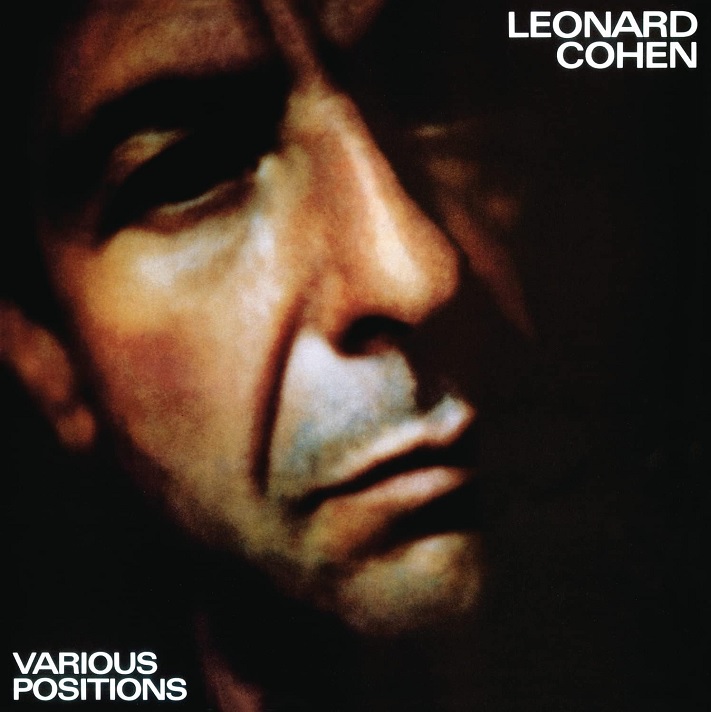
Leonard Cohen's Various Positions was his first album in five years. Released in December 1984, it marked a noticeable change in his sound, with synthesizers and more contemporary studio arrangements appearing alongside Cohen's familiar voice and songwriting.
--
Leonard Cohen spent months working on the arrangements for *Various Positions* before entering the studio. He and John Lissauer played the songs together in Lissauer's living room for months. But Cohen said that once they reached the studio, many of the ideas they thought were settled were “radically revised”. The arrangements evolved right up until the final recordings.
--
Cohen and producer John Lissauer built much of Various Positions around a cheap Casio keyboard. Cohen had begun using the keyboard as a way of moving beyond the guitar, and Lissauer developed arrangements around the sounds Cohen was creating on it.
--
“Hallelujah” was written years before most people knew it existed. Cohen worked on the song for a long time and wrote a huge number of verses before reducing the material for the version that appeared on Various Positions. The song that eventually became famous was only a fraction of what he had originally written.
--
When John Lissauer and the musicians finished recording “Hallelujah”, Lissauer remembered being stunned by what they had made. He later recalled thinking they had created an important song and believed the album might finally give Cohen a major breakthrough in the United States.
--
That breakthrough almost immediately ran into a record-company wall. Columbia Records decided not to release Various Positions in the United States. The album was released elsewhere, while the American release eventually came through the independent Passport Records rather than Cohen's regular label.
--
Cohen's backing-vocal arrangement on Various Positions was unusually extensive. Jennifer Warnes was prominent throughout the album, alongside a large group of backing singers including Anjani Thomas, Crissie Faith, Erin Dickins, John Crowder, Lani Groves, Merle Miller, Ron Getman and Yvonne Lewis.
--
Jennifer Warnes wasn't simply a backing singer brought in for one song. Her contribution to Various Positions was substantial enough that she is credited as a vocalist across the album's tracks. Her close musical relationship with Cohen would continue for many years.
--
“Dance Me to the End of Love” opens Various Positions, and its sound immediately signals Cohen's move towards a more modern production. John Lissauer's arrangements brought synthesizers and programmed-sounding textures into Cohen's music without abandoning the orchestral and acoustic elements that had characterised his earlier records.
--
The album was recorded at Quadrasonic Sound in New York, with Leanne Ungar working as recording engineer and mixer. John Lissauer produced and arranged the album, while David Campbell handled the string arrangements.
--
The title Various Positions is particularly fitting for an album that finds Cohen in several musical modes. “Dance Me to the End of Love” and “Coming Back to You” sit alongside the stark “The Law”, the biblical imagery of “Hallelujah” and “If It Be Your Will”, and the more conversational “Heart With No Companion”.
--
Leonard Cohen was already a published poet before most people had ever heard him sing. His first collection, Let Us Compare Mythologies, appeared in 1956 while he was still an undergraduate at McGill University in Montreal.
--
Cohen did not begin his musical career as a conventional singer-songwriter. At 17 he helped form a country-and-western group called the Buckskin Boys, which performed at square dances around Montreal.
--
By the early 1960s Cohen was much better known as a writer than a musician. His second poetry collection, The Spice-Box of Earth, appeared in 1961 and established him internationally as a serious literary figure.
--
Cohen spent much of the 1960s on the Greek island of Hydra, where he bought a house and lived for several years. It was an extraordinarily productive period: he wrote poetry and two novels there, including The Favourite Game and Beautiful Losers.
--
Hydra also provided the setting for one of the most important relationships in Cohen's life. He met Marianne Ihlen there, and their relationship became part of the story behind songs including So Long, Marianne.
--
Cohen's breakthrough as a songwriter came partly because Judy Collins recognised his songs before the record industry did. She recorded Suzanne and Dress Rehearsal Rag, helping bring Cohen's writing to a much wider audience.
--
Suzanne began life as a poem inspired by Montreal rather than as a conventional love song. Cohen later developed it into the song that Judy Collins recorded before Cohen released his own version.
--
Cohen was in his early thirties when he seriously turned towards a career as a recording artist. Columbia Records signed him after he came to the attention of legendary A&R man John Hammond, who had also been involved in signing artists including Bob Dylan.
--
Songs of Leonard Cohen appeared in 1967, when Cohen was 33. Its combination of sparse arrangements, his unusually deep voice and intensely literary songs sounded very different from much of the pop music surrounding it.
--
Cohen's second album, Songs from a Room, followed in 1969 and contained Bird on the Wire. The song was begun on Hydra after telephone wires were installed on the island — something Cohen regarded as a striking symbol of modern civilisation arriving in his previously isolated surroundings.
--
Cohen's literary career never really disappeared once he became famous as a musician. He continued publishing poetry throughout his recording career, effectively maintaining two parallel careers as writer and singer.
--
Beautiful Losers, published in 1966, was a radically different work from the restrained public image later associated with Cohen's music. Its explicit sexuality and experimental style caused considerable controversy and even prompted comparisons with James Joyce.
--
Cohen briefly attended Columbia University in New York after graduating from McGill, but left after only a short period. He subsequently spent time travelling and writing before settling into his increasingly unconventional life between Montreal, Europe and Hydra.
--
In 1959 Cohen travelled to Cuba during the Revolution. According to the Jewish Museum's account of his early life, he arrived carrying a guitar and, despite speaking only English, managed to pass himself off as a spy and later as a Cuban on the run.
--
Cohen's fascination with religion was not simply an aspect of his later songwriting. Raised in Montreal's Jewish community, religious imagery, biblical stories and questions of faith had been present in his writing from his earliest poetry onwards.
--
Cohen was inducted into the Rock & Roll Hall of Fame in 2008, but his career had already crossed several worlds by then: poetry, novels, folk music, popular songwriting and some of the most distinctive albums of the singer-songwriter era.
--
The Future was recorded between January and June 1992, but it was not made in one studio. The sessions spread across a remarkable list of Los Angeles studios, including Capitol, Cherokee, Ocean Way, Sunset Sound and The Village Recorder.
--
Leonard Cohen was credited as producer on most of The Future. He also had a direct hand in arranging the songs, rather than simply arriving at the studio as a singer and songwriter.
--
The Future's production credits are unusually complicated for a Leonard Cohen album. Alongside Cohen himself, the record credits Steve Lindsey, Bill Ginn, Leanne Ungar, Yoav Goren and Rebecca De Mornay as producers on different tracks.
--
Rebecca De Mornay was not simply associated with Leonard Cohen through the album's credits: she received a producer credit on Anthem and also contributed to the arrangement of Waiting for the Miracle and Anthem.
--
The Future contains one song that Cohen did not write. Be for Real is a cover of a song written by American soul singer Frederick Knight, originally released by Knight in 1976.
--
Cohen also recorded a second non-original song for The Future: Always, the Irving Berlin standard. At more than eight minutes, it is actually the longest track on the album.
--
The album's enormous cast of musicians included Vinnie Colaiuta on drums for Democracy, Leland Sklar on bass for Always, Dean Parks on guitar and mandolin, and Jennifer Warnes among the backing vocalists.
--
The Future contains an extraordinary mixture of acoustic instruments and early-1990s electronic technology. Tacoma Trailer, for example, was built around Synclavier programming by Steve Croes and Bill Ginn.
--
Leonard Cohen himself played more instruments on The Future than his image as a singer-songwriter might suggest. The album credits him with saxophone and violin as well as vocals, and he was also involved directly in the arrangements.
--
The choir on The Future wasn't a small group of backing singers. The credits identify the Los Angeles Mass Choir, with more than twenty individual singers listed, including Julia Waters Tillman, Maxine Waters Willard and Jennifer Holliday collaborator Carmen Twillie.
--
The title track The Future is more than six and a half minutes long and was produced by Cohen himself. Its arrangement combines programming with live drums, guitar and percussion, with David Campbell conducting and arranging the strings.
--
Waiting for the Miracle has two songwriters: Leonard Cohen and Sharon Robinson. Robinson would later become one of Cohen's most important collaborators, including on Ten New Songs.
--
The Future was Cohen's ninth studio album and, at almost an hour, was his longest studio album up to that point. Its nine tracks occupy roughly 60 minutes despite the relatively small number of songs.
--
The closing track, Tacoma Trailer, is one of the strangest pieces on the album from a production standpoint. It has no conventional band lineup in the credits: Bill Ginn is credited with programming and Synclavier, while Cohen is credited with the arrangement.
--
The album's sound therefore came from an unusually wide combination of musicians, programmers, choirs, strings, horns and electronic equipment. The Future is much more elaborate as a studio production than its singer-songwriter label might suggest.
--
Leonard Cohen was born in Westmount, Montreal, in 1934 and grew up at 599 Belmont Avenue, a house overlooking what was then called Murray Hill Park. The house later became closely associated with his writing: his first novel, The Favourite Game, contains scenes based on the house and its surroundings.
--
Cohen's Montreal childhood home was not merely somewhere he lived. His fictional alter ego Lawrence Breavman in The Favourite Game grows up in essentially the same Westmount landscape, making the novel unusually close to Cohen's own childhood geography.
--
Cohen's family connection to Montreal's Jewish community went back generations. His grandfather Lyon Cohen was a prominent Montreal businessman, philanthropist and Jewish community leader who helped establish the Canadian Jewish Congress.
--
The synagogue central to Cohen's family history was Congregation Shaar Hashomayim in Westmount. Cohen had his bar mitzvah there, and decades later its cantor Gideon Zelermyer and choir appeared on You Want It Darker.
--
The distance between Cohen's childhood and his final album is remarkably small geographically. Shaar Hashomayim, where his family worshipped and where he encountered the musical traditions of his Jewish community, supplied the voices heard on You Want It Darker more than sixty years later.
--
Cohen attended McGill University in Montreal and graduated in 1955. While there, he became president of the McGill Debating Union and won the Chester Macnaghten literary prize for poetry.
--
Cohen's first published book, Let Us Compare Mythologies, appeared in 1956, only a year after he graduated from McGill. It was published by McGill's literary magazine, CIV/n, and contained poems he had written while still a student.
--
Before becoming internationally famous as a musician, Cohen was already part of Montreal's literary world. His early mentors included the poets Louis Dudek and Irving Layton, with Layton becoming one of the most important literary influences on his young career.
--
Cohen's first musical group was formed while he was still in Montreal. The Buckskin Boys were a country-folk trio that he performed with while studying at McGill.
--
Cohen eventually owned a grey-stone house in Montreal's Plateau neighbourhood near Parc du Portugal. Unlike his Westmount childhood home, this became associated with the adult Cohen and the bohemian side of his Montreal life.
--
Montreal remained a psychological home for Cohen even after decades of living elsewhere. In a 2006 interview he said that he felt at home in Montreal in a way he did nowhere else, adding that the feeling became stronger as he grew older.
--
“Heart With No Companion” appeared on Leonard Cohen’s 1984 album Various Positions, where it sits immediately before “If It Be Your Will” and after “Hunter’s Lullaby.” The album was released on 11 December 1984.
--
The studio recording was made at Quadrasonic Sound in New York. John Lissauer produced it, Leanne Ungar engineered and mixed it, and John Lissauer also arranged the track.
--
Jennifer Warnes is credited as a vocalist on “Heart With No Companion”, alongside Cohen. The track also has an unusually large supporting vocal cast, including Anjani Thomas, Erin Dickins, Merle Miller, Yvonne Lewis, Crissie Faith and Lani Groves.
--
The instrumental lineup is surprisingly varied for a song lasting only about three minutes. Alongside Cohen's guitar are John Lissauer on keyboards and piano, Sid McGinnis on guitar, John Crowder on bass, Richard Crooks on drums and Kenneth Kosek on fiddle.
--
Cohen's lyric addresses several figures who are defined by something missing: a captain whose ship has not been built, a mother whose cradle is still unfilled, a heart with no companion and a soul without a king.
--
The song contains one of Cohen's clearest statements about keeping faith when circumstances make a promise seem meaningless. Its central idea is expressed through the repeated insistence that a promise must nevertheless be kept.
--
The 1988 live arrangement is substantially longer than the studio recording. The official Amsterdam performance from 19 April 1988 runs for almost five minutes, compared with roughly three minutes for the original studio version.
--
The song survived into Cohen's later live catalogue. An official live recording from Amsterdam in 1988 was eventually included on Cohen Live, released in 1994.
--
There is an interesting contrast between the song's studio and live histories: the original recording is a compact three-minute album track, while Cohen's 1988 concerts turned it into a more expansive performance and, on the early European dates, placed it right at the beginning of the show.
--
A contemporary Los Angeles Times review of Cohen's 1985 concert specifically singled out “Heart With No Companion”, describing its message as one in which a person must continue to keep a promise even through shame and distress.
--
Search Keywords
Leonard Cohen
Genius
Icon
LEONARD COHEN
Links
Leonard Cohen Fascinating Facts
Scott Walker Fascinating Facts
Michael Brook Fascinating Facts
Cocteau Twins Fascinating Facts
Penguin Cafe Orchestra Fascinating Facts
Roxy Music / Bryan Ferry Fascinating Facts
Ryuichi Sakamoto Fascinating Facts
Haruomi Hosono Fascinating Facts
Yukihiro Takahashi Fascinating Facts
David Bowie Rarities (Shipped From UK)