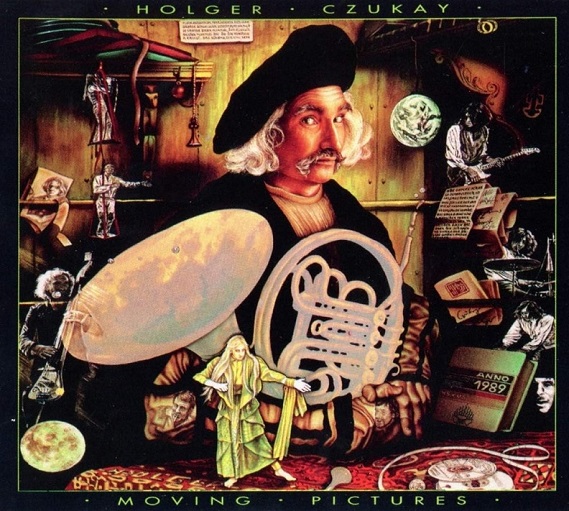
HOLGER CZUKAY
Links
Buy
Holger Czukay Vinyl - direct link @ ebay.co.uk
(Lenin is a participant in the eBay (EPN) affiliate program)
Holger Czukay Fascinating Facts
Anton Corbijn Fascinating Facts
Peter Gabriel Fascinating Facts
Jean-Michel Jarre Fascinating Facts
Sting & The Police Fascinating Facts
Dexys Midnight Runners Fascinating Facts
Roxy Music / Bryan Ferry Fascinating Facts
Elvis Presley Fascinating Facts
Scott Walker Fascinating Facts
Michael Brook Fascinating Facts
Penguin Cafe Orchestra Fascinating Facts
David Bowie Rarities (Shipped From UK)
Cocteau Twins Fascinating Facts
Ryuichi Sakamoto Fascinating Facts
Haruomi Hosono Fascinating Facts
Yukihiro Takahashi Fascinating Facts
Hector Zazou Fascinating Facts
Frank Auerbach Fascinating Facts
Holger Czukay
Artist
Holger Czukay
Content
All the fascinating facts
More
Bitesized
Year
1970s to Present Day
Random and bite-sized facts on all things on the mythical musician who was Holger Czukay. Totally random but totally fascinating if you're into it. Do you know Holger Czukay now?
--
HE RECORDED CHILDREN SAYING "HIT HIT FLOP FLOP"
For "Hit Hit Flop Flop", Holger Czukay went to a beach and asked children to say the title into a tape recorder. He eventually recorded the words around 200 times, then kept only a handful of takes that worked. He liked the mistakes and spontaneity that came from not telling the children exactly what to do.
--
ONE CHILD WHISPERED THE BEST PART BY ACCIDENT
Czukay deliberately recorded people without telling them exactly when they were being recorded. During "Hit Hit Flop Flop", one of the children can be heard whispering to another, "No, don't say it yet!" Czukay kept it because the accidental moment was exactly what he wanted.
--
HE DIDN'T WANT THE CHILDREN TO GET THE RHYTHM PERFECT
Czukay said that getting children of around ten years old to repeat the phrase in rhythm was surprisingly difficult. Rather than treating that as a problem, he used the imperfect performances as part of the recording.
--
"HIT HIT FLOP FLOP" WAS BUILT FROM ACCIDENTS
Czukay said accidents and unexpected moments were essential to his way of working. He didn't like starting with a fixed idea and forcing musicians to reproduce it. Instead, he collected sounds and performances and worked out what to do with them afterwards.
--
HE USED THE SAME IDEA WITH OTHER PEOPLE'S MISTAKES
Czukay liked recording people without telling them exactly what he was looking for. He believed this could capture something spontaneous that would disappear if the performer knew precisely what was expected.
--
"HIT HIT FLOP FLOP" CAME FROM "ROME REMAINS ROME"
"Hit Hit Flop Flop" appeared on Czukay's 1987 album "Rome Remains Rome". The album also included "Hey Baba Reebop", "Blessed Easter" and "Perfect World".
--
THE BEST PART OF "HIT HIT FLOP FLOP" WAS AN ACCIDENT
Holger Czukay secretly recorded the children he used on "Hit Hit Flop Flop". One of them whispered to another, "No, don't say it yet!" Czukay kept the mistake in the finished recording because he wanted exactly that kind of spontaneous, accidental moment.
--
"PERSIAN LOVE" USED A RADIO BROADCAST
Czukay's "Persian Love" combines his own music with sounds taken from shortwave radio, including a Persian-language vocal. The strange combination of radio voices, rhythm and melody became one of his best-known solo pieces.
--
"PERSIAN LOVE" WAS ON HIS FIRST SOLO ALBUM
"Persian Love" appeared on Czukay's 1979 album "Movies", his first major solo album after Can. The record showed how far he was prepared to take his experiments with radio, tape manipulation and found sounds.
--
JAH WOBBLE WAS OBSESSED WITH "PERSIAN LOVE"
Jah Wobble heard "Persian Love" and was so struck by the voices that he said he thought he would never try to sing again. He later became one of Czukay's collaborators.
--
HE WAS USING SAMPLING BEFORE SAMPLERS WERE COMMON
Czukay's early solo work relied on physically cutting and splicing tape to manipulate sounds. He was effectively sampling long before digital samplers made the process easy.
--
CAN
Links
Buy
Can Japanese Vinyl - direct link @ ebay.co.uk
(Lenin is a participant in the eBay (EPN) affiliate program)
--
SYLVIAN WENT TO COLOGNE TO SING — THEN EVERYTHING CHANGED
David Sylvian originally went to Holger Czukay's studio in Cologne to record a vocal for one of Czukay's tracks. Instead, he sat down at one of the instruments in the studio and began improvising. Czukay secretly switched on the tape machines. What they recorded became "Plight & Premonition".
--
CUZKAY RECORDED SYLVIAN WITHOUT TELLING HIM
Holger Czukay deliberately recorded David Sylvian while he was still finding his way around the instruments. Whenever Sylvian began to settle on an idea and refine it, Czukay would stop recording. He wanted the moment before the music became a finished performance.
--
THE STUDIO WAS AN ABANDONED CINEMA
The first Sylvian and Czukay sessions took place in Czukay's studio in Cologne, which was housed in an abandoned cinema. Instruments were scattered around the large space with no real separation between the playing area and the control room.
--
"PLIGHT" WAS ONLY TEN MINUTES LONG AT FIRST
The piece that became "Plight" originally lasted about ten minutes. Czukay later extensively re-edited it, turning the short improvisation into the much longer piece that appeared on the album.
--
SYLVIAN SAID "PLIGHT" WAS REALLY CZUKAY'S PIECE
David Sylvian later described "Plight" as essentially Holger Czukay's piece because of the extensive editing Czukay gave the original improvisation. Sylvian considered "Premonition" much closer to his own contribution.
--
THE FIRST ALBUM WASN'T PLANNED AT ALL
Sylvian said "Plight & Premonition" wasn't planned. The concept only emerged while they were recording. He later described the sessions as sounding as though the instruments had somehow been left in the room and were making music by themselves.
--
THE SECOND ALBUM WAS SUPPOSED TO BE DIFFERENT
When Sylvian returned to Cologne to make "Flux & Mutability", he went there deliberately to make an album. Unlike the first record, this time he had a specific ten-day period in which to create it.
--
"MUTABILITY" WAS FINISHED IN ONE DAY
"Mutability" came together remarkably quickly. Sylvian later recalled that it took a series of first takes, a couple of keyboard overdubs and four guitar overdubs — and was finished in a single day.
--
CAN REUNITED AROUND SYLVIAN AND CZUKAY
"Flux & Mutability" brought other members of Can into the sessions. Jaki Liebezeit played percussion and Michael Karoli played guitar, while Markus Stockhausen added flugelhorn.
--
THEY USED RADIO AND TRAINS AS PART OF THE MUSIC
The recordings included sounds that weren't conventional musical instruments. Czukay incorporated shortwave radio material, while outdoor sounds including passing trains became part of the atmosphere.
--
CAN
Links
Buy
Can Japanese Vinyl - direct link @ ebay.co.uk
(Lenin is a participant in the eBay (EPN) affiliate program)
--
CZUKAY WAS CAN'S SOUND ENGINEER AS WELL AS BASSIST
Holger Czukay wasn't just Can's bassist. He also handled much of the recording and editing, turning the band's long improvisations into finished tracks. He could be playing bass while simultaneously controlling the recording.
--
CAN RECORDED FOR HOURS AND THEN CZUKAY CUT IT DOWN
Can could improvise for hours without knowing what the finished piece would be. Czukay recorded the sessions and later edited sections of the improvisations together, effectively making the tape itself part of the composition.
--
CZUKAY STOLE TAPE FROM STOCKHAUSEN
While working as an assistant to Karlheinz Stockhausen, Czukay took discarded pieces of recording tape from the studio and reused them for Can. Tape was expensive, so he wasn't going to let perfectly good scraps go to waste.
--
THE BAND COULD RECORD WITH ALMOST NOTHING
When Can recorded at Schloss Nörvenich, the equipment was extremely basic. They sometimes recorded the entire band with only one or two microphones and two tape recorders, with Czukay handling the technical side as they played.
--
CZUKAY TURNED THE RADIO INTO AN INSTRUMENT
Czukay experimented with shortwave radio during Can's recordings, treating fragments of broadcasts as musical material. Radio voices and noises could be cut into the band's improvisations just like another instrument.
--
"SPOON" WAS CAN'S UNEXPECTED HIT
Can recorded "Spoon" because they had been commissioned to make music for a German television crime series. It became a Top 10 single in Germany — a remarkable result for a band better known for long improvisations.
--
"SPOON" USED A RHYTHM BOX THE WRONG WAY
Can's first use of a rhythm box came on "Peking O". Jaki Liebezeit played along with it, using the machine in a way it wasn't designed to be used. The result produced a strange rhythm that became part of Can's sound.
--
THE BAND'S FIRST STUDIO WAS A CASTLE
Can recorded their early music inside Schloss Nörvenich, a medieval castle near Cologne. They made use of the building's huge natural reverb, including the entrance hall and staircase.
--
THEIR NEXT STUDIO WAS AN OLD CINEMA
After leaving the castle, Can built their own studio, Inner Space, inside a former cinema. The huge room had ceilings around eight metres high, so they nailed about 1,500 mattresses to the walls and ceiling to control the acoustics.
--
THEY DIDN'T PLAY THEIR RECORDS LIVE
Irmin Schmidt later explained that Can didn't simply reproduce their studio recordings on stage. They would improvise around fragments of songs, sometimes with different members playing parts from completely different pieces at the same time.
--
CAN
Links
Buy
Can Japanese Vinyl - direct link @ ebay.co.uk
(Lenin is a participant in the eBay (EPN) affiliate program)
--
CZUKAY PLAYED BASS FOR BRIAN ENO
Holger Czukay wasn't just connected to Brian Eno through their experimental music. He actually played bass on "Cluster & Eno", Eno's 1977 collaboration with German duo Cluster. Czukay's bass can be heard specifically on "Ho Renomo".
--
HE PLAYED ON ENO'S NEXT CLUSTER ALBUM TOO
Czukay returned for "After The Heat" in 1978, another Brian Eno collaboration with Cluster. So the Can bassist ended up appearing on two consecutive Eno-and-Cluster albums.
CZUKAY AND BRIAN ENO PLAYED A THREE-HOUR IMPROVISATION
In 1998, Holger Czukay joined Brian Eno and J. Peter Schwalm for a huge improvised performance in Bonn. It was held at the opening of Eno's "Future Light-Lounge Proposal" exhibition, and the music went on for around three hours. Czukay brought his shortwave radio experiments into the mix. The recording was eventually released in 2024 as "Sushi. Roti. Reibekuchen."
CAN RECORDED IN AN OLD CINEMA
In 1971, Can moved their Inner Space studio into a huge old cinema in Weilerswist near Cologne. The seats were ripped out and the high ceilings gave them enormous amounts of space to record in. They used around 1,500 old army mattresses for soundproofing, turning the place into one of the strangest recording studios in rock.
--
CAN
Links
Buy
Can Japanese Vinyl - direct link @ ebay.co.uk
(Lenin is a participant in the eBay (EPN) affiliate program)
--
CZUKAY RECORDED CAN'S LONG JAMS WITH THE MACHINES STILL RUNNING
Holger Czukay often left the tape machines running while Can were playing. Years later, engineer René Tinner still had cupboards full of the old Revox tapes containing hours of these recordings. Some eventually became part of "The Lost Tapes" in 2012.
--
HE USED A TABLE TENNIS TABLE AS AN INSTRUMENT
Inside Can's old cinema studio, Czukay once put a microphone underneath a table tennis table and discovered an unusual sound. He called it one of the tricks he never told anyone about.
--
HIS HOME STUDIO WAS FULL OF OLD BROADCAST EQUIPMENT
Czukay built his home studio around equipment rescued from Cologne's old 1950s broadcasting studios. He even had a vintage broadcasting desk with its original microphone, clock, gong and mute switches.
--
HE ONCE WANTED TO BECOME CAN'S DJ
By the mid-1970s, Czukay was using shortwave radio, tapes and even a telephone during Can concerts. He said his ambition was to become "a disc jockey of Can" — not just playing recordings, but creating music from whatever came through the radio.
--
HE RECORDED CAN'S MUSIC WHILE PLAYING BASS
Czukay sometimes had to engineer Can's recordings while also playing bass. The studio was designed so the musicians, engineer and producer were all in the same space rather than separated behind glass.
--
HE USED AN OLD CRUMAR ORGAN AS A DRUM MACHINE
For his solo album "On The Way To The Peak Of Normal", Czukay used the rhythm from an old Crumar organ instead of a conventional drum machine. He then processed the rhythm through a Leslie speaker.
--
CAN'S STUDIO HAD NO SEPARATE CONTROL ROOM
At the old cinema studio, there was no normal division between the recording room and control room. Czukay deliberately wanted everyone involved in the recording to be in the same enormous space.
--
CAN
Links
Buy
Can Japanese Vinyl - direct link @ ebay.co.uk
(Lenin is a participant in the eBay (EPN) affiliate program)
--
CZUKAY THOUGHT A RADIO COULD BE A SINGER
When Can were struggling to find a new singer, Czukay had an odd solution. He started using shortwave radio instead. He described the radio as an unpredictable synthesiser and said, "The man inside the radio does not hear us, but we hear him."
--
HE ONCE PLAYED CAN WITH A FAKE MICHAEL KAROLI
When Can were due to appear on a London television show in the 1970s, guitarist Michael Karoli was stuck in Africa and couldn't get back in time. The band found another guitarist, dressed him up to look like Karoli and hoped the cameras wouldn't notice.
--
CANAXIS 5 WAS RECORDED IN ONE NIGHT
Czukay recorded his 1969 "Canaxis 5" album at the WDR studios in Cologne. He had a second key to the studio and, when Stockhausen had gone home, Czukay and David Johnson went in and switched everything on. Czukay said the main piece was completed in about four hours.
--
HE BOUGHT A 1950s DICTAPHONE FROM IBM
After Can split, Czukay bought an old IBM dictaphone from the 1950s. He discovered that he could use it as a musical instrument, because its strange recording quality gave sounds a character he couldn't get from modern equipment.
--
CZUKAY WANTED TO CALL PEOPLE ON THE TELEPHONE DURING CAN CONCERTS
Czukay's search for sounds from outside Can eventually included the telephone. He imagined calling people during performances and bringing their voices into the music, or even transmitting sounds somewhere and receiving them back again.
--
HE CALLED HIMSELF A "LIVING SEARCH ENGINE"
Years after Can, Czukay described his approach to making music with a wonderfully strange phrase: "I am a living search engine." He was still constantly looking for noises, voices and accidental sounds that could become music.
--
HE COULD HEAR THE STUDIO'S SILENCE
When Czukay was interviewed inside Can's old cinema studio, he said the silence there fascinated him. He said that when nobody was in the room, he could hear almost nothing — apart from the sound of blood in his own ears.
--
CAN
Links
Buy
Can Japanese Vinyl - direct link @ ebay.co.uk
(Lenin is a participant in the eBay (EPN) affiliate program)
--
HE MADE "CANAXIS 5" IN STOCKHAUSEN'S STUDIO WITHOUT PERMISSION
Holger Czukay used to study with avant-garde composer Karlheinz Stockhausen. In 1968, he and David Johnson used a spare key to get into the electronic music studio at West German Radio after Stockhausen had gone home. Czukay said they completed the main piece of "Canaxis 5" in about four hours.
--
HE FOUND A MUSICAL INSTRUMENT IN A $14 DICTAPHONE
Czukay bought a second-hand dictaphone for just $14. Rather than using it simply to record ideas, he discovered that its limited sound and recording quirks made it an instrument in its own right. He used it while making "Der Osten Ist Rot".
--
HE COULD BUILD A TRACK AROUND A SINGLE GUITAR RECORDING
When making his solo album "Movies", Czukay sometimes began with nothing more than a basic guitar recording. He would edit it into a pattern of rhythms and melodies, then build the rest of the track around it using tape, radio and studio equipment.
--
"PERSIAN LOVE" DOESN'T USE RADIO THE WAY YOU MIGHT EXPECT
For "Persian Love", Czukay used a voice picked up from shortwave radio, but the finished track was carefully assembled in the studio. The original broadcast was transformed through editing and layering until it became part of the music rather than simply a recording of a radio transmission.
--
HE THOUGHT TOO MUCH TECHNOLOGY COULD GET IN THE WAY
Czukay preferred making music with whatever happened to be available, rather than planning everything in advance. He believed that working with limitations and unexpected sounds could lead somewhere that a perfectly organised studio setup might not.
--
HE EDITED CAN'S LONG JAMS INTO DIFFERENT SONGS
Can often recorded long improvisations, but the released tracks were not necessarily what the band had played from beginning to end. Czukay painstakingly cut and edited the tapes, turning extended jams into distinct pieces. "Halleluhwah" and "Mother Sky" both exist in different edited versions.
--
CAN
Links
Buy
Can Japanese Vinyl - direct link @ ebay.co.uk
(Lenin is a participant in the eBay (EPN) affiliate program)
--
CZUKAY DISCOVERED THAT "DUM" WAS THE PERFECT SOUND
When Holger Czukay experimented with his cheap dictaphone, he tested which spoken syllable it could reproduce most effectively. The winner was "dum". He turned that discovery into a musical idea, using the machine to build rhythms from recorded speech, long before digital samplers became commonplace.
--
HE NEVER LEARNED TO PLAY THE FRENCH HORN PROPERLY
Czukay was given a French horn as a present when he visited a music shop. He had never played one before, but immediately took it into the studio. He later used it on recordings with Jah Wobble, including "Trench Warfare". He admitted that he never practised and could only play for about five minutes before his lips hurt.
--
HE SAID CAN'S MUSIC WAS LIKE A FOOTBALL MATCH
Czukay described Can's approach as "instant composition". He compared the band to a football team: everyone understood the goal, but nobody knew where the ball would go next. The music depended on listening and reacting rather than playing a finished arrangement.
--
HE COULD MAKE THOUSANDS OF EDITS TO ONE PIECE
Can's recordings were painstakingly edited with razor blades and tape. Czukay said that while Can's music could contain hundreds of tape splices, some of his solo work involved thousands. Every cut had to help create a new piece of music from the original recordings.
--
HE THOUGHT MULTITRACK RECORDING CHANGED CAN FOR THE WORSE
In Can's early days, the band recorded directly onto two-track tape, playing together and balancing their own sound. Czukay later felt that multitrack recording encouraged musicians to concentrate on their individual parts and correct mistakes, rather than listening and reacting as a group. He believed the change contributed to the band's problems.
--
HE RECORDED DRUMS AT DIFFERENT TAPE SPEEDS
Czukay sometimes recorded Jaki Liebezeit's drums at different tape speeds, making them sound lighter and changing their feel. Liebezeit could adapt to the shifting tempo and sound, so the resulting rhythm had a movement that would have been difficult to achieve by simply playing it straight.
--
CAN
Links
Buy
Can Japanese Vinyl - direct link @ ebay.co.uk
(Lenin is a participant in the eBay (EPN) affiliate program)
--
Search Keywords
Holger Czukay
Can
Krautrock
HOLGER CZUKAY
Links
Buy
Holger Czukay Vinyl - direct link @ ebay.co.uk
(Lenin is a participant in the eBay (EPN) affiliate program)
Holger Czukay Fascinating Facts
Anton Corbijn Fascinating Facts
Peter Gabriel Fascinating Facts
Jean-Michel Jarre Fascinating Facts
Sting & The Police Fascinating Facts
Dexys Midnight Runners Fascinating Facts
Roxy Music / Bryan Ferry Fascinating Facts
Elvis Presley Fascinating Facts
Scott Walker Fascinating Facts
Michael Brook Fascinating Facts
Penguin Cafe Orchestra Fascinating Facts
David Bowie Rarities (Shipped From UK)
Cocteau Twins Fascinating Facts
Roxy Music / Bryan Ferry Fascinating Facts
Ryuichi Sakamoto Fascinating Facts
Haruomi Hosono Fascinating Facts
Yukihiro Takahashi Fascinating Facts
Hector Zazou Fascinating Facts
Frank Auerbach Fascinating Facts