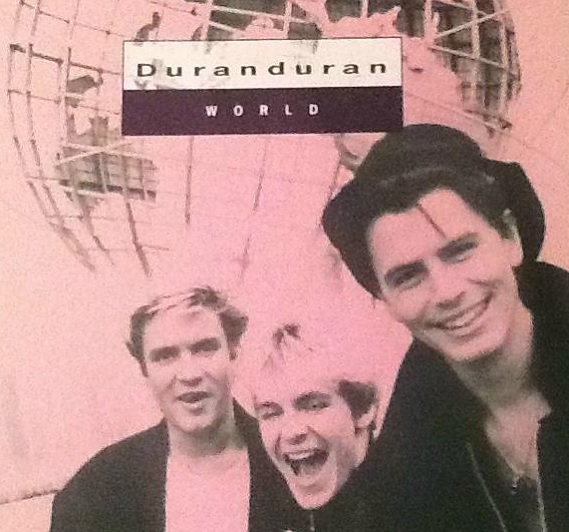
DURAN DURAN
Links
Buy
Duran Duran Vinyl - direct link @ ebay.co.uk
(Lenin is a participant in the eBay (EPN) affiliate program)
Adam and the Ants Fascinating Facts
Associates Fascinating FactsHuman League Fascinating Facts
Porcupine Tree Fascinating Facts
Danny Thompson Fascinating Facts
Marc Bolan and T. Rex Fascinating Facts
Jean-Michel Jarre Fascinating Facts
Siouxsie and the Banshees Fascinating Facts
Peter Gabriel Fascinating Facts
Holger Czukay Fascinating Facts
Anton Corbijn Fascinating Facts
Sting & The Police Fascinating Facts
Dexys Midnight Runners Fascinating Facts
Roxy Music / Bryan Ferry Fascinating Facts
Elvis Presley Fascinating Facts
Scott Walker Fascinating Facts
Michael Brook Fascinating Facts
Penguin Cafe Orchestra Fascinating Facts
David Bowie Rarities (Shipped From UK)
Cocteau Twins Fascinating Facts
Ryuichi Sakamoto Fascinating Facts
Haruomi Hosono Fascinating Facts
Yukihiro Takahashi Fascinating Facts
Hector Zazou Fascinating Facts
Frank Auerbach Fascinating Facts
Duran Duran
Artist
Duran Duran
Content
All the fascinating facts
More
Bitesized
Year
1980s to Present Day
Random and bite-sized facts on all things on the mythical New Romantics that are Duran Duran. Totally random but totally fascinating if you're into it. Do you know Duran Duran now?
--
A different mix for the seven-inch
When Duran Duran released “I Don’t Want Your Love” in September 1988, the UK seven-inch single featured a 3:47 Shep Pettibone mix, rather than the 4:06 album version on Big Thing. The reverse side carried the full album version, making the single a small but worthwhile variation for collectors. Pettibone, already established as a New York dance-music remixer, helped give the single a tighter edit for radio, while the longer club-oriented “Big Mix” appeared on the 12-inch release.
--
HUNGRY LIKE THE WOLF WAS WRITTEN VERY QUICKLY
“Hungry Like the Wolf” came together remarkably quickly. John Taylor recalled that the band were working in EMI’s demo studio in London on a Saturday afternoon. Andy Taylor had the guitar riff, Nick Rhodes developed the keyboard sequence, Simon Le Bon had an idea for the vocal, and Roger Taylor had recently bought Simmons electronic drums. John said the song was essentially written within a couple of hours.
--
HUNGRY LIKE THE WOLF HAD TO BE RELEASED THREE TIMES IN AMERICA
The song didn't immediately become the huge American hit it eventually became. John Taylor said “Hungry Like the Wolf” was sent to American radio three separate times. The band and Capitol simply refused to give up on it, with the video eventually helping transform Duran Duran from a club band into a major pop act in the US.
--
MY OWN WAY WAS COMPLETELY REWORKED FOR RIO
The version of “My Own Way” that first appeared as a single wasn't the version that ended up on Rio. Duran Duran recorded a new version for the album, changing the arrangement and giving the song a different feel. The original single version was later restored on the Rio deluxe edition.
--
MY OWN WAY WAS NEVER RELEASED AS A US SINGLE
“My Own Way” reached number 14 in Britain and was also successful in several other countries, but it was never released as a US single. At the time Duran Duran still hadn't broken America, and by the time that happened with “Hungry Like the Wolf”, the band had already moved on to the new version of “My Own Way” for Rio.
--
THE REFLEX WAS WRITTEN ON JOHN TAYLOR'S BIRTHDAY
John Taylor said “The Reflex” was written on his birthday, June 20, 1983, while Duran Duran were recording in Montserrat. The band eventually felt the song hadn't reached its full potential, so they asked Nile Rodgers to work on it. Rodgers radically reshaped the track and helped turn it into one of their biggest singles.
--
WILD BOYS WAS ORIGINALLY MEANT FOR A FILM
“The Wild Boys” wasn't originally conceived simply as a Duran Duran single. Director Russell Mulcahy had obtained the rights to William S. Burroughs' book The Wild Boys and planned to make a film from it. Duran Duran agreed to write the theme song. When the film project collapsed, the elaborate ideas developed for it were turned into the extraordinary music video instead.
--
THE WILD BOYS VIDEO COST AROUND A MILLION DOLLARS
The “Wild Boys” video was filmed at Shepperton Studios over ten days on a huge purpose-built set. Russell Mulcahy later recalled that the production cost around $1 million, an enormous amount of money for a music video in 1984. The band felt they needed something extravagant and experimental at that point in their career.
--
THE REFLEX WAS TRANSFORMED BY NILE RODGERS
Duran Duran's original recording of “The Reflex” wasn't considered good enough to release in its existing form. Nile Rodgers was brought in and, according to John Taylor, effectively turned the song inside out. Rodgers' version became the hit single and helped give the band their biggest UK and US success up to that point.
--
JOHN TAYLOR WANTED RIO TO OPEN THEIR SHOWS
John Taylor had been working on the groove that became “Rio” with drummer Roger Taylor because he was obsessed with writing songs that could open Duran Duran's live shows. They played the idea repeatedly at soundchecks and rehearsals before eventually getting the feel they wanted. John later described the bassline as a very young man's bassline because of how much he played.
--
THE BAND ORIGINALLY SAW THEMSELVES AS AN ALTERNATIVE CLUB BAND
Before the fame, Duran Duran didn't see themselves as a straightforward pop group. Simon Le Bon later said that when the band's debut became a huge success, they were uncomfortable with being portrayed as teen pop stars because they had originally thought of themselves as an alternative club band.
--
DURAN DURAN
Links
Buy
Duran Duran Japanese Vinyl - direct link @ ebay.co.uk
(Lenin is a participant in the eBay (EPN) affiliate program)
--
SIMON LE BON GOT THE DURAN DURAN JOB WITH A BOOK OF LYRICS
When Simon Le Bon auditioned for Duran Duran in 1980, the band already had plenty of musical ideas but lacked a lyricist. Simon arrived with a large book full of lyrics that he described as slightly punky and slightly science-fiction inspired. He'd been training as an actor in Birmingham, and an ex-girlfriend had told him the band were looking for a singer. He was the final piece of the original five-member lineup.
--
RIO WAS WRITTEN ON THE BACK OF A NAPKIN
Simon has recalled writing the lyrics to “Rio” while sitting in a bar in Birmingham. He was watching one of the waitresses, captivated by the way she moved and charmed the people around her. He wrote his observations on the back of a napkin. The song's Rio wasn't simply a description of the Brazilian city: Simon was imagining a woman who embodied that sense of glamour and excitement.
--
SIMON LE BON ADMITS HE CAN'T EXPLAIN THE REFLEX
Simon has joked that he can explain where the lyrics to “Rio” came from, but don't ask him to explain “The Reflex”. The song became Duran Duran's first US number one, yet its cryptic words remain deliberately difficult to pin down. It's a reminder that Le Bon's lyrics often work through sound, rhythm and striking images rather than a straightforward narrative.
--
HE WAS TRAINING TO BE AN ACTOR BEFORE JOINING THE BAND
Before Duran Duran, Simon was in Birmingham studying theatre and training as an actor. That background gave him a different starting point from the other members, who had formed the band and developed its sound before he arrived. Simon brought not just a voice but a book of lyrics full of unusual images and ideas.
--
SIMON LEARNED HIS HARMONIES FROM A CHOIRMASTER
Le Bon has credited his old school choirmaster, Mr Tierney, with teaching him about harmony. When he met the choirmaster again years later, Simon reflected that people often noticed the harmonies in Duran Duran's music, but the foundations had come from those early choir lessons. He even said he'd like to sing in a choir again.
--
THE DURAN DURAN HEADBANDS STARTED WITH SWEATY TOWELS
The band's famous early-80s headbands weren't the result of a carefully planned fashion decision. Simon recalled that the dressing room at Sheffield City Hall was unbearably hot. Roger Taylor wrapped a towel around his head to soak up the sweat, John followed, and the band went on stage looking like that. The towels eventually became headbands, appearing in photos and on the covers of teen magazines.
--
SIMON AND NICK RHODES HAVE OFTEN CLASHED OVER LYRICS
Simon has spoken openly about creative disagreements with keyboardist Nick Rhodes. Because Simon writes the lyrics, Nick feels they represent the whole band and wants a say in what they communicate. Simon has admitted that this can be frustrating, but also recognises that Nick's perspective helps the group avoid losing touch with part of its audience.
--
SIMON DIDN'T INITIALLY THINK OF THE BAND AS HIS FRIENDS
Looking back on Duran Duran's early years, Simon admitted that the members were once much more competitive. He described the relationship as each man being in the other's band, rather than a group of close friends. It was only as they grew more confident and spent more time together that they began to appreciate one another personally, as well as musically.
--
HE SAYS SHARING THE MONEY HELPED KEEP DURAN DURAN TOGETHER
Asked how Duran Duran managed to survive for so long, Simon gave a less glamorous answer than most rock-star stories: they split the money equally. He pointed out that resentment can grow in bands when one member earns more than another despite everyone feeling they're doing an equal job. For him, sharing the money fairly has been one of the foundations of the band's longevity.
--
SIMON LE BON ONCE GOT BANNED FROM THE PUBS IN PINNER
Simon grew up in Pinner, northwest London, and recalled that his New Romantic look attracted some hostility there. While he said the band generally didn't receive much grief for their make-up and clothes, he remembered being banned from the local pubs. It makes a nice contrast with the band's carefully styled image, which would soon become part of their international appeal.
--
HIS DAUGHTER TOLD HIM HE DIDN'T LIKE MUSIC ANY MORE
During lockdown, Simon's daughter challenged him by saying that he called himself a musician but didn't even seem to like music any more. He took the criticism seriously and started exploring contemporary artists through places such as Bandcamp, Spotify and BBC Radio 6 Music. That experience led to his radio show, WHOOOSH!, and gave him a new reason to discover music beyond his own generation.
--
DURAN DURAN
Links
Buy
Duran Duran Japanese Vinyl - direct link @ ebay.co.uk
(Lenin is a participant in the eBay (EPN) affiliate program)
--
NICK RHODES BOUGHT HIS FIRST KEYBOARD FROM A CATALOGUE
Nick's first keyboard was a Stylophone, bought through his aunt's catalogue and paid for in weekly instalments. He still had it decades later, and it still worked. It was a humble beginning for someone who would go on to help define the sound of early-80s synth-pop.
--
HE SPENT SIX MONTHS SAVING FOR A SYNTHESIZER
In the 1970s, synthesizers were expensive instruments for a teenager. Nick recalled saving for six months to buy a Wasp synthesizer, which cost him £300. He later acquired more sophisticated instruments such as the Prophet-5 and Roland Jupiter-8, but the Wasp was one of the machines that helped him begin building his own electronic sound.
--
THE JUPITER-8 ON RIO WAS STILL HIS DECADES LATER
Nick Rhodes kept the same Roland Jupiter-8 synthesizer he used on Duran Duran's Rio album. In an interview published on the band's official website in 2000, he confirmed that it was still part of his equipment. It's a remarkable connection to the original recordings, given how much synthesizer technology changed after the early 1980s.
--
THE INTRO TO RIO CAME FROM A ROLAND JUPITER-4
The distinctive, juddering synthesizer intro to “Rio” was created using a Roland Jupiter-4. Nick Rhodes discussed the instrument in an interview with Roland, explaining how its sound helped shape one of Duran Duran's most recognisable recordings. The song's opening is a good example of how a relatively simple electronic part can become the identity of an entire track.
--
TV MANIA BEGAN WITH PEOPLE TALKING ABOUT FASHION
In 1996, while Duran Duran were working on Medazzaland, Nick and guitarist Warren Cuccurullo found themselves watching a daily television programme called Planet Fashion. Nick noticed that people being interviewed seemed to be speaking in ready-made song titles. They began recording snippets of dialogue, changing their pitches and turning them into music. The project eventually became TV Mania's Bored of Prozac and the Internet, released in 2013.
--
THE RECORD COMPANY THOUGHT TV MANIA WAS COMPLETELY MAD
Nick and Warren took their TV Mania project to Duran Duran's record label, expecting it to be heard as an experimental piece in its own right. Instead, the label was waiting for the next polished Duran Duran album. Nick later recalled that the label thought they had gone completely crazy. The project was shelved, and the tapes remained unheard for years.
--
THEY THOUGHT THEY HAD LOST THE TV MANIA TAPES
When Nick eventually rediscovered TV Mania, he was looking through Duran Duran's stored tapes for material from the Medazzaland period. He found a tape labelled “Medazzaland Outtakes”, but inside was the master for the long-forgotten TV Mania album. The original multitrack masters had been lost, so the discovery was especially significant: the album could be released, but there was no possibility of returning to the original multitracks for remixes.
--
HE WANTED DURAN DURAN TO SOUND LIKE KRAFTWERK AND BOWIE
When asked to describe Duran Duran's early sound, Nick placed it somewhere between Kraftwerk and David Bowie, with the energy of punk bands such as The Clash added to the mix. He also cited Roxy Music, Cockney Rebel and disco as important influences. That combination helps explain how the band brought electronic textures, guitars and dance rhythms together without sounding like a conventional synth-pop group.
--
CHIC CHANGED THE WAY JOHN TAYLOR THOUGHT ABOUT THE BASS
Nick has recalled how hearing Chic on Radio Luxembourg made a huge impression on him. All five members of Duran Duran loved the band, and Chic's groove was particularly influential on John Taylor, who moved from guitar to bass. It's a useful reminder that Duran Duran's sound came as much from disco and rhythm as it did from synthesizers and New Romantic style.
--
NICK RHODES PREFERS THE CHARACTER OF ANALOGUE SYNTHS
Nick has continued to favour analogue synthesizers because he likes their warmth and individual character. When Duran Duran made All You Need Is Now, he returned to instruments associated with the band's earlier records, including the Prophet-5, Roland Jupiter-8 and Memorymoog. For Nick, these weren't simply vintage props: they were instruments with sounds he still wanted to use.
--
NICK RHODES AND WARREN CUCCURULLO MADE MUSIC FROM TV CUT-UPS
TV Mania was built by cutting up spoken television dialogue and combining it with samples, old rhythm machines, analogue synthesizers and harsh digital sounds. Nick compared the process to the cut-up techniques associated with writer William S. Burroughs. The result was less like a conventional collection of songs and more like an electronic collage built around an imagined dysfunctional family.
--
DURAN DURAN
Links
Buy
Duran Duran Japanese Vinyl - direct link @ ebay.co.uk
(Lenin is a participant in the eBay (EPN) affiliate program)
--
JOHN TAYLOR WANTED TO BE THE MOST NOTICEABLE BASS PLAYER IN THE WORLD
John Taylor has admitted that he was trying to make himself stand out on Duran Duran's first two albums. In a later interview, he joked that those records were like five solo albums put together, with him wanting to be the most noticed bass player and Nick Rhodes wanting to be the most noticed keyboard player. The busy, melodic basslines were no accident.
--
CHIC'S BERNARD EDWARDS MADE JOHN WANT TO PLAY BASS
John has named Bernard Edwards of Chic as the musician who first made him want to play bass. He was also listening to George Murray, David Bowie's bassist, as well as James Jamerson and Paul McCartney. Those influences help explain why his playing drew as much from funk and disco as it did from punk and new wave.
--
JOHN HAD PLAYED THE RIO BASSLINE FOR EIGHT MONTHS BEFORE RECORDING IT
John revealed that he had been playing the bassline to “Rio” for around eight months before the band recorded it. He'd worked it out with drummer Roger Taylor during rehearsals and soundchecks, gradually refining the groove. That long period of playing it live helped make the part sound so confident and spontaneous on the finished record.
--
HE THOUGHT THE RIO BASSLINE WAS A YOUNG MAN'S GAME
Looking back at “Rio”, John described its bassline as a young man's creation. As he got older, he found himself playing more economically, realising he could sometimes achieve the same effect with fewer notes. The original part, though, captures the energy and confidence of Duran Duran at their early-80s peak.
--
HUNGRY LIKE THE WOLF WAS WRITTEN IN A SINGLE AFTERNOON
John recalled that “Hungry Like the Wolf” came together during a Saturday afternoon session in EMI's demo studio at its London headquarters. Andy Taylor had the guitar riff, Nick Rhodes developed the keyboard sequence, Simon Le Bon had a vocal idea and Roger Taylor used his new Simmons electronic drums. John joined in and immediately knew what to play. By the end of the afternoon, the song was practically finished.
--
HUNGRY LIKE THE WOLF WAS SENT TO AMERICAN RADIO THREE TIMES
John has explained that “Hungry Like the Wolf” didn't become a hit in America straight away. The single was sent to US radio three separate times, with the band's British label pushing its American subsidiary to keep trying. The video eventually helped the song break through, turning Duran Duran from a successful British band into a major American act.
--
JOHN HELPED CREATE THE GROOVE THAT BECAME THE REFLEX ON HIS BIRTHDAY
John recalled that the groove behind “The Reflex” emerged while Duran Duran were recording in Montserrat in June 1983, around his birthday on 20 June. The band had been struggling to find their feet on the third album, but the sessions in the Caribbean finally produced the groove they needed. Nile Rodgers later transformed the recording into the hit single.
--
HE SWITCHED FROM GUITAR TO BASS BECAUSE OF DISCO
John started out wanting to be a guitar player in a punk band. Discovering disco changed his ambitions: he wanted to be in a funk band instead, even though he knew he wasn't going to play exactly like Chic's Bernard Edwards. “Planet Earth” became an early expression of that ambition, combining punk energy with a more danceable rhythm.
--
JOHN TAYLOR DIDN'T ALWAYS LIKE BEING THE ONE AT THE BACK
John has admitted that switching to bass meant accepting that he would stand at the back of the stage rather than at the front with a guitar. He eventually came to enjoy the role, and Duran Duran helped make the bass player a more glamorous figure in pop. John even joked that teen pin-ups could be good bass players, pointing to Sting and Spandau Ballet's Martin Kemp.
--
JOHN THINKS THE BEST BASS PLAYERS ARE FELT RATHER THAN HEARD
Despite his own famously prominent basslines, John has said he doesn't generally like the bass being treated as a lead instrument. He believes the best bass players are the ones you feel rather than hear. It's an interesting contrast with the busy, melodic parts that made him famous, and reflects how his approach has evolved over the years.
--
JOHN'S BASSLINE ON SOME LIKE IT HOT WAS ONE OF HIS FAVOURITES
John has singled out “Some Like It Hot”, the 1985 hit by The Power Station, as one of the best basslines he has played. He liked having time to live with the part before recording it, much as he had with “Rio”. The Power Station gave him a chance to explore a tougher, more direct rock sound alongside drummer Tony Thompson and singer Robert Palmer.
--
DURAN DURAN
Links
Buy
Duran Duran Japanese Vinyl - direct link @ ebay.co.uk
(Lenin is a participant in the eBay (EPN) affiliate program)
--
ARCADIA WAS A REACTION TO DURAN DURAN SPLITTING IN TWO
When John and Andy Taylor began working on The Power Station with Robert Palmer and Chic drummer Tony Thompson, Simon Le Bon and Nick Rhodes found themselves wondering what was happening to Duran Duran. Simon later described Arcadia as a reaction to the uncertainty surrounding the band. Nick and Simon began working together and then invited Roger Taylor to join them.
--
ARCADIA WANTED TO SOUND NOTHING LIKE THE POWER STATION
The two Duran Duran offshoots deliberately went in very different directions. The Power Station was built around rock, funk and a much heavier sound, while Nick Rhodes wanted Arcadia to be more textured and esoteric. Simon described the finished music as looser, darker and more atmospheric than Duran Duran, with jazz and Spanish influences.
--
THE NAME ARCADIA WAS CHOSEN FOR ITS MYSTERY
Nick Rhodes said they wanted a name that didn't suggest a particular musical style. They liked the word Arcadia because it seemed to belong to another time, somewhere in the mists of the past. He also liked the way it looked graphically, with an A at both ends. The name came from the Latin phrase “et in Arcadia ego”.
--
ARCADIA'S MUSICIANS CAME FROM VERY DIFFERENT WORLDS
Nick and Simon deliberately used Arcadia as a chance to work with musicians outside their normal circle. The core players included Japanese guitarist Masami Tsuchiya, jazz bassist Mark Egan and experimental percussionist David Van Tieghem. Tsuchiya had worked with Japan and Ryuichi Sakamoto, while Van Tieghem had worked with Brian Eno and Laurie Anderson.
--
DAVID GILMOUR AND STING WERE ONLY TWO OF THE GUESTS
So Red The Rose brought together an unusually extravagant collection of guest musicians. David Gilmour played guitar, Grace Jones appeared on “Election Day”, Herbie Hancock contributed keyboards, Sting sang backing vocals on “The Promise” and Carlos Alomar also played on the album. Andy Mackay of Roxy Music was another contributor.
--
“MISSING” WAS THE ONLY SONG THAT ALREADY EXISTED
Most of So Red The Rose was created from scratch. The exception was “Missing”, which came from a lyric Simon Le Bon had written years earlier. Nick had discovered it in Simon's notebook, the same notebook that had produced “The Chauffeur” for Rio. Nick described “Missing” as a ghost story and particularly liked its surreal, abstract quality.
--
THE ALBUM WAS ORIGINALLY MUCH LONGER
Nick Rhodes initially wanted So Red The Rose to feel more like a continuous experience than a collection of short pop songs. During the mixing process, he said that virtually every song had at one point been around eight or nine minutes long. Vinyl running time eventually forced them to cut some of the longer versions.
--
“ROSE ARCANA” WAS CUT DOWN BECAUSE OF VINYL SPACE
Nick particularly wanted the full-length version of the instrumental “Rose Arcana” on the album, but there wasn't enough room. Another instrumental, temporarily titled “The Queen Mother”, was also recorded but remained unreleased at the time simply because of the space available on the record.
--
ARCADIA WAS AN EXTREMELY EXPENSIVE EXPERIMENT
So Red The Rose became one of the most extravagant side projects of the 1980s. Nick Rhodes later said the album cost around £1 million to make. He and Simon had artistic control and were able to spend the money earned from Duran Duran's enormous success on making something much less commercial.
--
“ELECTION DAY” WASN'T REALLY REPRESENTATIVE OF THE ALBUM
“Election Day” was chosen as the first single and became a major hit, reaching number seven in the UK. But Simon Le Bon said the song was actually atypical of So Red The Rose. Much of the album was slower, darker and more atmospheric than the danceable rock of “Election Day”.
--
ROGER TAYLOR WAS THE LINK BETWEEN THE TWO SPLINTER GROUPS
Roger Taylor was the only member of Duran Duran to have a role in both Arcadia and The Power Station. His involvement with The Power Station was limited, while he was much more closely associated with Arcadia alongside Simon Le Bon and Nick Rhodes.
--
DURAN DURAN
Links
Buy
Duran Duran Japanese Vinyl - direct link @ ebay.co.uk
(Lenin is a participant in the eBay (EPN) affiliate program)
--
RIO WAS BUILT AROUND A BASSLINE JOHN TAYLOR HAD BEEN PLAYING FOR MONTHS
John Taylor had been working on the bassline for “Rio” for around eight months before the song was recorded. He and Roger Taylor played the groove repeatedly at rehearsals and soundchecks until the arrangement finally came together. John later described it as a “young man's bassline” because of how much he was playing.
--
NICK RHODES MADE THE STRANGE SOUND AT THE START OF “RIO”
The mysterious noise that opens “Rio” wasn't a synthesizer. Nick Rhodes dropped several small metal rods onto the strings of a grand piano at AIR Studios. The recording was then reversed, creating the strange rising sound that opens the track.
--
THE BAND RECORDED RIO AT THE SAME TIME AS PAUL MCCARTNEY
Duran Duran recorded Rio at AIR Studios in London with producer Colin Thurston. Paul McCartney was working in another studio in the same building with George Martin. Nick Rhodes recalled that McCartney and Linda would regularly appear at the band's studio door around seven in the evening to wish them good luck.
--
JAPAN WERE ALSO RECORDING AT AIR STUDIOS
There was another interesting connection at AIR Studios while Rio was being made: Japan were recording an album there at the same time. Duran Duran had already acknowledged Japan as an influence, particularly in the atmospheric and sophisticated side of their sound.
--
THE RIO ALBUM WAS RECORDED VERY QUICKLY
Duran Duran have said the recording process for Rio took less than two months. Much of the writing had already happened while they were rehearsing and touring, and the band were working under a deadline because they needed to finish the album before travelling to Sri Lanka to film their videos.
--
THE BAND HAD TWO STUDIOS RUNNING AT ONCE
Towards the end of the Rio sessions, Duran Duran were using two studios simultaneously so they could finish the album in time for the planned video filming in Sri Lanka. The band later remembered the sessions as remarkably efficient despite the amount of material being completed.
--
“MY OWN WAY” WAS RECORDED AGAIN FOR RIO
“My Own Way” had already been released as a single, but Duran Duran decided to record a new version for Rio. The album version was therefore not simply the single version placed onto the LP.
--
RIO WASN'T ORIGINALLY THE AMERICAN VERSION OF THE ALBUM
The original Rio album released in May 1982 contained nine tracks in their original mixes. Six months later, the North American edition replaced several of those mixes with new remixes by David Kershenbaum. This meant that listeners in Britain and North America could initially hear noticeably different versions of the same album.
--
THE BAND HAD ALREADY DEMOED “RIO” BEFORE RECORDING THE ALBUM
In August 1981, several months before the album sessions, Duran Duran recorded demos that included an early version of “Rio”. These recordings show that the song was already taking shape well before the final version was recorded at AIR Studios.
--
JOHN TAYLOR WAS THINKING ABOUT CHIC WHEN HE PLAYED “RIO”
John Taylor was heavily influenced by disco and funk bass players rather than simply following the punk and new-wave approach common among bassists of the period. He particularly admired Bernard Edwards of Chic and deliberately tried to bring some of Edwards' influence into his playing on “Rio”.
--
DURAN DURAN
Links
Buy
Duran Duran Japanese Vinyl - direct link @ ebay.co.uk
(Lenin is a participant in the eBay (EPN) affiliate program)
--
SEVEN AND THE RAGGED TIGER STARTED IN THE SOUTH OF FRANCE
Duran Duran didn't begin the album at AIR Studios in Montserrat. They first went to the south of France, where a RAK mobile recording studio was parked outside a chateau. Nick Rhodes later said the band recorded three or four songs there, but most of what they did was eventually scrapped. Some of the unfinished material was rediscovered years later.
--
THE BAND THOUGHT MONTSERRAT WOULD HELP THEM CONCENTRATE
After the difficult sessions in France, Duran Duran moved to George Martin's AIR Studios on the Caribbean island of Montserrat. The isolation was partly intended to get the band away from the distractions and publicity surrounding them and allow them to concentrate on making the album.
--
THE STUDIO TURNED OUT TO BE A BAD PLACE TO WRITE SONGS
Roger Taylor later admitted that the band spent a lot of time writing and developing songs after arriving in Montserrat because they had relatively little finished material. His conclusion was that they had learned an important lesson: the studio wasn't necessarily a good place for Duran Duran to write songs.
--
THE TITLE TRACK WAS NEVER ACTUALLY RELEASED
“Seven and the Ragged Tiger” was originally the title of a song as well as the album. Nick Rhodes later confirmed that a rough demo of the song existed, but the idea eventually evolved into “The Seventh Stranger”. A bootleg claiming to be the original song has circulated, but Rhodes said the band believed that version was fake.
--
“THE SEVENTH STRANGER” CAME FROM THE ABANDONED TITLE TRACK
The connection between the album title and “The Seventh Stranger” is therefore more direct than it might appear. What began as a song called “Seven and the Ragged Tiger” was reworked into the track that eventually closed the album.
--
“THE REFLEX” WAS RECORDED IN MONTSERRAT
“The Reflex” was one of the tracks developed during the Montserrat sessions. Duran Duran recorded it there before returning to the UK and Australia. Nile Rodgers later radically reshaped the track for its single release, turning it into the version that became one of the band's biggest hits.
--
THE BAND HAD TECHNICAL PROBLEMS IN MONTSERRAT
The sessions at AIR Studios weren't as idyllic as the photographs might suggest. The recording equipment caused problems, including tape machines running at incorrect speeds. The production team became frustrated with the local engineers while trying to get the technical problems sorted out.
--
THE FINAL MIXES WERE DONE IN AUSTRALIA
After the Montserrat sessions, Duran Duran travelled to Sydney to finish the album at 301 Studios. Producer Alex Sadkin worked with the band on the final recording and mixing there, completing the album in Australia.
--
THEY WROTE “SECRET OKTOBER” IN JUST 24 HOURS
While working in Sydney on “Union of the Snake”, Simon Le Bon and Nick Rhodes left themselves only 24 hours to write, record and mix “Secret Oktober”, which became the B-side of the single. The track was therefore created almost as a last-minute piece rather than as part of the main album sessions.
--
THEY FLEW A REAL BENGAL TIGER TO AUSTRALIA
For the cover photography for Seven and the Ragged Tiger, the band arranged for a Bengal tiger to be flown to Australia. The photograph was taken by Rebecca Blake, with the tiger becoming one of the most memorable elements of the album's visual identity.
--
DURAN DURAN
Links
Buy
Duran Duran Japanese Vinyl - direct link @ ebay.co.uk
(Lenin is a participant in the eBay (EPN) affiliate program)
--
“TEL AVIV” WAS THE FIRST SONG RECORDED BY THE CLASSIC LINE-UP
“Tel Aviv” was the first Duran Duran recording made by Simon Le Bon, Nick Rhodes, John Taylor, Roger Taylor and Andy Taylor together. It was recorded at AIR Studios on Oxford Street in London in 1980, along with an early version of “Girls on Film”. Neither recording was released at the time because the band did not yet have a record label.
--
THE ORIGINAL “TEL AVIV” HAD LYRICS
The version of “Tel Aviv” eventually released on Duran Duran's first album was almost completely different from the 1980 recording. Nick Rhodes said the original had lyrics and that virtually nothing from it survived apart from the title. The album version was built up piece by piece, with Rhodes using a Prophet V and Andy Taylor a Roland guitar synthesizer.
--
THE BAND'S FIRST JOBS WERE AT THE RUM RUNNER
When Duran Duran began working with the Berrow brothers at Birmingham's Rum Runner nightclub, the band were given jobs there so they could avoid taking ordinary day jobs. John Taylor worked on the door, Nick Rhodes became the DJ and Roger Taylor worked as a busboy while they rehearsed and developed the band.
--
THE FIRST SONG THEY WROTE TOGETHER WAS “SOUND OF THUNDER”
The classic five-piece wrote “Sound of Thunder” at the Rum Runner after Simon Le Bon had joined. It was the first song written by the complete line-up of Simon, Nick, John, Roger and Andy.
--
“THE CHAUFFEUR” WAS ALREADY IN SIMON'S NOTEBOOK
When Simon Le Bon auditioned for Duran Duran in 1980, he arrived carrying a book of lyrics from his previous band, ROV OSTROV. Among them was the lyric that eventually became “The Chauffeur”, which later appeared on Rio.
--
“PLANET EARTH” STARTED WITH NICK RHODES'S FIRST KEYBOARD
Nick Rhodes's first keyboard was a Stylophone, bought through his aunt's mail-order catalogue. The purchase helped lead to the electronic approach that became central to Duran Duran's sound, including the beginnings of “Planet Earth”.
--
“UNION OF THE SNAKE” NOT REACHING NUMBER ONE UPSET THE BAND
Duran Duran had become accustomed to enormous chart success by 1983, so they were genuinely disappointed when “Union of the Snake” failed to enter the UK chart at number one. The song debuted at number three instead, which the band later recalled as a surprisingly depressing moment given how successful they already were.
--
THEY ALMOST HAD CONCORDE ON “ORDINARY WORLD”
“Ordinary World” was recorded in Warren Cuccurullo's home studio in Battersea, London. Concorde flew over the area several times a day while the band were working there, and the group said faint sounds of the aircraft ended up on some of the individual recording tracks. They were not audible on the finished record.
--
ARCADIA TOOK LONGER TO MAKE THAN MOST DURAN DURAN RECORDS
Nick Rhodes said the Arcadia album took the longest time per song that Duran Duran had spent in the studio up to that point. It also took unusually long to mix. Rhodes contrasted it with the band's normal approach, where songs were often assembled much more quickly.
--
DURAN DURAN HAVE AN ENTIRE UNRELEASED ALBUM
Before Andy Taylor left Duran Duran for the second time in 2006, the band recorded an entire album called Reportage. Nick Rhodes later described the material as angrier and more political than their usual work. The record was shelved after Sony failed to hear an obvious lead single in the material, and the band moved on to make Red Carpet Massacre.
--
THE BAND DELIBERATELY LEFT SONGS UNFINISHED
Duran Duran have said that their album sessions regularly produced far more tracks and ideas than could fit on a record. Many were left without lyrics or never fully developed. The band described these unfinished recordings as “treasures hidden in the vaults” and said they might eventually return to some of them.
--
DURAN DURAN
Links
Buy
Duran Duran Japanese Vinyl - direct link @ ebay.co.uk
(Lenin is a participant in the eBay (EPN) affiliate program)
--
Search Keywords
Duran Duran
New Romantics
Icons
DURAN DURAN
Links
Buy
Duran Duran Vinyl - direct link @ ebay.co.uk
(Lenin is a participant in the eBay (EPN) affiliate program)
Adam and the Ants Fascinating Facts
Mobiles Fascinating FactsPorcupine Tree Fascinating Facts
Danny Thompson Fascinating Facts
Human League Fascinating Facts
Marc Bolan and T. Rex Fascinating Facts
Sting & The Police Fascinating Facts
Jean-Michel Jarre Fascinating Facts
Siouxsie and the Banshees Fascinating Facts
Peter Gabriel Fascinating Facts
Holger Czukay Fascinating Facts
Anton Corbijn Fascinating Facts
Dexys Midnight Runners Fascinating Facts
Roxy Music / Bryan Ferry Fascinating Facts
Elvis Presley Fascinating Facts
Scott Walker Fascinating Facts
Michael Brook Fascinating Facts
Penguin Cafe Orchestra Fascinating Facts
David Bowie Rarities (Shipped From UK)
Cocteau Twins Fascinating Facts
Roxy Music / Bryan Ferry Fascinating Facts
Ryuichi Sakamoto Fascinating Facts
Haruomi Hosono Fascinating Facts
Yukihiro Takahashi Fascinating Facts
Hector Zazou Fascinating Facts
Frank Auerbach Fascinating Facts