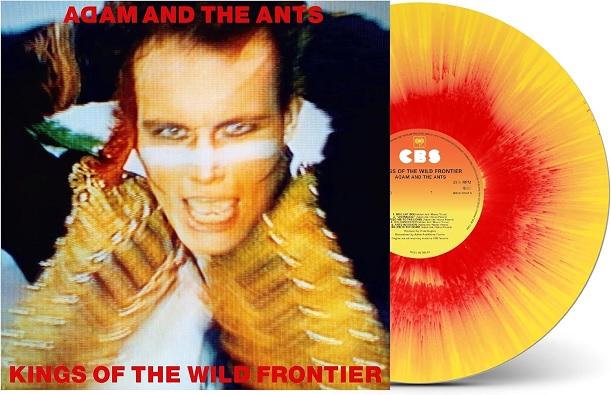
ADAM AND THE ANTS
Links
Buy
Adam and the Ants Vinyl - direct link @ ebay.co.uk
(Lenin is a participant in the eBay (EPN) affiliate program)
Adam and the Ants Fascinating Facts
Danny Thompson Fascinating FactsTalking Heads Fascinating Facts
Porcupine Tree Fascinating Facts
Led Zeppelin Fascinating Facts
Siouxsie and the Banshees Fascinating Facts
Marc Bolan and T. Rex Fascinating Facts
Sting & The Police Fascinating Facts
Jean-Michel Jarre Fascinating Facts
Human League Fascinating Facts
Peter Gabriel Fascinating Facts
Holger Czukay Fascinating Facts
Anton Corbijn Fascinating Facts
Dexys Midnight Runners Fascinating Facts
Roxy Music / Bryan Ferry Fascinating Facts
Elvis Presley Fascinating Facts
Scott Walker Fascinating Facts
Michael Brook Fascinating Facts
Penguin Cafe Orchestra Fascinating Facts
David Bowie Rarities (Shipped From UK)
Cocteau Twins Fascinating Facts
Ryuichi Sakamoto Fascinating Facts
Haruomi Hosono Fascinating Facts
Yukihiro Takahashi Fascinating Facts
Hector Zazou Fascinating Facts
Frank Auerbach Fascinating Facts
Adam and the Ants
Artist
Adam and the Ants
Content
All the fascinating facts
More
Bitesized
Year
1970s to Present Day
Random and bite-sized facts on all things on the mythical band Adam and the Ants. Totally random but totally fascinating if you're into it. Do you know Adam and the Ants now?
--
THE TWO-DRUMMER SOUND ALMOST DIDN'T HAPPEN
Adam Ant wanted a Burundi-influenced rhythm, but the original plan wasn't necessarily for two Ants to play drums. Chris Hughes was initially producing rather than playing. During auditions for a second drummer, Hughes demonstrated the Burundi patterns to the candidates. Ant eventually turned to him and effectively asked why he didn't play the part himself. Hughes suddenly became both producer and drummer.
--
THE FIRST DOUBLE-DRUM RECORDING WASN'T WHAT YOU MIGHT EXPECT
The two-drummer idea was already being worked out on “Cartrouble” before the classic Ants line-up had properly taken shape. Jon Moss played the drums on the 1980 re-recording, with Chris Hughes producing. The B-side “Kick!” used Moss doubled onto two drum parts, creating an early version of the two-drum Burundi sound that would become one of the band's signatures.
--
CHRIS HUGHES WASN'T SUPPOSED TO BE IN THE BAND
Hughes went to Rockfield to produce Adam Ant and Marco Pirroni. He wasn't intending to become an Ant. After helping Adam find another drummer, though, Ant asked Hughes to join in. Hughes ended up playing alongside Terry Lee Miall while also producing the records.
--
THE ANTS MADE DRUMS OUT OF ALMOST ANYTHING
The huge percussion sound wasn't just the two drum kits. In the studio they added kettle drums and hit guitar cases, pieces of wood, doors and even walls. The aim was to create what was described as an enormous barrage of percussion rather than simply making the two drummers sound louder.
--
“KINGS OF THE WILD FRONTIER” STARTED WITH ADAM'S RIFF
Marco Pirroni didn't write the main riff of “Kings of the Wild Frontier”. Adam Ant played him the riff and Pirroni supplied the chord sequence. Pirroni then brought his love of Ennio Morricone and film music into the arrangement, particularly the sound of “The Good, the Bad and the Ugly”.
--
THE ANTS WERE TRYING TO STOP DJs TALKING OVER THEIR SONGS
Adam Ant deliberately wanted the band's singles to start with something memorable. The idea was practical: if the opening seconds immediately grabbed attention, DJs couldn't easily talk over the intro before the song got going.
--
“CARtrouble” WAS RECORDED IN A HURRY
Chris Hughes later recalled that Adam was desperate to get something recorded with the new Ants. They went to Rockfield in Wales and recorded “Cartrouble” and “Kick!” within a week. Hughes had very little production experience at the time, but the sessions helped establish the new sound and led to the band securing a publishing deal.
--
THE FIRST ALBUM WAS MADE AT A REMARKABLE SPEED
For “Dirk Wears White Sox”, the basic instrumentation and guide vocals for the album were completed in just the first three days of the August 1979 sessions. The remaining time was largely spent finishing lead and backing vocals. Several of the songs had actually existed in earlier versions recorded before the album sessions.
--
“PHYSICAL” HAD A STRANGE AFTERLIFE
“Physical” was recorded before “Kings of the Wild Frontier” but didn't appear on the original UK album. It eventually surfaced as the B-side of “Dog Eat Dog”, and was later included on the American version of the album in place of “Making History”. Years later, Nine Inch Nails recorded their own version of the song.
--
THE ANTS' SOUND WAS PARTLY BUILT FROM FILM MUSIC
Marco Pirroni brought a strong love of film soundtracks into the band. He specifically cited Ennio Morricone and John Barry as influences on “Kings of the Wild Frontier”, alongside his earlier guitar influences such as Duane Eddy. The result was an unusual combination of spaghetti-western guitar, African-inspired percussion and punk energy.
--
ADAM AND THE ANTS
Links
Buy
Adam and the Ants Japanese Vinyl - direct link @ ebay.co.uk
(Lenin is a participant in the eBay (EPN) affiliate program)
--
ADAM ANT WAS AN ART STUDENT BEFORE HE WAS A POP STAR
Stuart Goddard was studying graphic design at Hornsey Art College when the character of Adam Ant began to take shape. He was caught between art and music, and later said he couldn't decide which direction his life should take.
--
HE CHOSE “ANT” FOR A VERY STRANGE REASON
Adam has said that he chose “Ant” because ants would survive a nuclear explosion. He also liked “Adam” because Adam was the first man. The name therefore wasn't simply a stage name chosen for how it sounded.
--
HE WAS THINKING ABOUT WARRIORS BEFORE THE PIRATE LOOK
Before the famous highwayman and pirate imagery, Ant became fascinated by tribal imagery and the idea of the warrior. He later described this as part of the thinking behind his early visual identity, rather than simply a costume designed for pop stardom.
--
ADAM ANT DIDN'T WANT TO LOOK LIKE OTHER POP STARS
Ant deliberately treated appearance as part of his music. He once said that his aim was for each album to look and sound different, because he had a “low boredom threshold”. For him, constantly changing the visual identity was part of the point.
--
HE SAW THE SEX PISTOLS AND CHANGED HIS IDEA OF MUSIC
When Ant saw the Sex Pistols at St Martin's School of Art in 1975, he was struck by the energy rather than technical ability. He later said that in the 1960s every band could play, but that music had become dead and nothing dangerous had happened since Elvis joined the army.
--
HE WAS ALREADY THINKING ABOUT SEX AND STYLE AS PART OF POP
Before the Ants became successful, Adam incorporated fetish imagery and bondage into his stage presentation. He was studying art at the time, and the visual side of his performances developed alongside the music rather than being added later by a record company.
--
HE WAS IN “JUBILEE” BEFORE HE WAS FAMOUS
Derek Jarman spotted Ant on the King's Road in 1977 and asked him to appear in Jubilee. Ant was still an underground punk figure at the time. He later said that he initially found the finished film embarrassing, although he came to regard it as an amazing achievement.
--
HE DISLOCATED HIS KNEE WHILE FILMING “JUBILEE”
Ant injured himself while filming a performance sequence for Derek Jarman's Jubilee. He threw himself around during the scene and dislocated his knee, but was subsequently asked to return to the production only a couple of days later.
--
HE WANTED HIS VOICE TO SOUND LIKE AN INSTRUMENT
When he discovered recordings of traditional African music while developing the new Ants sound, Ant became fascinated by the way voices were used rhythmically. He said he wanted to use his own voice “like an instrument”, helping create the forceful, percussive vocal style that became central to the band.
--
HE DELIBERATELY REFUSED TO STICK TO ONE SOUND
Ant regarded changing direction as part of his creative identity. He later said that he wanted each album to look and sound different, even though he knew this could frustrate people who wanted another version of the previous record.
--
HE HAD ALREADY BEEN THINKING LIKE A POP STAR BEFORE THE HITS
Ant understood very early that pop wasn't just about the record. Image, clothes, performance, video and attitude could all be part of the same piece of work. His later explosion into pop stardom wasn't therefore a complete transformation from punk musician into pop star — much of the visual strategy was already there.
--
ADAM AND THE ANTS
Links
Buy
Adam and the Ants Japanese Vinyl - direct link @ ebay.co.uk
(Lenin is a participant in the eBay (EPN) affiliate program)
--
MARCO PIRONI WAS THE GUITARIST ADAM NEEDED TO REINVENT THE ANTS
When Marco Pirroni joined Adam Ant in early 1980, the two immediately began rebuilding the band from scratch. Pirroni later said that virtually everything on Kings of the Wild Frontier was newly created between them, apart from “Ants Invasion”, which Adam already had. Their collaboration became the longest and most productive songwriting partnership of Adam's career.
--
PIRONI WAS INITIALLY TRYING TO GET AWAY FROM PUNK
Pirroni had already played with Siouxsie and the Banshees and Rema-Rema, but by the time he joined Adam he was bored with the post-punk scene. He later said that he and Adam were both sick of the musical “ghetto” they were in and wanted to do something completely different.
--
BURUNDI DRUMS AND LINK WRAY WERE PIRONI'S IDEA OF A PERFECT MATCH
Pirroni brought his love of raw 1950s guitar into the new Ants sound. He and Adam combined Burundi-inspired rhythms with the primitive guitar attack of Link Wray. Pirroni later said the two influences seemed like a perfect match because both were so raw.
--
HE DISCOVERED LINK WRAY ALMOST BY ACCIDENT
Pirroni bought an album of Link Wray's early recordings simply because he liked its yellow cover. He didn't know what the music would sound like. When he heard it, he realised he could actually play many of Wray's riffs and became fascinated by his sound.
--
HIS WHITE LES PAUL JUNIOR WAS A JOHNNY THUNDERS TRIBUTE
Pirroni's white Gibson Les Paul Junior became one of the visual and sonic ingredients of the Ants' new sound. He bought it because he wanted to emulate Johnny Thunders, having previously tried to channel Mick Ronson with a Les Paul. He eventually decided that the Junior suited him much better.
--
THE “KINGS OF THE WILD FRONTIER” RIFF WAS ADAM'S
The huge opening guitar riff of “Kings of the Wild Frontier” wasn't Pirroni's original idea. Adam Ant played him the riff and Pirroni supplied the chord sequence. Pirroni immediately heard something cinematic in it and drew on his love of Ennio Morricone and John Barry when developing the arrangement.
--
“DOG EAT DOG” WAS WRITTEN BECAUSE THE RECORD COMPANY WANTED A SINGLE
Most of Kings of the Wild Frontier had been worked out before the band went into the studio, but “Dog Eat Dog” was the exception. When the record company complained that they didn't have an obvious single, Adam and Pirroni wrote it together over lunch and made a demo. Pirroni later said that demo had unfortunately been taped over.
--
PIRONI DIDN'T THINK “ANTMUSIC” WAS AN OBVIOUS SINGLE
Pirroni later admitted that he was surprised “Antmusic” wasn't immediately regarded as a potential single. At the time, he and Adam didn't have a clear idea which song should be the first single until “Dog Eat Dog” was written.
--
HE AND ADAM BUILT “STAND AND DELIVER” PIECE BY PIECE
“Stand and Deliver” wasn't simply played live in the studio by the whole band. Because time was short, Chris Hughes built the recording up piece by piece, with Adam playing bass and Pirroni adding guitar. Hughes later described the result as half pop production and half chaos, with Pirroni's guitar overdubs helping create the finished sound.
--
PIRONI'S GUITAR WASN'T ABOUT PLAYING LOTS OF NOTES
His approach was deliberately economical. Pirroni combined the twang of 1950s rock'n'roll and Link Wray with the cinematic sound of Morricone, often making a small number of distinctive guitar phrases carry a large part of the arrangement.
--
HE AND ADAM COULD WRITE A HIT IN A LUNCH BREAK
The story of “Dog Eat Dog” wasn't an isolated example of their working relationship. Pirroni and Ant developed an unusually fast songwriting partnership, with Pirroni often supplying chord sequences or guitar ideas while Adam brought melodies, rhythms and vocal concepts. Their contrasting approaches became one of the defining ingredients of the Ants' sound.
--
ADAM AND THE ANTS
Links
Buy
Adam and the Ants Japanese Vinyl - direct link @ ebay.co.uk
(Lenin is a participant in the eBay (EPN) affiliate program)
--
GARY TIBBS ARRIVED JUST AS THE ANTS EXPLODED
Gary Tibbs joined Adam and the Ants on 9 March 1981, just as the band were becoming one of Britain's biggest pop acts. He had already played bass with Roxy Music, and Chris Hughes later said the Ants knew he was talented enough and experienced enough to slot straight into the band.
--
HE WAS ONSTAGE BEFORE HE WAS ON THE RECORD
Tibbs joined the live band before he became established on the Ants' records. He took part in the filming of “Stand and Deliver” just three days after joining, appearing in the famous video at Hatfield House.
--
ADAM STILL PLAYED BASS EVEN AFTER TIBBS JOINED
Having a new bassist didn't mean Adam Ant stopped playing bass in the studio. Chris Hughes recalled that during the making of Prince Charming, Adam still wanted to play bass on various pieces and kept a close grip on the recordings. Hughes said Adam regarded Tibbs as a great bass player, but didn't simply hand over every bass part.
--
TIBBS HAD TO WALK INTO A BAND AT PEAK ANT-MANIA
His first major Ants shows were played in front of enormous crowds at the height of Adam Ant's popularity. Contemporary reports describe audiences going wild simply when Tibbs moved onstage, showing how extraordinary the band's level of fame had become.
--
HE WAS ALREADY A VETERAN OF THE PUNK AND NEW WAVE SCENE
Before joining the Ants, Tibbs had played with the Vibrators and Roxy Music. He therefore arrived with experience from two very different sides of the British rock scene: raw punk and sophisticated art-rock.
--
HE DIDN'T HAVE TO LEARN THE ANTS' PARTS THE HARD WAY
Chris Hughes remembered Tibbs walking into the studio, picking up the parts and immediately knowing what he was doing. Hughes described the transition as “a breeze”, despite the Ants' complicated arrangements and unusually demanding rhythm section.
--
HE WAS PART OF THE PRINCE CHARMING TRANSITION
Tibbs became the regular bassist as the Ants moved from Kings of the Wild Frontier into Prince Charming. That meant joining a band whose sound was already established rather than helping invent it from scratch — but his arrival coincided with another major stage in Adam's visual and musical transformation.
--
HE DIDN'T STAY FOR LONG
Tibbs' time with Adam and the Ants was relatively brief. By 1982, Adam had decided to disband the group and continue as a solo artist, with Tibbs among the musicians who were no longer part of the new line-up.
--
ADAM AND THE ANTS
Links
Buy
Adam and the Ants Japanese Vinyl - direct link @ ebay.co.uk
(Lenin is a participant in the eBay (EPN) affiliate program)
--
ADAM AND THE ANTS DIDN'T JUST MAKE MUSIC VIDEOS — THEY MADE LITTLE FILMS
Adam Ant approached the band's videos with the eye of someone who had studied art and film. He storyboarded the ideas himself, and the videos became increasingly elaborate as the Ants' success exploded. He later described his approach as "sex, subversion, style, and humour."
--
STAND AND DELIVER WAS BUILT LIKE A MINIATURE ADVENTURE FILM
Adam played the dandy highwayman, stopping a carriage, bursting through a window and eventually ending up on the gallows. He performed his own stunt when he jumped through the window, using breakaway glass. It didn't go entirely to plan: Adam later recalled splitting his head open after being told it wouldn't hurt.
--
THE OPENING MAKE-UP SCENE BECAME ONE OF HIS DEFINING IMAGES
The sight of Adam applying his make-up before setting off on his robbery became so closely associated with him that the image was subsequently used on the sleeve of the band's next single.
--
THE VIDEO EVEN USED PROPS FROM HAMMER FILMS
The stagecoach and other props used for "Stand and Deliver" came from the world of Hammer horror films, helping give the video its deliberately cinematic look.
--
PRINCE CHARMING WAS BASICALLY A REVERSED CINDERELLA
Adam played the downtrodden "Cinderella" character, while Diana Dors appeared as his Fairy Godmother. She was one of Britain's biggest film stars, and Adam specifically wanted her in the video. She shot her scenes in a single day.
--
THE FAMOUS PRINCE CHARMING DANCE HAD A MEANING
The hand movements weren't just invented as a bit of pop choreography. Choreographer Stephanie Coleman said the four gestures represented "Pride, Courage, Humour and Flair" — four qualities associated with Adam's Prince Charming character.
--
ADAM SWUNG FROM A CHANDELIER
The famous chandelier entrance in "Prince Charming" was another genuine stunt rather than a camera trick. Adam reportedly took two attempts to get the swing right.
--
THE BALLROOM CROWD WASN'T A RANDOM CAST OF EXTRAS
Many of the people seen dancing at the ball were Adam's own friends. It helped give the video the slightly strange feeling of being an actual Ants party rather than a conventional pop production.
--
DIANA DORS WASN'T THE ONLY FAMOUS FACE
Adam liked having recognisable women from an older generation appear in his videos. Lulu was brought in for "Ant Rap", where she played the damsel in distress. The videos became almost a game of spotting the unexpected celebrity.
--
ANT RAP WAS COMPLETELY BONKERS
Adam turns up as Lancelot, an American football player and Bruce Lee, while Marco Pirroni appears dressed as Liberace. Lulu plays the princess. It was less a conventional pop video than another excuse for Adam to throw different characters and images at the screen.
--
THE VIDEOS WERE PART OF THE ANT IDENTITY
By the time "Stand and Deliver", "Prince Charming" and "Ant Rap" appeared, the image, costumes, characters and choreography were inseparable from the songs themselves. Contemporary coverage noted that Ant fans were sometimes looking forward to the next video as much as the next record.
--
ADAM EVEN KEPT HIS OWN VISUAL ARCHIVE
Adam's official archive describes surviving material showing his hand-drawn sketches for the videos — an insight into how deliberately he planned the look rather than simply turning up and performing in front of a camera.
--
ADAM AND THE ANTS
Links
Buy
Adam and the Ants Japanese Vinyl - direct link @ ebay.co.uk
(Lenin is a participant in the eBay (EPN) affiliate program)
--
ADAM AND THE ANTS IN JAPAN
Adam and the Ants actually toured Japan at the height of Antmania, playing a series of dates there in October 1981. It was a very different experience from simply having their records released overseas: the Ants arrived in Japan as a fully formed pop phenomenon, complete with the costumes, make-up and two-drum attack.
--
THE JAPANESE AUDIENCE KNEW THE LOOK
A Japanese fan who saw the Ants in Nagoya in October 1981 later recalled an audience full of people dressed in Ant-style clothes, with elaborate hair, make-up and jewellery. The band's visual identity had clearly travelled with the records.
--
KINGS OF THE WILD FRONTIER GOT A PROPER JAPANESE RELEASE
The Japanese edition of Kings of the Wild Frontier appeared in 1981 on Epic. Like many Japanese records of the period, it came with an obi-style paper strip around the sleeve and Japanese information for the local market.
--
THE JAPANESE EDITION IS DIFFERENT
Japanese copies of the Ants' records can be identified by their Japanese catalogue numbers, obi strips and lyric sheets. For collectors, these aren't simply imported British records with a different price tag — they were specifically manufactured Japanese editions.
--
PRINCE CHARMING FOLLOWED
The Japanese edition of Prince Charming also came with its own obi and Japanese lyric sheet. By this point the Ants' visual identity was so strong that the artwork and packaging were an important part of how the band was presented in Japan.
--
THE SINGLES WERE THERE TOO
"Antmusic", "Stand and Deliver" and "Prince Charming" all received Japanese single releases. The records were being issued in Japan while the Ants were still at the centre of their original pop explosion, rather than being retrospective collector's releases.
--
THE JAPANESE MUSIC PRESS COVERED ADAM
Adam also appeared in Japanese music magazines during the period. A 1981 issue of Music Life, for example, featured coverage of Adam Ant at almost exactly the time the band were touring Japan.
--
THE ANT IMAGE TRAVELLED A LONG WAY
Japan is an interesting part of the Ants story because the band's appeal wasn't being exported as just music. The clothes, make-up, pirate imagery, choreography and double-drum sound all travelled with them. By the time they reached Japan in 1981, the whole Ant package was already recognisable.
--
ADAM AND THE ANTS
Links
Buy
Adam and the Ants Japanese Vinyl - direct link @ ebay.co.uk
(Lenin is a participant in the eBay (EPN) affiliate program)
--
THE BLUEBLACK HUSSAR RETURNED IN 2013
Adam Ant revived the Hussar character more than 30 years after the classic Adam and the Ants period. His 2013 comeback album was called Adam Ant Is the Blueblack Hussar in Marrying the Gunner's Daughter, released on 21 January 2013 on his own Blueblack Hussar Records label.
--
THE HUSSAR HAD BEEN PART OF ADAM'S IMAGE SINCE 1980
The Hussar idea wasn't invented for the comeback. Adam had already incorporated a Hussar-style military jacket into his image when he rebuilt the Ants around 1980. He later explained that the particular jacket was based on the uniform of the 11th Hussars, the regiment associated with the Charge of the Light Brigade.
--
WHY THE 11TH HUSSARS?
Adam was fascinated by the contrast between the regiment's flamboyant appearance and its disastrous military history. He described the 11th Hussars as being regarded as excessively well dressed, while also having carried out the famously doomed Charge of the Light Brigade. That combination of glamour, danger and warrior bravado fitted perfectly with the image he was creating.
--
THE BLUEBLACK HUSSAR WAS ADAM'S 21ST-CENTURY VERSION
When Adam explained the 2013 album title, he imagined what the character from Kings of the Wild Frontier might look like decades later: a French Hussar who had ridden to Moscow with Napoleon in 1812 and then walked back. He saw the character as a comic reflection of his own experiences with the music business.
--
“MARRYING THE GUNNER'S DAUGHTER” HAD ANOTHER MEANING
The second half of the title sounds like another piece of military imagery, but Adam explained that “marrying the gunner's daughter” was actually an old naval expression for punishment. He deliberately combined the two ideas to create the extraordinary title.
--
IT WASN'T JUST A NOSTALGIA RECORD
Adam recorded the album very differently from his earlier records. Instead of making the whole album in one studio with one producer, he worked on songs with several collaborators, including Boz Boorer and Chris McCormack. He eventually had 17 songs and decided that a double album was the best way to contain such different material.
--
THE ALBUM HAD ITS OWN LABEL
Adam created Blueblack Hussar Records specifically to release the album. The original vinyl edition was a double album in a gatefold sleeve, released on 21 January 2013.
--
AND THEN THERE WAS A FILM
The Blueblack Hussar was a documentary directed by Jack Bond, following Adam during the period when he was attempting to rebuild his career and make new music. Much of the film centres on 2011, including his time in Paris, performances around London and the development of the comeback project.
--
IT WASN'T A CONVENTIONAL MUSIC DOCUMENTARY
Rather than simply looking back at the glory days of Adam and the Ants, Bond filmed Adam as he was trying to create something new. The film captures rehearsals, musicians around him, his creative process and the sometimes chaotic world surrounding his return to performing.
--
THE ALBUM AND FILM WERE ALMOST TWO SIDES OF THE SAME COMEBACK
The album was Adam's attempt to turn his return into a new body of music; the documentary captured what that return actually looked like from the inside. Both took their name from the same Blueblack Hussar character — the flamboyant warrior Adam had first developed during the Ants' transformation in 1980.
--
ADAM AND THE ANTS
Links
Buy
Adam and the Ants Japanese Vinyl - direct link @ ebay.co.uk
(Lenin is a participant in the eBay (EPN) affiliate program)
--
WHY DID ADAM AND THE ANTS SPLIT?
The Ants didn't break up because they had suddenly stopped being successful. In fact, they were still enormous. The problem was that success had become exhausting. The band had spent nearly two years constantly touring, recording, travelling and promoting themselves, with very little time to stop.
--
PRINCE CHARMING CAME TOO QUICKLY
Adam later said that the band had made Prince Charming too soon after Kings of the Wild Frontier. The pressure of having to produce another album so quickly meant that the band never really had time to recover from the first record's phenomenal success.
--
THE BAND WERE LIVING IN EACH OTHER'S POCKETS
Adam later described the situation as everyone living in each other's pockets, with exhaustion setting in. Different members wanted different things, while Adam wanted to keep pushing forward. The band had effectively gone from obscurity to worldwide pop stardom in a remarkably short time.
--
TERRY LEE MIALL THOUGHT THEY NEEDED A BREAK
Terry Lee Miall later said the band had been on the road for nearly two years, going from the States to Japan and elsewhere, while also working in the studio. He believed they needed a couple of months away from each other and from the music business machine to recover and work out where they were going.
--
GARY TIBBS WAS ALSO A DIFFERENT KIND OF MEMBER
Miall remembered that Gary Tibbs didn't come into the Ants under Adam's wing in the way the earlier members had. Tibbs was already an experienced musician and had played with Roxy Music. Miall recalled that Adam and Gary didn't get on particularly well, describing Gary as a strong character who wasn't going to simply accept everything.
--
THEN MARCO PIRRONI DIDN'T WANT TO TOUR
This was the immediate trigger. By early 1982, Adam was looking for replacements for drummer Terry Lee Miall and bassist Gary Tibbs. But Marco Pirroni told Adam that he didn't want to work on the road anymore. Adam decided that rather than go through the difficult process of rebuilding the Ants again, he would disband the group.
--
ADAM DIDN'T SEE IT AS THE END OF THE MUSIC
The split was actually the beginning of Adam's solo career. Pirroni stayed with him as a songwriting partner, Chris Hughes continued producing, and Adam's first solo single, "Goody Two Shoes", went straight to No.1 in Britain.
--
THE BAND NEVER REALLY HAD A BIG FINAL FAREWELL
Terry Lee Miall later said there had never been an official announcement explaining the split to everyone. The members simply went their separate ways and the news gradually travelled through the grapevine. For a band that had been one of Britain's biggest pop acts only months earlier, it was a remarkably quiet ending.
--
THE ANTS WERE EXHAUSTED — NOT FAILED
That's perhaps the strangest thing about the split. Adam and the Ants didn't disappear because the audience had gone away. They disappeared while they were still hugely successful. The combination of relentless work, exhaustion, changing relationships within the band and Pirroni's decision not to tour made continuing as the Ants more trouble than Adam wanted to take on.
--
ADAM AND THE ANTS
Links
Buy
Adam and the Ants Japanese Vinyl - direct link @ ebay.co.uk
(Lenin is a participant in the eBay (EPN) affiliate program)
--
Search Keywords
Adam and the Ants
Adam Ant
Icons
ADAM AND THE ANTS
Links
Buy
Adam and the Ants Vinyl - direct link @ ebay.co.uk
(Lenin is a participant in the eBay (EPN) affiliate program)
Adam and the Ants Fascinating Facts
Associates Fascinating FactsHuman League Fascinating Facts
Porcupine Tree Fascinating Facts
Siouxsie and the Banshees Fascinating Facts
Danny Thompson Fascinating Facts
Talking Heads Fascinating Facts
Marc Bolan and T. Rex Fascinating Facts
Sting & The Police Fascinating Facts
Jean-Michel Jarre Fascinating Facts
Led Zeppelin Fascinating Facts
Peter Gabriel Fascinating Facts
Holger Czukay Fascinating Facts
Anton Corbijn Fascinating Facts
Dexys Midnight Runners Fascinating Facts
Roxy Music / Bryan Ferry Fascinating Facts
Elvis Presley Fascinating Facts
Scott Walker Fascinating Facts
Michael Brook Fascinating Facts
Penguin Cafe Orchestra Fascinating Facts
David Bowie Rarities (Shipped From UK)
Cocteau Twins Fascinating Facts
Roxy Music / Bryan Ferry Fascinating Facts
Ryuichi Sakamoto Fascinating Facts
Haruomi Hosono Fascinating Facts
Yukihiro Takahashi Fascinating Facts
Hector Zazou Fascinating Facts
Frank Auerbach Fascinating Facts