NICK DRAKE
Links
Buy
Nick Drake Vinyl - direct link @ ebay.co.uk
(Lenin is a participant in the eBay (EPN) affiliate program)
Led Zeppelin Fascinating Facts
Human League Fascinating Facts
Visage / Steve Strange Fascinating Facts
Tears For Fears Fascinating Facts
Queen / Freddie Mercury Fascinating Facts
Danny Thompson Fascinating Facts
Talking Heads Fascinating Facts
Porcupine Tree Fascinating Facts
Adam and the Ants Fascinating Facts
Queen / Freddie Mercury Fascinating FactsMarc Bolan and T. Rex Fascinating Facts
Sting & The Police Fascinating Facts
Jean-Michel Jarre Fascinating Facts
Peter Gabriel Fascinating Facts
Holger Czukay Fascinating Facts
Anton Corbijn Fascinating Facts
Dexys Midnight Runners Fascinating Facts
Roxy Music / Bryan Ferry Fascinating Facts
Elvis Presley Fascinating Facts
Scott Walker Fascinating Facts
Michael Brook Fascinating Facts
Penguin Cafe Orchestra Fascinating Facts
David Bowie Rarities (Shipped From UK)
Cocteau Twins Fascinating Facts
Ryuichi Sakamoto Fascinating Facts
Haruomi Hosono Fascinating Facts
Yukihiro Takahashi Fascinating Facts
Hector Zazou Fascinating Facts
Frank Auerbach Fascinating Facts
Nick Drake
Artist
Nick Drake
Content
All the fascinating facts
More
Bitesized
Year
1960s to Present Day
Random and bite-sized facts on all things on the mythical Nick Drake. Totally random but totally fascinating if you're into it. Do you know Nick Drake now?
--
An early version of ‘Cello Song’ had a different title
An early studio arrangement of Nick Drake’s ‘Cello Song’ was titled ‘Strange Face’. The recording had a more psychedelic folk-rock feel than the familiar album version, revealing a different direction the song might have taken before the arrangement was settled.
--
He recorded demos in a Cambridge student room
In early 1968, Drake recorded demos for his friend and arranger Robert Kirby in a university dorm room. Fellow student Paul de Rivaz captured the session on an early Grundig reel-to-reel recorder and kept the tape for decades. It eventually became a key source for the archival collection The Making of Five Leaves Left.
--
He explained how he wanted his songs arranged on tape
The surviving dorm-room recording preserves more than performances: Drake can be heard discussing how he wanted his songs to sound and how they might be arranged. It offers rare direct evidence of his creative decisions, rather than relying entirely on later recollections from the musicians around him.
--
‘Mickey’s Song’ reveals an unexpected jazz influence
Among the compositions that did not make Five Leaves Left was ‘Mickey’s Song’, whose lilting melody has been compared with the feel of Dave Brubeck’s ‘Take Five’. The recording also features wordless, bossa nova-style singing, revealing a lighter and more rhythmically playful side of Drake’s early writing.
--
His first professional studio recordings were rejected
Some of Drake’s earliest professional recordings, made in 1968, used arrangements by Richard Hewson. The versions of ‘Day Is Done’ and ‘The Thoughts of Mary Jane’ were later rejected. Their relatively elaborate, easy-listening arrangements differ markedly from the more distinctive sound that emerged on his debut album.
--
‘My Love Left With the Rain’ shows another side of his songwriting
This lesser-known early composition surfaced in the archival material associated with The Making of Five Leaves Left. Its lilting melody and wordless vocal passages have a bossa nova flavour, quite different from the sombre image that later came to dominate discussions of Drake’s music.
--
Pink Moon was recorded in two late-night sessions
Engineer John Wood recalled that the album was made at Sound Techniques during two consecutive sessions beginning at 11pm. Drake initially allowed for the possibility of adding other musicians, but after the first couple of songs he made it clear that the record would consist of his voice and guitar. The only additional overdub was piano on the title track.
--
Randy Newman and the Beach Boys were among his stated influences
When engineer John Wood asked Drake about his influences, Drake named Randy Newman and the Beach Boys. It is an intriguing pairing: Newman’s sharply observed songwriting and the Beach Boys’ sophisticated harmonies offer a different perspective on the musical world behind Drake’s delicate acoustic recordings.
--
NICK DRAKE
Links
Buy
Nick Drake Japanese Vinyl - direct link @ ebay.co.uk
(Lenin is a participant in the eBay (EPN) affiliate program)
--
Gabrielle Drake helped correct the myths surrounding her brother
In 2014, Gabrielle co-edited Nick Drake: Remembered for a While, bringing together family photographs, handwritten lyrics, letters and personal recollections. She said she had initially vowed never to write a book about him, but felt compelled to respond after published accounts got parts of his story wrong. She also challenged a claim attributed to her about his romantic life, explaining that she simply did not know the truth.
--
Gabrielle was part of the musical world of the Drake family
Although better known as an actor, Gabrielle can be heard singing alongside Nick on privately recorded family material later released on Family Tree. Their mother, Molly, was also a songwriter who recorded songs at home. Gabrielle has spoken about how creativity was accepted and encouraged within the family, making the private recordings a glimpse of a musical household rather than simply Nick's isolated beginnings.
--
NICK DRAKE
Links
Buy
Nick Drake Japanese Vinyl - direct link @ ebay.co.uk
(Lenin is a participant in the eBay (EPN) affiliate program)
--
‘Saturday Sun’ stood apart during Nick Drake’s first studio visit
When engineer John Wood first brought Drake into Sound Techniques in 1968, the aim was to see what songs he had ready rather than make conventional demos. Wood recalled that seven or eight songs were recorded, almost all with just Drake and his guitar. ‘Saturday Sun’ was the exception, already featuring a more developed arrangement. It offered an early indication that Drake’s music could move beyond the solitary voice-and-guitar format.
--
‘Way to Blue’ features Nick Drake’s voice without his guitar
Although Drake is closely associated with his intricate acoustic guitar playing, he sings without playing guitar on ‘Way to Blue’ from Five Leaves Left. Robert Kirby supplied the string arrangement, creating a setting in which Drake’s voice becomes the central instrument. It is a useful reminder that the album’s sound was not built around guitar on every track.
--
‘Three Hours’ has an unusual percussion credit
The Five Leaves Left version of ‘Three Hours’ features percussion by Rocki Dzidzornu, the Ghanaian percussionist also known as Rocky Dijon. Danny Thompson plays double bass, adding a rhythmic foundation to Drake’s guitar and voice. The combination gives the track a more mobile, percussive feel than the sparse arrangements for which Drake is often remembered.
--
Robert Kirby’s first Drake string arrangements were recorded in one session
Kirby was only 19 when he arranged strings for Five Leaves Left. According to the official Nick Drake website, four of his arrangements were recorded in a single three-hour session, with Drake performing live in the room alongside the musicians. The strings were therefore not simply added later to a finished vocal and guitar recording.
--
‘River Man’ had a different string arranger from most of the debut album
Robert Kirby was responsible for several of the debut album’s arrangements, but ‘River Man’ was arranged by Harry Robinson. That distinction is easy to miss because the track’s strings sit so naturally beside the rest of the album. Robinson’s arrangement gives the song its distinctive, unsettled orchestral atmosphere.
--
‘Saturday Sun’ brought together piano, bass, drums and vibes
The closing track on Five Leaves Left is a departure from the album’s more pastoral sound. Drake plays piano, Danny Thompson contributes double bass, and Tristan Fry plays drums and vibraphone. That instrumental combination helps give ‘Saturday Sun’ its lightly jazz-influenced character, making it one of the album’s less typical arrangements.
--
John Cale played several instruments on ‘Northern Sky’
The Velvet Underground’s John Cale contributed to Bryter Layter, playing instruments including celeste, piano, organ, viola and harpsichord across the album. His contribution to ‘Northern Sky’ is particularly notable: the shimmering keyboard textures help give the song a sound quite different from Drake’s more stripped-back recordings.
--
Bryter Layter was Nick Drake’s only album with a full rhythm section
For his second album, Drake and producer Joe Boyd pursued a fuller, more upbeat sound. Fairport Convention musicians Dave Pegg and Dave Mattacks were brought in on bass and drums, with Richard Thompson again contributing guitar. According to the official Nick Drake website, this was the only album Drake made with a rhythm section, making it a distinct chapter in his recording career.
--
‘Tow the Line’ remained unheard until decades after Nick Drake’s death
‘Tow the Line’ appeared on the 2004 archival collection Made to Love Magic. It was described by Pitchfork as a genuinely unheard song, unlike many tracks on archival releases that had circulated previously as demos or alternate versions. Its eventual release offered listeners a rare addition to Drake’s small body of officially available original material.
--
A fragment of Nick Drake performing for John Peel survives
A BBC session recorded for John Peel’s programme in the summer of 1969 is among the rare surviving evidence of Drake performing live for broadcast. Only a fragment survives, featuring a solo performance of ‘Three Hours’. Given how few times Drake is known to have performed publicly, the recording is a valuable glimpse of how his intricate songs worked outside the studio.
--
Some of Nick Drake’s early home recordings include songs by other artists
Before his own compositions dominated his recordings, Drake made home tapes of songs by artists including Bob Dylan and Bert Jansch. Pitchfork has also highlighted his version of the Youngbloods’ ‘Get Together’. These teenage recordings offer a glimpse of the folk and blues repertoire he was absorbing before the musical style of his three studio albums fully emerged.
--
NICK DRAKE
Links
Buy
Nick Drake Japanese Vinyl - direct link @ ebay.co.uk
(Lenin is a participant in the eBay (EPN) affiliate program)
--
Nick Drake personally directed the backing singers on ‘Poor Boy’
Robert Kirby recalled that the backing vocals on ‘Poor Boy’ were not imposed on Drake against his wishes. Doris Troy and P. P. Arnold, both celebrated soul singers, performed on the track, and Kirby said Drake himself told them what to sing and how to sing it. He also explained that the song’s backing-vocal section was intended to be sarcastic, rather than simply an expression of self-pity.
--
Robert Kirby kept the original scores for ‘Magic’ and ‘Time of No Reply’
When the archival album Made to Love Magic was being prepared, Kirby still possessed his original orchestral scores for ‘Magic’ and ‘Time of No Reply’. He worked with engineer John Wood to prepare them for recording. Kirby explained that the new sessions used a double string quartet, allowing him to create richer arrangements and remove some of the double-stopping required in earlier performances.
--
‘Blossom’ was another Nick Drake song Robert Kirby had arranged but never recorded
In an interview on Drake’s official website, Kirby named ‘Blossom’ alongside ‘My Love Left with the Rain’ as a song he had arranged for Drake that had never been recorded at the time. The recollection offers evidence that Drake’s catalogue extended beyond the songs eventually released on his three studio albums, although the existence of an arrangement does not establish that a complete studio recording survives.
--
Kirby remembered ‘Fruit Tree’ as one of his favourite arrangements
Asked which of his arrangements for Drake he personally favoured, Robert Kirby singled out ‘Fruit Tree’. He also said that ‘At the Chime of a City Clock’ brought back particularly strong memories of Drake and London in 1968 and 1969. Kirby’s comments give a personal perspective on the music from someone who helped shape the sound of the first two albums.
--
Nick Drake’s guitars included a Martin D-28 and a Spanish guitar
Robert Kirby recalled Drake playing a Martin D-28 and a Spanish guitar. Kirby believed Drake sold the Martin after making Pink Moon, apparently part-exchanging it for a smaller Martin model before recording four later songs. Kirby added that the original Spanish guitar remained with Gabrielle Drake. His recollection is qualified rather than a definitive inventory of every guitar Drake owned.
--
Some of the songs on Family Tree came from Nick Drake’s family tapes
The 2007 compilation Family Tree drew on home recordings made by Drake and other members of his family. Alongside his own songs, it included covers by artists such as Bob Dylan and Jackson C. Frank, as well as recordings by his mother, Molly. The collection revealed a much broader private musical world than the three studio albums alone could suggest.
--
Drake recorded a Mozart piece with members of his family
Among the unusual material included on Family Tree is a family performance of music by Mozart. It stands apart from Drake’s later compositions and offers a glimpse of music-making at home before his professional recording career. The collection is especially interesting because it places his own songwriting alongside the music he grew up hearing and playing with relatives.
--
Nick Drake busked in France with Robin Frederick
Before becoming a recording artist, Drake spent time in France and busked with American singer-songwriter Robin Frederick. A performance of one of Frederick’s songs was later included on Family Tree. It is a relatively unusual surviving example of Drake interpreting music by someone he knew personally, rather than recording his own compositions or familiar folk material.
--
The early recordings reveal Drake giving unusually specific arrangement instructions
Recordings made in Robert Kirby’s Cambridge room capture Drake discussing how he wanted his songs arranged. The tapes preserve not only performances but also the process of explaining musical ideas to a collaborator. They reveal a songwriter who had detailed ideas about the sounds he wanted, even while he was still developing the arrangements that would appear on his debut album.
--
Nick Drake’s surviving live performance record is remarkably small
A fragment of a BBC session for John Peel’s programme in 1969 survives, featuring a solo performance of ‘Three Hours’. Pitchfork has also discussed a short piece of purported festival footage in which a tall figure walks away from the camera, but the person’s identity cannot be confirmed. The distinction matters: the BBC recording is a documented performance, whereas the supposed film of Drake remains uncertain.
--
NICK DRAKE
Links
Buy
Nick Drake Japanese Vinyl - direct link @ ebay.co.uk
(Lenin is a participant in the eBay (EPN) affiliate program)
--
Newly discovered studio tapes revealed how much ‘Five Leaves Left’ changed during recording
The 2025 box set The Making of Five Leaves Left brought together previously unheard studio recordings and alternate takes from the debut album’s creation. Biographer Richard Morton Jack noted that the discovery of actual studio outtakes was particularly significant because their existence had not previously been known. The material gives listeners a chance to hear songs evolving through the recording process, rather than simply comparing the finished album with home demos.
--
Nick Drake’s early studio outtakes survived partly because of the recording format
Engineer John Wood explained that the newly discovered Five Leaves Left studio material survived because the recordings had been made on half-inch tape. He joked that the reels were light enough to carry. The discovery was unusual because, as Wood observed, record companies and studios did not routinely preserve every outtake, meaning much comparable material from the period has disappeared.
--
‘River Man’ existed in a much more intimate recording before its famous orchestral version
An archival tape preserves Drake performing ‘River Man’ in Robert Kirby’s Cambridge room. The recording offers a different perspective on a song later associated with its distinctive string arrangement. Hearing the song in a private setting makes it possible to focus on the underlying melody and guitar part before the orchestral treatment became central to the track’s identity.
--
The arrangements for ‘I Was Made to Love Magic’ waited decades to be recorded
Robert Kirby had written an arrangement for ‘I Was Made to Love Magic’ long before it appeared on the 2004 collection Made to Love Magic. When the project was organised, Kirby still had his original score. He and John Wood revisited the music and recorded it with a string octet, turning an arrangement that had remained unrealised for decades into a finished recording.
--
‘Time of No Reply’ also had an orchestral life before its eventual release
Kirby also retained the original score for ‘Time of No Reply’, allowing it to be recorded for Made to Love Magic. The later session was not simply a matter of copying an old arrangement note for note: Kirby adjusted the parts for a double string quartet, which allowed for fuller voicings and reduced the need for some double-stopping. The recording therefore preserves both his original ideas and a later refinement of them.
--
‘Tow the Line’ was found after John Wood thought he had finished listening to the final recordings
While reviewing Drake’s final recordings for the 2004 archival release, John Wood let the tape continue after ‘Black-Eyed Dog’ had ended. Gabrielle Drake later recalled that Wood called out that they had found another song. She subsequently came across a piece of paper in Nick’s handwriting listing five titles, with ticks beside them; one was ‘Tow the Line’. The song had been overlooked even during the work on the archive.
--
‘Three Days’ survives with percussion by Kwaku Baah
An archival version of ‘Three Days’ features percussion by Kwaku Baah, the Ghanaian musician known for his work with Traffic and other British rock acts. The recording was discussed in coverage of the Drake archive in 2004. It provides another example of Drake experimenting with a fuller rhythmic setting, beyond the sparse arrangements most closely associated with his later reputation.
--
Nick Drake’s first album took more than a year to complete
Recording for Five Leaves Left began at Sound Techniques in July 1968, but the album did not appear until 1969. Producer Joe Boyd later explained that the team worked on a few songs at a time, then stepped back to reconsider the direction and return with new ideas. The extended process reflected the challenge of finding an orchestral sound that suited Drake’s songs without overwhelming them.
--
Joe Boyd’s first choice of arranger did not work out
For Five Leaves Left, producer Joe Boyd initially hired professional arranger Richard Hewson, who worked on three tracks. Boyd later said the results did not work well, prompting Drake to suggest his Cambridge friend Robert Kirby. Kirby had already arranged some of Drake’s songs, and Boyd came to regard his work as exceptional. The change helped establish the distinctive string sound of the debut album.
--
‘Pink Moon’ changed direction after just a couple of songs
During the late-night sessions for Pink Moon, engineer John Wood initially expected Drake might bring in another musician, perhaps bassist Danny Thompson. After the first couple of songs, Wood raised the possibility of adding to the arrangements. Drake replied that the album would consist only of himself and his guitar, apart from the piano overdub on the title track. The decision defined the record’s unusually exposed sound.
--
Beverley Martyn kept an important Nick Drake tape for more than fifty years
A mono listening reel containing recordings from Drake’s earliest Sound Techniques sessions survived because Beverley Martyn had kept it in a drawer for over half a century. The tape eventually became a major source for The Making of Five Leaves Left. Its survival was remarkable: it preserved music from the beginning of Drake’s professional recording history that had not been widely available to listeners.
--
‘Mayfair’ and ‘Time Has Told Me’ appear together on an early session tape
The opening recordings on the surviving mono reel include ‘Mayfair’ followed by ‘Time Has Told Me’. Archivist Neil Storey suggested that the sequence probably reflects the order in which the songs were recorded, partly because the two performances run into one another. It offers a small but revealing glimpse of how Drake’s earliest studio sessions unfolded.
--
An early ‘Strange Face’ shows a musical direction Drake did not pursue
An alternate version of ‘Strange Face’ included in The Making of Five Leaves Left was never completed, but it gives an indication of how the song might have developed had Drake continued with that arrangement. The unfinished recording is valuable because it captures a musical possibility before he settled on the direction heard in the later version.
--
‘Day Is Done’ can be heard in two very different stages of development
The archival collection juxtaposes Richard Hewson’s early orchestral version of ‘Day Is Done’, in which Drake sings without playing guitar, with a later recording featuring Danny Thompson and then the arrangement associated with Robert Kirby. The contrast makes the evolution of the song unusually clear: rather than merely hearing an alternate take, listeners can compare different approaches to its entire musical setting.
--
Nick Drake recorded an untitled instrumental in Cambridge
The Cambridge tape made while Drake was working with Robert Kirby includes an instrumental that has remained untitled. It is one of the less conventional discoveries among the archive’s previously unheard material, preserving a glimpse of Drake working on music without the lyrics and vocal melodies that usually define his songs.
--
‘Mickey’s Tune’ survived alongside Drake’s arrangement discussions
Another major discovery from the Cambridge reel was ‘Mickey’s Tune’, an otherwise unrecorded piece heard among the music Drake played while discussing arrangements with Kirby. The tape is especially valuable because it documents Drake both as a performer and as a songwriter explaining his musical intentions to a collaborator.
--
The early sessions reveal Drake’s songs before their familiar arrangements existed
The newly released recordings include performances that predate the finished versions of songs on Five Leaves Left. They make it possible to hear Drake’s compositions before the strings, percussion and other studio elements became part of their familiar identity. The archive therefore documents not just alternative performances but an earlier stage in the formation of the album’s sound.
--
Nick Drake’s early studio recordings were not all intended as formal demos
Engineer John Wood recalled that Drake’s first visit to Sound Techniques was not simply a conventional demo session. The intention was to find out what material Drake had ready and explore how it might work in the studio. Seven or eight songs were recorded, mostly with voice and guitar, before the album’s longer process of arranging and recording took shape.
--
Robert Kirby and Nick Drake first connected through Cambridge student life
Kirby recalled that he and Drake had both auditioned for the Cambridge Footlights during their first term, although neither was accepted. They were subsequently introduced through a mutual friend who knew Kirby’s musical background. Their collaboration grew from this student connection rather than from the usual professional route of a songwriter hiring an established arranger.
--
Robert Kirby had already been arranging music before working with Nick Drake
When Drake asked Kirby to help arrange his songs, Kirby was studying music and orchestration at Cambridge and was already writing arrangements for a pop group. He recalled that the orchestral players involved in the early Drake work were mainly friends. Despite his youth, Kirby was therefore bringing practical arranging experience to the sessions that helped define Five Leaves Left.
--
NICK DRAKE
Links
Buy
Nick Drake Japanese Vinyl - direct link @ ebay.co.uk
(Lenin is a participant in the eBay (EPN) affiliate program)
--
Nick Drake brought records by the Beach Boys and the Fifth Dimension to the recording sessions
Robert Kirby recalled that Drake brought him copies of the Beach Boys’ Pet Sounds and an album by the Fifth Dimension when they were working on Five Leaves Left. Kirby described Drake’s taste as catholic and eclectic, encompassing classical music, French Impressionism, jazz and contemporary pop. The records suggest that Drake’s musical world was broader than the folk influences usually associated with him.
--
‘Mayfair’ was recorded by Millie before Nick Drake’s version appeared officially
Jamaican-born singer Millie Small, famous for ‘My Boy Lollipop’, recorded Drake’s composition ‘Mayfair’ as ‘May Fair’. Robert Kirby, who worked with Drake on arrangements, was also involved in Millie’s recording. The song’s description of a wealthy woman passing a less fortunate person shows Drake writing an observational character sketch quite different from the inward-looking songs that later became his best-known work.
--
‘River Man’ was written in an unusual five-beat metre
‘River Man’ is built around a five-beat rhythmic pattern rather than the more familiar four beats found in much popular music. Harry Robinson arranged its strings, rather than Robert Kirby, who worked on several of the other orchestral tracks on Five Leaves Left. The combination of the unusual metre and Robinson’s arrangement gives the song its distinctive, unsettled movement.
--
Richard Thompson played electric guitar on Nick Drake’s second album
Fairport Convention guitarist Richard Thompson played on Bryter Layter, contributing electric guitar to a record that moved Drake away from the mostly acoustic presentation of his debut. Thompson’s presence connected Drake’s studio work with the British folk-rock scene, although the finished album’s carefully arranged sound remained distinctive.
--
Fairport Convention’s rhythm section rehearsed with Drake before recording Bryter Layter
Bassist Dave Pegg and drummer Dave Mattacks rehearsed with Drake before the sessions for Bryter Layter. At the time, Fairport Convention’s members were living with their families in a disused pub in Little Hadham, Hertfordshire. Pegg later recalled that Drake was quiet during the rehearsals, saying very little. The sessions produced the only one of Drake’s three studio albums recorded with a rhythm section.
--
Nick Drake’s arrangement for ‘I Was Made to Love Magic’ was rejected before its later release
Richard Hewson worked on an early arrangement of ‘I Was Made to Love Magic’, but Drake was dissatisfied with the result. Robert Kirby later recalled that he still possessed the original score for a different arrangement of the song. Kirby and engineer John Wood eventually recorded it for the 2004 collection Made to Love Magic, decades after Drake’s death.
--
Nick Drake’s final four recordings were added to an American album release
In 1977, Drake’s final four recordings were appended to the American release of Pink Moon. The songs had been recorded late in his life and later became important pieces of the posthumous catalogue. Their inclusion also shaped the early history of Drake’s unreleased material, as listeners and collectors tried to establish whether any further completed recordings existed.
--
Drake’s songs were being recorded by other artists during his lifetime
Millie Small’s recording of ‘May Fair’ is an unusual example of another artist taking a Drake composition into a different musical setting. Robert Kirby was involved in the arrangement, helping carry the song from Drake’s circle into a reggae-influenced pop recording. The release did not become a hit, but it shows that Drake’s work was not entirely confined to his own albums even during his lifetime.
--
Nick Drake’s early Cambridge recordings preserve him speaking about the music
The Cambridge tape made while Drake worked with Robert Kirby is valuable not just for the performances but for the conversation between songs. Drake explains the sounds he wants and discusses arrangements with Kirby, giving listeners evidence of how closely he was involved in shaping the orchestral direction of his music. It challenges the idea that the arrangements were simply added by a producer after the songs had been written.
--
Nick Drake’s reputation as a solitary musician can obscure how collaborative his albums were
Although Drake’s name and guitar dominate his records, the finished albums depended on a close group of collaborators: producer Joe Boyd, engineer John Wood, arranger Robert Kirby, bassist Danny Thompson and other musicians. On Bryter Layter, John Cale and members of Fairport Convention also contributed. The credits reveal a carefully constructed studio sound rather than a purely solitary recording process.
--
NICK DRAKE
Links
Buy
Nick Drake Japanese Vinyl - direct link @ ebay.co.uk
(Lenin is a participant in the eBay (EPN) affiliate program)
--
Nick Drake recorded with the musicians playing alongside him
During the sessions for Five Leaves Left, Drake often performed live while the string players played around him, rather than recording his voice and guitar separately and adding the orchestration afterwards. Engineer John Wood explained that the four-track recording system required careful decisions about how to allocate the instruments and their reverberation. The method helped preserve the feeling of musicians responding to one another in the room.
--
The limited recording tracks affected how the orchestra was captured
Sound Techniques was using four-track recording during the making of Five Leaves Left. John Wood described how the team had to plan the use of each track according to the instruments and the type of reverberation they wanted. Strings and brass could not simply be placed wherever convenient; the recording had to be organised around the sound they were trying to achieve. These technical choices helped shape the finished album.
--
Joe Boyd thought Nick Drake’s songs needed a different kind of orchestration
Producer Joe Boyd had already worked with artists in the British folk scene, but Drake’s music presented a particular challenge: the arrangements needed to add colour without turning the songs into conventional pop productions. Boyd’s initial work with Richard Hewson did not satisfy him, and Drake proposed his Cambridge friend Robert Kirby instead. Kirby’s more sympathetic arrangements became a defining feature of the first two albums.
--
Robert Kirby remembered the first arranging session as unusually intense
Kirby recalled working with Drake in his room at Gonville and Caius College, Cambridge, on arrangements for a student concert. He remembered the musicians involved in the early work as mainly friends, and said there was initially no discussion of a record deal, just the prospect of live performances. Even at that early stage, Kirby recognised Drake as a special talent.
--
Nick Drake’s music was not always intended to sound melancholy
Robert Kirby pushed back against the tendency to interpret all of Drake’s music through the sadness associated with his later life. Discussing Bryter Layter, he said Drake wanted a more upbeat, commercially accessible album at that point in his career. Kirby also recalled that Drake could have happy, lively periods, a perspective that complicates the image of the songwriter as permanently withdrawn and despondent.
--
Drake’s record collection helped shape the arrangements of his debut
Robert Kirby recalled Drake sharing records and musical ideas with him while they were working together. Drake’s interests extended beyond folk to include the Beach Boys, jazz and classical music. This eclectic listening helped inform the arrangements they discussed in Cambridge, where Drake could describe the sounds he wanted rather than simply handing over songs and leaving the musical decisions to someone else.
--
‘Poor Boy’ was deliberately more theatrical than many of Drake’s songs
The backing vocals by Doris Troy and P. P. Arnold on Bryter Layter’s ‘Poor Boy’ were intended to be pointed and sarcastic. Robert Kirby said Drake himself directed the singers, telling them what to sing and how to deliver it. The performance is therefore part of the song’s characterisation, not merely a decorative soul chorus added by the producer.
--
Nick Drake’s guitar playing was central even when the arrangements became elaborate
On Five Leaves Left, the orchestration could be complex, but Drake’s guitar often remained the structural centre of the performance. John Wood’s account of recording Drake live with the string players shows how the guitar and voice were integrated into the arrangement from the outset. This differs from the more common studio practice of building an arrangement around a completed vocal or instrumental track.
--
Nick Drake’s connection with Robert Kirby lasted beyond the original albums
Kirby’s involvement with Drake’s music continued after the three studio albums had been released. He retained original arrangements for songs that had not been recorded at the time, and later worked with John Wood to realise some of them for Made to Love Magic. The surviving scores gave the later recordings a direct link to the arrangements Kirby had written decades earlier.
--
The recordings reveal how much of Drake’s musical identity was established before his debut
The early Cambridge recordings and the recently released studio outtakes show that Drake already had detailed musical ideas before Five Leaves Left was completed. The later arrangements refined those ideas, but the surviving performances demonstrate that the songs’ melodies, guitar parts and much of their distinctive character were present at an early stage. The archive makes the development of his debut unusually audible.
--
NICK DRAKE
Links
Buy
Nick Drake Japanese Vinyl - direct link @ ebay.co.uk
(Lenin is a participant in the eBay (EPN) affiliate program)
--
Françoise Hardy reportedly invited Nick Drake to France to write songs
A story recounted in a retrospective Guardian feature describes French singer Françoise Hardy asking Drake to come to France to write songs for her. Drake travelled to her château, but Hardy was not there when he arrived, and the encounter reportedly ended in confusion. The same account says the two eventually recorded together, although nothing from those sessions was released. The episode remains an unusual, little-documented detour in Drake’s career.
--
Nick Drake’s only widely documented print interview appeared in 1971
Drake gave very few interviews during his lifetime. One of the best-known appeared in the music paper Sounds in March 1971, conducted by journalist Jerry Gilbert. Because so little direct commentary from Drake survives, the interview is an unusually valuable source for his own views, rather than relying on memories from friends and collaborators decades later.
--
A six-song tape from 1967 was nearly sold at auction
In 2014, singer Beverley Martyn attempted to auction a tape containing six early Drake recordings made in 1967, before he had a record deal. The sale was halted amid a dispute over ownership. Martyn said she had treasured the tape for decades; its significance lay in capturing Drake performing songs in one take at such an early stage of his development. The episode also exposed how complicated the ownership of rare archival recordings can become.
--
Drake’s early recordings show a different side of his guitar playing
The 1967 recordings preserved on the disputed tape were made before the polished studio sound of Five Leaves Left. They capture Drake performing his songs with a directness that differs from the carefully arranged albums. Their importance is not simply that they are rare: they document his developing repertoire before the arrangements and production associated with his official releases had taken shape.
--
Nick Drake’s father recorded everyday family life on reel-to-reel tape
Drake’s father, Rodney, was an enthusiastic home-recording hobbyist who documented family life on reel-to-reel equipment. Some of the recordings later circulated among collectors before material was officially issued on Family Tree. This domestic archive preserved not only Nick’s music but also performances by his mother, Molly, helping reveal the musical environment in which he grew up.
--
Molly Drake’s songs were part of the family archive long before their wider release
Two songs written and performed by Nick’s mother, Molly Drake, appeared on Family Tree: ‘Poor Mum’ and ‘Do You Ever Remember?’. They originated in private recordings made at home in the 1950s. Their release revealed Molly as a songwriter in her own right and offered listeners a musical connection between Nick’s work and the creativity of the household in which he grew up.
--
Nick Drake’s recording contract came after Joe Boyd heard a home demo
Producer Joe Boyd has described hearing a four-track recording Drake had made in his Cambridge college room. Boyd recalled being impressed before the first song had even finished and soon offered Drake a deal covering management, publishing and recording. The home tape was therefore not merely a private exercise: it directly helped bring Drake into a professional studio.
--
The early Cambridge tape was made to prepare for a performance
Paul de Rivaz recorded Drake in his Cambridge room in 1968 to help Drake and Robert Kirby prepare arrangements for a local performance. The tape captured Drake playing songs and discussing the musical details he wanted Kirby to develop. Its original purpose was practical rather than archival, which makes its survival as a record of Drake’s working methods particularly valuable.
--
Nick Drake’s early studio work included arrangements that left out his guitar
Richard Hewson’s early arrangements of ‘Day Is Done’ and ‘The Thoughts of Mary Jane’ placed Drake’s songs in a polished orchestral setting, sometimes without his guitar. These versions were rejected, and later arrangements gave the guitar a more central role. Hearing the outtakes makes clear how much the production approach affected the identity of the songs, not just their surface sound.
--
Nick Drake’s reputation grew dramatically after his music was used in an advert
In 1999, ‘Pink Moon’ was used in a Volkswagen Cabrio advertisement in the United States. The placement introduced Drake’s music to a much wider audience and helped trigger a major rise in interest in his catalogue. It was a striking reversal for an artist whose albums had attracted limited sales during his lifetime, showing how a single unexpected use of a song can change its audience decades later.
--
NICK DRAKE
Links
Buy
Nick Drake Japanese Vinyl - direct link @ ebay.co.uk
(Lenin is a participant in the eBay (EPN) affiliate program)
--
Nick Drake’s first important London performance was at the Roundhouse
In 1968, Drake performed at the Roundhouse in Camden, supporting Country Joe and the Fish. Fairport Convention bassist Ashley Hutchings was in the audience and was sufficiently impressed to pass Drake’s details to producer Joe Boyd. That introduction helped set in motion the professional relationship that led to Five Leaves Left.
--
A folk festival performance helped bring Nick Drake to Joe Boyd’s attention
Before signing with Island Records, Drake had been performing in Cambridge, where Ashley Hutchings saw him play. Hutchings later recalled being struck by Drake’s presence as well as his musical ability. Rather than discovering Drake through a demo sent to a record company, Boyd first heard about him through another musician who had seen him perform in person.
--
Nick Drake’s silence could conceal a very clear artistic opinion
Producer Joe Boyd discovered during the making of Five Leaves Left that Drake’s quiet manner did not mean he would accept arrangements he disliked. When Richard Hewson’s work on ‘I Was Made to Love Magic’ failed to convince him, Drake waited until the musicians had left before making it clear that his Cambridge friend Robert Kirby could do better. Kirby was subsequently brought in to work on the album.
--
Nick Drake considered abandoning music for computer programming
In the period before his death, Drake considered several alternatives to a musical career, including trying to join the army and seeking work as a computer programmer. These possibilities are discussed in Richard Morton Jack’s biography and reflect the practical uncertainty surrounding his career after his albums had failed to find a substantial audience during his lifetime.
--
Drake’s final recording sessions included songs that Joe Boyd considered beautiful
In 1974, Drake returned to Sound Techniques to record new songs with producer Joe Boyd and engineer John Wood. Boyd and Wood regarded the results as promising, but Drake later decided to discard the recordings and return to the studio to make better versions. The sessions are a poignant reminder that even near the end of his life, he remained concerned with the quality of the music he was making.
--
Nick Drake’s father wrote unusually candidly about Pink Moon
Rodney Drake admitted in a letter that the album had bewildered the family, with the exception of ‘From the Morning’, which they loved. His response is a useful corrective to the idea that Drake’s music was immediately understood by those closest to him. Even his family needed time to make sense of the stark, unfamiliar sound of his final album.
--
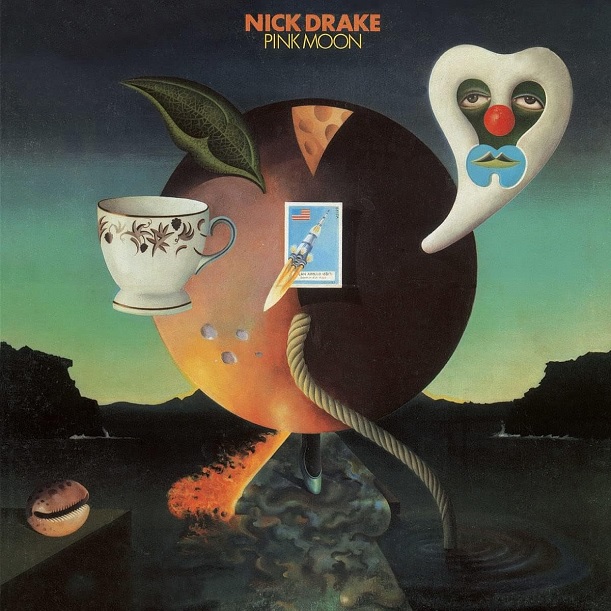
Joe Boyd initially took Pink Moon as a rebuke
Boyd was in the United States when Pink Moon was recorded and had no part in making it. When Island Records sent him a copy, he was alarmed by the cover and the album’s stark sound. He interpreted it as Drake rejecting the commercial ambitions they had previously shared, although he later came to appreciate the record’s significance.
--
Nick Drake’s guitar playing impressed his engineer for its rhythmic precision
John Wood later described Drake’s guitar playing as having an extraordinary metronomic quality. Wood was particularly impressed that Drake could maintain such precise rhythm despite having relatively little studio experience. The observation helps explain why the guitar on Pink Moon can sound so rhythmically compelling even when the arrangements are stripped back to the bare minimum.
--
Drake’s friends sometimes heard a very different performer in private
Accounts of Drake’s private musical gatherings describe him playing blues improvisations for friends, a side of his musicianship that was rarely documented on his official records. These informal performances contrast with the carefully constructed songs on his albums and suggest that the small public catalogue captures only part of his musical activity.
--
‘Pink Moon’ became a hit in America nearly three decades after Drake’s death
Volkswagen used the title track of Pink Moon in an American Cabrio advertisement in 1999. The placement brought Drake’s music to a much larger audience and led to a major increase in album sales. John Wood later reflected on how unexpected this success was, given that he had not considered the album commercially promising when it was first made.
--
Search Keywords
Nick Drake
Songwriter
Icon
NICK DRAKE
Links
Buy
Nick Drake Vinyl - direct link @ ebay.co.uk
(Lenin is a participant in the eBay (EPN) affiliate program)
Led Zeppelin Fascinating Facts
Human League Fascinating Facts
Visage / Steve Strange Fascinating Facts
Tears For Fears Fascinating Facts
Queen / Freddie Mercury Fascinating Facts
Danny Thompson Fascinating Facts
Talking Heads Fascinating Facts
Porcupine Tree Fascinating Facts
Adam and the Ants Fascinating Facts
Visage / Steve Strange Fascinating FactsTears For Fears Fascinating Facts
Queen / Freddie Mercury Fascinating Facts
Marc Bolan and T. Rex Fascinating Facts
Sting & The Police Fascinating Facts
Jean-Michel Jarre Fascinating Facts
Peter Gabriel Fascinating Facts
Holger Czukay Fascinating Facts
Anton Corbijn Fascinating Facts
Dexys Midnight Runners Fascinating Facts
Roxy Music / Bryan Ferry Fascinating Facts
Elvis Presley Fascinating Facts
Scott Walker Fascinating Facts
Michael Brook Fascinating Facts
Penguin Cafe Orchestra Fascinating Facts
David Bowie Rarities (Shipped From UK)
Cocteau Twins Fascinating Facts
Roxy Music / Bryan Ferry Fascinating Facts
Ryuichi Sakamoto Fascinating Facts
Haruomi Hosono Fascinating Facts
Yukihiro Takahashi Fascinating Facts
Hector Zazou Fascinating Facts
Frank Auerbach Fascinating Facts