ANTON CORBIJN
Links
Buy
Anton Corbijn Books - direct link @ ebay.co.uk
(Lenin is a participant in the eBay (EPN) affiliate program)
Anton Corbijn Fascinating Facts
Adam and the Ants Fascinating Facts
Nick Drake Fascinating FactsLed Zeppelin Fascinating Facts
Porcupine Tree Fascinating Facts
Danny Thompson Fascinating Facts
Peter Gabriel Fascinating Facts
Marc Bolan and T. Rex Fascinating Facts
Jean-Michel Jarre Fascinating Facts
Sting & The Police Fascinating Facts
Holger Czukay Fascinating Facts
Dexys Midnight Runners Fascinating Facts
Roxy Music / Bryan Ferry Fascinating Facts
Elvis Presley Fascinating Facts
Scott Walker Fascinating Facts
Michael Brook Fascinating Facts
Penguin Cafe Orchestra Fascinating Facts
David Bowie Rarities (Shipped From UK)
Cocteau Twins Fascinating Facts
Ryuichi Sakamoto Fascinating Facts
Haruomi Hosono Fascinating Facts
Yukihiro Takahashi Fascinating Facts
Hector Zazou Fascinating Facts
Frank Auerbach Fascinating Facts
Anton Corbijn
Artist
Anton Corbijn
Content
All the fascinating facts
More
Bitesized
Year
1980s to Present Day
Random and bite-sized facts on all things on the mythical photographer who is Anton Corbijn. Totally random but totally fascinating if you're into it. Do you know Anton Corbijn now?
--
HE FIRST PHOTOGRAPHED U2 IN 1982
Anton Corbijn first photographed U2 for the NME in New Orleans in 1982. What started as one photo session eventually became one of the longest-running creative relationships between a photographer and a rock band.
--
DEPECHE MODE RARELY QUESTIONED HIS IDEAS
When Anton Corbijn suggested ideas to Depeche Mode, the band generally just went along with them. Corbijn said they rarely held meetings to discuss his ideas — they would simply get on with it.
--
DAVE GAHAN WASN'T KEEN ON THE KING IDEA
For Depeche Mode's "Enjoy the Silence", Corbijn imagined Dave Gahan dressed as a king, carrying a deckchair through empty landscapes. The band weren't initially convinced by the idea, but trusted Corbijn enough to let him make it.
--
ANTON CORBIJN
Links
Buy
Anton Corbijn Books - direct link @ ebay.co.uk
(Lenin is a participant in the eBay (EPN) affiliate program)
--
HE DESIGNED DEPECHE MODE'S STAGE SHOW
Corbijn's work with Depeche Mode went far beyond photographs and album covers. He also designed their logos, T-shirts, videos and even their stage shows.
--
HE TURNED A U2 ALBUM INTO A FILM
For U2's "No Line on the Horizon", Corbijn made "Linear" — a film designed to accompany the entire album rather than simply provide another music video. It grew from footage he'd shot with the band in Morocco.
--
HE WANTED CONCERT FILMS TO FEEL REAL
When filming Depeche Mode live, Corbijn deliberately avoided making the cameras too flashy. He wanted it to feel like you were actually standing in the audience watching the band.
--
CONTROL WAS HIS FIRST FEATURE FILM
After years of photographing and filming musicians, Corbijn made his first feature film in 2007. "Control" told the story of Joy Division singer Ian Curtis, with Sam Riley playing Curtis.
--
ANTON CORBIJN
Links
Buy
Anton Corbijn Books - direct link @ ebay.co.uk
(Lenin is a participant in the eBay (EPN) affiliate program)
--
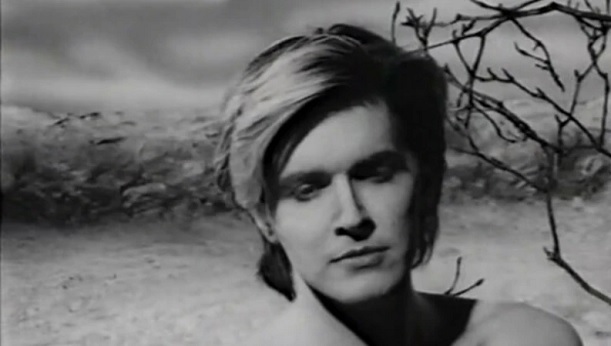
ANTON CORBIJN DIRECTED DAVID SYLVIAN'S FIRST SOLO VIDEO
After seeing Anton Corbijn's video for Propaganda's "Dr. Mabuse", David Sylvian approached him to direct "Red Guitar" — his first solo single after Japan. Corbijn based the video's main visual idea on a photograph by Angus McBean.
--
SYLVIAN APPROACHED CORBIJN AFTER SEEING PROPAGANDA
David Sylvian saw Anton Corbijn's video for Propaganda's "Dr. Mabuse" on television and approached him to direct "Red Guitar". Corbijn had already photographed Sylvian several times during the Japan years.
--
ANGUS MCBEAN ENDED UP IN THE VIDEO
Anton Corbijn based the main image in David Sylvian's "Red Guitar" video on a 1938 photograph by surrealist Angus McBean. Corbijn contacted McBean for permission to use it — and McBean ended up appearing in the video himself.
--
ANGUS MCBEAN WAS 80 WHEN HE APPEARED ON TOP OF THE POPS
Angus McBean appeared in David Sylvian's "Red Guitar" video at the age of 80. Anton Corbijn later recalled that McBean couldn't believe he was appearing on "Top Of The Pops".
--
CORBIJN STRUGGLED TO COME UP WITH THE IDEA
Corbijn spent several days alone in a Brussels hotel trying to come up with an idea for David Sylvian's "Red Guitar" video. He later admitted that he found it surprisingly difficult to come up with something worthwhile.
--
THE IMAGES WEREN'T SUPPOSED TO MAKE SENSE
For David Sylvian's "Red Guitar", Corbijn deliberately put together a series of images that had no obvious connection. His idea was to let viewers decide for themselves what the video meant rather than give them a fixed story.
--
CORBIJN MADE ANOTHER SYLVIAN VIDEO THAT YEAR
"Red Guitar" wasn't Anton Corbijn's only video with David Sylvian. He also directed "The Ink in the Well" later in 1984. After that, their collaboration continued through photography rather than more music videos.
--
ANTON CORBIJN
Links
Buy
Anton Corbijn Books - direct link @ ebay.co.uk
(Lenin is a participant in the eBay (EPN) affiliate program)
--
CORBIJN FIRST PHOTOGRAPHED DEPECHE MODE IN 1981
Anton Corbijn first photographed Depeche Mode in 1981 for the cover of NME. He wouldn't become closely involved with the band's visual identity until several years later.
--
HE DIRECTED HIS FIRST DEPECHE MODE VIDEO IN 1986
"A Question Of Time" was the first Depeche Mode video directed by Anton Corbijn. Shot in Los Angeles in black and white, it marked the beginning of a much bigger creative relationship with the band.
--
THE BAND LET CORBIJN TAKE CONTROL
Alan Wilder later said that it wasn't until Corbijn became involved in 1986 that Depeche Mode realised they could take more control over having a cohesive image as a group.
--
THEY HATED HIS IDEA FOR "ENJOY THE SILENCE"
Corbijn's idea for "Enjoy The Silence" was Dave Gahan dressed as a king, wandering around with a deckchair looking for somewhere peaceful to sit. The band hated the idea at first — but trusted Corbijn enough to let him make it.
--
THE DECKCHAIR HAD TO TRAVEL EVERYWHERE
For "Enjoy The Silence", Corbijn and Dave Gahan travelled as part of a tiny five-person team. They carried a Super 8 camera and the rather less portable king's deckchair with them between Scotland, Portugal and Switzerland.
--
THE VIDEO WAS FILMED IN FREEZING CONDITIONS
The "Enjoy The Silence" shoot began in Scotland in December 1989. Corbijn later remembered how difficult the cold was before the production moved on to Portugal and Switzerland.
--
"STRANGE" WAS SHOT ON SUPER 8
Corbijn shot the Depeche Mode videos collected on "Strange" on Super 8. The rough, grainy look became part of the visual character of the films rather than something to be cleaned up.
--
"STRANGE TOO" WAS HIS COLOUR VERSION
"Strange Too" followed in 1990 with six Corbijn films from the "Violator" era, including "Personal Jesus", "Policy Of Truth", "Enjoy The Silence", "Clean", "Halo" and "World In My Eyes". This time the films were in colour.
--
ANTON CORBIJN
Links
Buy
Anton Corbijn Books - direct link @ ebay.co.uk
(Lenin is a participant in the eBay (EPN) affiliate program)
--
MTV CENSORED "PERSONAL JESUS"
The original international version of Corbijn's "Personal Jesus" video was uncensored. MTV in the US used a slightly edited version which removed some of Martin Gore's silhouette shots.
--
"HALO" TURNED THE BAND INTO CHARACTERS
Corbijn's "Halo" video gave the four members very different characters. Martin Gore appeared as a clown, Dave Gahan as "The Strongest Man In The Universe", while Alan Wilder and Andy Fletcher appeared as strange undertaker-like figures.
--
"VIOLATOR" WAS MORE THAN JUST A PHOTO
Anton Corbijn designed the artwork for Depeche Mode's "Violator", including its famous single red rose against a black background. The same visual world continued through the album's singles and videos.
--
HE DESIGNED THE "SONGS OF FAITH AND DEVOTION" COVER
Corbijn designed the sleeve for "Songs Of Faith And Devotion" as well as taking the photographs. Unlike earlier Depeche Mode albums, it was the first of their studio album covers to feature the band's faces.
--
THE CORBIJN FILMS WERE FINALLY RESTORED
When "Strange" and "Strange Too" were released on DVD and Blu-ray in 2023, the 11 films were restored from their original Super 8 sources. Six previously unseen outtake "vignettes" were also included.
--
ANTON CORBIJN
Links
Buy
Anton Corbijn Books - direct link @ ebay.co.uk
(Lenin is a participant in the eBay (EPN) affiliate program)
--
CORBIJN DIDN'T EVEN LIKE U2'S MUSIC AT FIRST
When Anton Corbijn first went to photograph U2 in New Orleans in 1982, he admitted that their music wasn't really his thing. He had mainly accepted the job because he wanted to photograph New Orleans.
--
THE FIRST U2 SHOOT WAS ON A BOAT
Corbijn thought he'd photograph U2, listen to a few songs and then go exploring around New Orleans. What he hadn't realised was that the concert was on a boat which sailed onto the Mississippi — so he was stuck on board for the entire show.
--
THE JOSHUA TREE CHANGED EVERYTHING VISUALLY
Corbijn photographed U2 in the California desert for "The Joshua Tree". The stark black-and-white photographs became one of the defining images of the album and of U2's visual identity in the late 1980s.
--
BONO WANTED TO LOOK LIKE CORBIJN
When Bono first met Corbijn, he had a very specific request: make him look tall, skinny, intelligent and funny. Corbijn's response was basically: "So you wanna look like me?"
--
ANTON CORBIJN
Links
Buy
Anton Corbijn Books - direct link @ ebay.co.uk
(Lenin is a participant in the eBay (EPN) affiliate program)
--
CORBIJN SAW U2 CHANGE IN FRONT OF HIS CAMERA
Corbijn said his book "U2 & I" showed more than just the band's changing appearance. He saw their attitude change too — particularly the difference between "The Joshua Tree" and "Achtung Baby".
--
BONO HELPED PUSH CORBIJN INTO COLOUR
Corbijn said Bono knew what he had been doing with Depeche Mode's colour photography and encouraged him during U2's transformation around "Achtung Baby". He said their willingness to accept his mistakes helped both sides develop.
--
"ACHTUNG BABY" WAS CORBIJN'S OTHER FAVOURITE PERIOD
Corbijn later singled out "The Joshua Tree" and "Achtung Baby" as the two most interesting periods of his work with U2. He felt the experimental music of "Achtung Baby" was reflected in the photographs.
--
HE HAD PHOTOGRAPHED U2 HUNDREDS OF TIMES
By 2005, Corbijn estimated that he had photographed U2 at around a hundred sessions and hundreds of shows. He had been working with them since that first New Orleans shoot in 1982.
--
"U2 & I" WAS TWENTY-TWO YEARS OF PHOTOGRAPHS
Corbijn's book "U2 & I" brought together two decades of his photographs of the band. He said it also documented his own development as a photographer alongside U2's transformation.
--
"LINEAR" STARTED WITH A FILMING TRICK
The idea for Corbijn's "Linear" film began during a 2007 U2 shoot in Morocco. He filmed the band standing completely still while things around them moved, almost like a photograph that had somehow come to life.
--
"LINEAR" WASN'T A NORMAL MUSIC VIDEO
For "No Line On The Horizon", U2 asked Corbijn to make something more ambitious than a conventional promotional video. "Linear" became a companion film to the album, turning themes from the songs into a continuous road journey.
--
CORBIJN'S U2 RELATIONSHIP LASTED DECADES
Corbijn wasn't simply hired for individual album covers. His photographs became part of U2's visual identity across decades, from "War" and "The Joshua Tree" through "Achtung Baby", "All That You Can't Leave Behind" and beyond.
--
ANTON CORBIJN
Links
Buy
Anton Corbijn Books - direct link @ ebay.co.uk
(Lenin is a participant in the eBay (EPN) affiliate program)
--
JOY DIVISION BROUGHT CORBIJN TO ENGLAND
Anton Corbijn moved from the Netherlands to England in October 1979 because he wanted to be closer to the music he loved. Joy Division were a major reason for the move.
--
HE MET JOY DIVISION WITHIN 12 DAYS
Corbijn arrived in England at the end of October 1979. Within 12 days he had persuaded Joy Division to meet him at Lancaster Gate Underground station for a photo shoot.
--
THE BAND NEARLY IGNORED HIS FAMOUS PHOTO
Corbijn's famous photograph shows three members of Joy Division walking towards a tunnel while Ian Curtis looks back at the camera. He later said not a single magazine initially wanted the picture — but Joy Division themselves liked it.
--
ANTON CORBIJN
Links
Buy
Anton Corbijn Books - direct link @ ebay.co.uk
(Lenin is a participant in the eBay (EPN) affiliate program)
--
THE IDEA WAS JOY DIVISION WALKING INTO THE FUTURE
Corbijn deliberately posed Joy Division with their backs to the camera because he wanted their bodies to symbolise the music and the idea of the band walking towards the unknown.
--
IAN CURTIS TURNED A GOOD PHOTO INTO SOMETHING ELSE
Corbijn knew the photograph was strong when he took it, but Ian Curtis's death six months later completely changed how people saw it. Corbijn later said the image began to look as though he had somehow known what was going to happen.
--
CORBIJN'S PHOTOS WERE BLACK AND WHITE FOR A PRACTICAL REASON
Corbijn loved shooting in black and white, but there was another reason he photographed Joy Division that way. The music magazines interested in publishing pictures of the band were printed in black and white.
--
THE JOY DIVISION PHOTOGRAPHS HELPED DEFINE CORBIJN
The Joy Division photographs were among Corbijn's earliest important images in England. Their stark look became closely associated with both the band and Corbijn's developing photographic style.
--
"CONTROL" WASN'T SUPPOSED TO BE HIS FIRST FILM
Corbijn had been offered film projects before "Control" but turned them down because he didn't feel a connection with the stories. He eventually returned to "Control" because Joy Division and Ian Curtis had such a strong personal connection to his own life.
--
HE MADE "CONTROL" IN BLACK AND WHITE FOR THE SAME REASON
Corbijn filmed "Control" in black and white because his memories of Joy Division were black and white. He also felt that almost all the surviving visual record of the band was monochrome.
--
CORBIJN HAD SEEN JOY DIVISION LIVE
When making "Control", Corbijn wasn't reconstructing Joy Division's stage performances from old footage alone. He had actually seen the band live, so he had his own memories of how they moved and performed.
--
"CONTROL" WAS HIS FIRST FEATURE FILM
"Control" became Anton Corbijn's first feature film. He had already spent years making music videos and photographing musicians, but had never directed a feature before.
--
HE STARTED WITH HIS FATHER'S CAMERA
Anton Corbijn was 17 when he borrowed his father's camera to photograph a band playing in his new hometown in the Netherlands. He was too shy to go to the concert without a reason — the camera gave him one. Three of the pictures were published by a music magazine.
--
HE DIDN'T KNOW ANYTHING ABOUT PHOTOGRAPHY
When Corbijn took those first photographs, he didn't know about f-stops, photography history or much else. He simply loved music and wanted a way into that world. He taught himself as he went along.
--
ANTON CORBIJN
Links
Buy
Anton Corbijn Books - direct link @ ebay.co.uk
(Lenin is a participant in the eBay (EPN) affiliate program)
--
HE USED BLACK AND WHITE FOR A VERY PRACTICAL REASON
Corbijn's famous black-and-white style wasn't originally some grand artistic decision. In the 1970s, the music magazines he was working for were generally printed in black and white, while colour was more associated with commercially successful artists.
--
THE GRAIN WAS PART OF THE POINT
Corbijn deliberately embraced grain, blur and imperfect focus. He felt that technically perfect, sharply lit photographs didn't look like the way he experienced real life. For him, the imperfections made photographs feel more human.
--
HE DIDN'T WANT MUSICIANS TO LOOK LIKE ROCK STARS
When photographing musicians, Corbijn often left their instruments out of the picture. He wanted to photograph them as people rather than simply showing them performing or posing as musicians.
--
HE OFTEN PUT PEOPLE IN THE LANDSCAPE
Corbijn often made his subjects relatively small within a much larger environment. He wasn't interested in filling every photograph with a famous face — the surroundings could be just as important as the person.
--
HE WORKS VERY FAST
Corbijn became known for taking remarkably short portrait sessions. He has sometimes completed an entire session in only a few minutes, believing that limited time can actually force a photographer to concentrate harder.
--
HE LEARNED TO LIMIT HIS EQUIPMENT
Corbijn has talked about deliberately limiting the equipment he uses. Instead of carrying lots of lenses and constantly changing his setup, he believes restrictions can make you more inventive.
--
BRIAN ENO TAUGHT HIM SOMETHING ABOUT LIMITS
Corbijn has specifically credited Brian Eno with influencing his approach to limitation. Eno's idea was that restricting the way you work can force you to become more inventive — something Corbijn carried into his photography.
--
HE DIDN'T START OUT WANTING TO BE AN ART PHOTOGRAPHER
For years, Corbijn's only real photographic subject was music. It was only later that he became interested in photography itself as an art form and began photographing painters, directors, actors and other artists.
--
HE CHANGED CAMERAS TO STOP REPEATING HIMSELF
After completing his first book, Corbijn felt that he was beginning to see photographs in his head through the same camera. He changed from his 35mm camera to a Hasselblad partly to challenge himself and avoid simply repeating what he had already done.
--
HE WANTED THE PERSON TO CHANGE, NOT JUST THE POSE
Corbijn has said that portraiture interests him because it can show someone differently from their public persona. He isn't simply trying to reproduce the image people already have of a famous person.
--
Search Keywords
Anton Corbijn
Depeche Mode
Joy Division
ANTON CORBIJN
Links
Buy
Anton Corbijn Book - direct link @ ebay.co.uk
(Lenin is a participant in the eBay (EPN) affiliate program)
Anton Corbijn Fascinating Facts
Adam and the Ants Fascinating Facts
Porcupine Tree Fascinating FactsLed Zeppelin Fascinating Facts
Danny Thompson Fascinating Facts
Marc Bolan and T. Rex Fascinating Facts
Jean-Michel Jarre Fascinating Facts
Sting & The Police Fascinating Facts
Peter Gabriel Fascinating Facts
Holger Czukay Fascinating Facts
Dexys Midnight Runners Fascinating Facts
Roxy Music / Bryan Ferry Fascinating Facts
Elvis Presley Fascinating Facts
Scott Walker Fascinating Facts
Michael Brook Fascinating Facts
Penguin Cafe Orchestra Fascinating Facts
David Bowie Rarities (Shipped From UK)
Cocteau Twins Fascinating Facts
Roxy Music / Bryan Ferry Fascinating Facts
Ryuichi Sakamoto Fascinating Facts
Haruomi Hosono Fascinating Facts
Yukihiro Takahashi Fascinating Facts
Hector Zazou Fascinating Facts
Frank Auerbach Fascinating Facts