MARC BOLAN AND T. REX
Links
Buy
Marc Bolan and T. Rex Vinyl - direct link @ ebay.co.uk
(Lenin is a participant in the eBay (EPN) affiliate program)
Marc Bolan and T. Rex Fascinating Facts
Adam and the Ants Fascinating Facts
Porcupine Tree Fascinating FactsHuman League Fascinating Facts
Danny Thompson Fascinating Facts
Talking Heads Fascinating Facts
Led Zeppelin Fascinating Facts
Sting & The Police Fascinating Facts
Jean-Michel Jarre Fascinating Facts
Peter Gabriel Fascinating Facts
Holger Czukay Fascinating Facts
Anton Corbijn Fascinating Facts
Dexys Midnight Runners Fascinating Facts
Roxy Music / Bryan Ferry Fascinating Facts
Elvis Presley Fascinating Facts
Scott Walker Fascinating Facts
Michael Brook Fascinating Facts
Penguin Cafe Orchestra Fascinating Facts
David Bowie Rarities (Shipped From UK)
Cocteau Twins Fascinating Facts
Ryuichi Sakamoto Fascinating Facts
Haruomi Hosono Fascinating Facts
Yukihiro Takahashi Fascinating Facts
Hector Zazou Fascinating Facts
Frank Auerbach Fascinating Facts
Marc Bolan and T. Rex
Artist
Marc Bolan and T. Rex
Content
All the fascinating facts
More
Bitesized
Year
1960s to Present Day
Random and bite-sized facts on all things on the mythical figure that was Marc Bolan. Totally random but totally fascinating if you're into it. Do you know Marc Bolan now?
--
BOLAN HEADLINED THE FIRST GLASTONBURY FESTIVAL
Marc Bolan and Tyrannosaurus Rex headlined the first Glastonbury Festival in 1970 after The Kinks cancelled. It was also around this point that Bolan shortened the group's name to T. Rex as he began moving away from the acoustic sound of Tyrannosaurus Rex.
--
T. REX HAD ELEVEN UK TOP TEN SINGLES
Between “Ride a White Swan” in 1970 and the run of hits that followed, T. Rex had eleven UK Top 10 singles. The sequence included “Hot Love”, “Get It On”, “Telegram Sam”, “Metal Guru” and “Children of the Revolution”. It was one of the most successful singles runs of the glam-rock era.
--
“20TH CENTURY BOY” WAS NEVER ON A T. REX STUDIO ALBUM
Despite becoming one of Marc Bolan's most recognisable songs, “20th Century Boy” was released as a single in 1973 and wasn't included on a contemporary T. Rex studio album. The same was true of several of Bolan's biggest singles, which he deliberately kept separate from his albums.
--
BOLAN WANTED HIS SINGLES TO GIVE FANS SOMETHING EXTRA
Marc Bolan said he wanted people who bought one of his singles and then bought the album to feel they had received their money's worth. That was one reason some of T. Rex's strongest songs, including “20th Century Boy” and “Children of the Revolution”, weren't simply saved for the next LP.
--
ELECTRIC WARRIOR WAS RECORDED IN FOUR STUDIOS
Electric Warrior wasn't made in one studio. Recording took place in London, Los Angeles and New York before the album was mixed back in London. Producer Tony Visconti later said the unusual circumstances helped create the record's distinctive sound.
--
“GET IT ON” WAS WRITTEN AS A TRIBUTE TO CHUCK BERRY
Marc Bolan wrote “Get It On” after deciding he wanted to make his own version of the kind of rock'n'roll song associated with Chuck Berry. Rather than record a cover, he wrote a new song around that influence. Tony Visconti later recalled that Bolan already knew the song was something special when he brought it into the sessions.
--
THE SLIDER WAS RECORDED WHILE T. REX WERE ON TOUR
Much of The Slider was recorded while T. Rex were touring. Tony Visconti later explained that Bolan was so busy that he would sometimes write songs in hotel rooms and teach them to the band at soundchecks. The musicians could then go into the studio and record backing tracks remarkably quickly.
--
TONY VISCONTI SAID T. REX COULD RECORD FIVE BACKING TRACKS IN A DAY
By the time they made The Slider, Tony Visconti said T. Rex were working almost like a group of session musicians. He recalled that they could record around five backing tracks in a day and arrange much of the material on the spot. It was a very different process from the more elaborate making of Electric Warrior.
--
BOLAN CALLED THE SLIDER HIS “IMAGINE”
In interviews around the release of The Slider, Bolan compared the album to John Lennon's Imagine. He felt the songs allowed him to be more frank and truthful about himself. That is striking given how much of Bolan's public image was built around fantasy, glamour and theatricality.
--
T. REX'S LAST UK TOUR LASTED JUST ELEVEN DAYS
The Dandy in the Underworld tour in March 1977 lasted only eleven days and turned out to be T. Rex's final UK tour. Bolan was attempting to rebuild his career after the huge glam-rock years, making this short tour an important but often overlooked part of his final period.
--
MARC BOLAN AND T. REX
Links
Buy
Marc Bolan and T. Rex Japanese Vinyl - direct link @ ebay.co.uk
(Lenin is a participant in the eBay (EPN) affiliate program)
--
RIDE A WHITE SWAN HAD NO DRUMS
When T. Rex recorded "Ride a White Swan" in 1970, there was no drummer on the track. Marc Bolan played four layered guitar parts, while Tony Visconti used a synchronised tambourine and handclaps to keep time. The claps were recorded in the bathroom at Trident Studios because its acoustics provided the echo Visconti wanted.
--
THE SONG WAS MADE LONGER IN THE STUDIO
"Ride a White Swan" was originally less than two minutes long. Tony Visconti extended it by looping Bolan singing "da da dee dee dah" at the end of the recording six times, bringing the finished version to just over two minutes.
--
HOT LOVE WAS A FIRST FOR T. REX
"Hot Love" was the first T. Rex recording to feature a full drum kit. Bill Fifield played on the session and subsequently joined the band under the name Bill Legend. The track also introduced backing vocals by Howard Kaylan and Mark Volman of The Turtles.
--
BOLAN DIDN'T BRING DEMOS TO THE STUDIO
Tony Visconti recalled that Marc Bolan rarely brought finished demos to T. Rex recording sessions. Instead, he would teach the songs to the musicians on the spot. Visconti said Bolan was extremely protective of his songs and was afraid of other people hearing his demos.
--
BOLAN KEPT SONGS IN A SCHOOL NOTEBOOK
According to Tony Visconti, Bolan carried a black school exercise book containing pages of lyrics. Visconti once looked inside and found around 50 songs written down. Bolan apparently knew the chord changes and music for them in his head rather than writing the music out.
--
THE FIRST TYRANNOSAURUS REX ALBUM WAS RECORDED VERY QUICKLY
Tony Visconti later recalled that the first Tyrannosaurus Rex album was recorded in only two or three days, with the entire album mixed on the fourth day. The limited budget was one reason the recording sounded so sparse compared with the much bigger T. Rex productions that followed.
--
STEVE TOOK WAS MORE THAN A PERCUSSIONIST
Tony Visconti regarded Steve Peregrine Took as an important creative force in the early Tyrannosaurus Rex. Visconti recalled that Took played numerous instruments and contributed ideas of his own, with the partnership between Took and Bolan eventually becoming much closer to an equal creative relationship.
--
BOLAN COULD KEEP A SONG VERY SIMPLE
Tony Visconti said Bolan was not interested in making every recording technically perfect. He recalled that they deliberately kept mistakes when those mistakes gave a performance a feeling of immediacy or spontaneity. The aim was often to capture the feel of a performance rather than polish every detail.
--
MAMBO SUN'S GUITAR PART WAS PLANNED AT HOME
The guitar work on "Mambo Sun" was not simply improvised in the studio. Tony Visconti recalled that Bolan had worked out the guitar part at home, including the distinctive double-tracked guitar played an octave lower.
--
THE FIRST T. REX HIT STILL HAD ONE FOOT IN THE OLD SOUND
"Ride a White Swan" was the first single released under the shortened T. Rex name, but despite signalling Bolan's move towards rock and electric guitar, it still contained no drums. The fuller band sound arrived with "Hot Love" a few months later.
--
MARC BOLAN AND T. REX
Links
Buy
Marc Bolan and T. Rex Japanese Vinyl - direct link @ ebay.co.uk
(Lenin is a participant in the eBay (EPN) affiliate program)
--
THE SLIDER WAS RECORDED AT AN INCREDIBLE SPEED
Tony Visconti recalled that T. Rex had only four days booked to record The Slider, but managed to record around 17 songs during those sessions. The band worked from the moment they woke up until late at night, reflecting the enormous pressure Bolan felt to follow Electric Warrior.
--
BOLAN WROTE SONGS IN HOTEL ROOMS
By the time T. Rex were touring heavily, Marc Bolan often wrote new songs in hotel rooms rather than rehearsing with the band. He would teach the songs to the musicians there, and they would then learn them properly at soundchecks before recording them.
--
T. REX COULD RECORD FIVE BACKING TRACKS IN A DAY
Tony Visconti said that from The Slider onwards, T. Rex could record around five backing tracks in a single day. The arrangements were often worked out in the studio, with the musicians essentially behaving like highly experienced session players.
--
BOLAN'S GUITAR WAS OFTEN RECORDED TWICE
Tony Visconti said that on T. Rex recordings, Bolan's original guitar was placed on one side of the stereo image and his overdub was placed on the other. The overdub could be recorded only about 15 minutes after the basic track had been accepted.
--
THE CHILDREN OF RARN ALBUM WAS NEVER RELEASED
After making The Slider and Tanx, T. Rex recorded material intended for an album called The Children of Rarn. The project was abandoned and the album was never released. Tony Visconti later recalled that he suggested Bolan take a year away from recording, but Bolan wanted to continue making singles and albums.
--
TANX BROUGHT THE MELLotron BACK
Tony Visconti recalled that he and T. Rex brought an old Mellotron back into the studio for Tanx. The album also allowed Bolan to explore sounds further away from the straightforward glam-rock formula, including funk, soul, saxophone and more elaborate arrangements.
--
BOLAN CALLED HIS NEW SOUND SPACEAGE FUNK
While working on the music that became Zinc Alloy and the Hidden Riders of Tomorrow, Marc Bolan described some of his ambitions with phrases including "spaceage funk" and "interstellar supersoul". The album reflected his growing interest in combining rock with funk, soul and psychedelic influences.
--
ZINC ALLOY HAD A DIFFERENT NAME ON THE COVER
Zinc Alloy and the Hidden Riders of Tomorrow was the first and only T. Rex album officially released under the name Marc Bolan & T. Rex. It appeared in March 1974 and marked another change in the band's presentation during a period when Bolan was experimenting with different musical styles.
--
ELECTRIC WARRIOR WAS BUILT BETWEEN AMERICAN GIGS
Marc Bolan later described Electric Warrior as one of his loosest albums because much of it was recorded between T. Rex concerts in America. Some of the rough backing tracks sounded so good that they were kept for the finished recordings rather than being replaced.
--
BOLAN HID LITTLE STUDIO TRICKS ON ELECTRIC WARRIOR
Marc Bolan said that Electric Warrior contained "little sneakies" for listeners to discover, including backward guitar and baroque strings. He felt the album could appear simple on the surface while containing details that became more noticeable when heard closely on headphones.
--
THE SLIDER SESSIONS INCLUDED A TWELVE-MINUTE REHEARSAL
During the recording sessions for The Slider, T. Rex recorded a roughly 12-minute rehearsal of "Children of the Revolution". The tape box was marked "For Ringo", as the song was intended for use in Ringo Starr's T. Rex film Born to Boogie.
--
THE SLIDER'S GUITARS WERE RECORDED IN A VERY UNUSUAL WAY
Tony Visconti recalled that Marc Bolan sometimes deliberately added large numbers of guitar overdubs rather than replacing an existing performance. On "The Slider", Bolan told Visconti he was going to add seven guitars to the basic track, even though the bassist felt he could improve his original performance.
--
MARC BOLAN AND T. REX
Links
Buy
Marc Bolan and T. Rex Japanese Vinyl - direct link @ ebay.co.uk
(Lenin is a participant in the eBay (EPN) affiliate program)
--
BOLAN WAS AFRAID OF HIDDEN CAMERAS
During the later T. Rex sessions, Marc Bolan became so suspicious about people discovering his songwriting and recording methods that Tony Visconti said Bolan would sometimes refuse to pick up a guitar in the studio because he believed there might be hidden cameras watching him.
--
BOLAN COULD PLAY A 20-MINUTE GUITAR SOLO
Tony Visconti recalled that Marc Bolan could improvise for as long as 20 minutes when playing live. Visconti believed this sometimes worked against T. Rex in America, where audiences were expecting the shorter, more direct rock'n'roll style of the hit records.
--
BOLAN BORROWED VISCONTI'S BASS
When recording "Ride a White Swan", Marc Bolan wanted to play the bass himself because he already had a particular bass line in his head. Tony Visconti lent him his own bass for the recording.
--
THE BAND COULD LEARN A SONG IN MINUTES
Tony Visconti compared T. Rex's musicians to Nashville session players because they could hear a new song once and be ready to make a master take around 15 minutes later. Bolan's songs were generally simple enough for the musicians to absorb extremely quickly.
--
VISCONTI ONCE WROTE T. REX ON HIS WALL
While working on Unicorn, Tony Visconti began writing "T. Rex" on his studio calendar instead of the group's full name, Tyrannosaurus Rex. Bolan initially objected, telling him it was Tyrannosaurus Rex. The following album was simply called T. Rex.
--
THE FIRST T. REX ALBUM COST JUST £400 TO RECORD
Tony Visconti recalled being given £400 to record the first T. Rex album, which bought only four days in the studio. He largely recorded the duo's live set, adding a few overdubs and double-tracked parts where there was enough time.
--
ONE EARLY SONG TOOK ONLY 30 MINUTES
Tony Visconti recalled that during the early Tyrannosaurus Rex sessions they could sometimes record a complete song in about 30 minutes, including Steve Peregrine Took adding his percussion parts. The speed was partly a necessity because the recording budget was so small.
--
UNICORN WAS VISCONTI'S FAVOURITE
Tony Visconti has described Unicorn as his favourite of the Tyrannosaurus Rex albums. He particularly praised Marc Bolan's writing on the record, describing that period as one in which Bolan's lyrics were at their most imaginative and poetic.
--
STEVE PEREGRINE TOOK WAS NEARLY A 50-50 PARTNER
Tony Visconti believed Steve Peregrine Took had become almost a 50-50 creative partner with Marc Bolan by the time their partnership ended. Took contributed backing vocals and played numerous instruments, including percussion, drums, xylophone and one-string fiddle.
--
BOLAN PRACTISED ALONE WITH A CASSETTE
After Steve Peregrine Took left, Marc Bolan said he spent months rehearsing alone with a cassette recorder while working out what he wanted to do next. He later formed the new T. Rex line-up with Mickey Finn and began moving decisively towards an electric band sound.
--
BOLAN REALISED THE OLD BAND COULDN'T RECREATE THE RECORD
After "Ride a White Swan" became a hit, Marc Bolan realised that the acoustic Tyrannosaurus Rex line-up could not reproduce the sound of the record on stage. He gradually added bass and drums, eventually deciding that he needed a proper drummer for the new electric T. Rex.
--
THE EARLY RECORDS WERE INSPIRED BY PET SOUNDS
Tony Visconti said that he and Marc Bolan were inspired by The Beach Boys' Pet Sounds when experimenting with vocal arrangements on the early Tyrannosaurus Rex records. He particularly pointed to Unicorn as an album where those influences could be heard.
--
MARC BOLAN AND T. REX
Links
Buy
Marc Bolan and T. Rex Japanese Vinyl - direct link @ ebay.co.uk
(Lenin is a participant in the eBay (EPN) affiliate program)
--
BOLAN'S GUITAR HAD BEEN TAKEN AWAY
When Marc Bolan left John’s Children, his guitar was taken from him. Tony Visconti later recalled that Bolan had always wanted to make a rock record, but initially had to develop the acoustic Tyrannosaurus Rex sound instead.
--
THEY STUDIED THE BEATLES AND BEACH BOYS
Marc Bolan and Tony Visconti spent time analysing Beatles and Beach Boys records, breaking down how the sounds had been created before trying to reproduce some of those techniques with Tyrannosaurus Rex. Their limited equipment forced them to find unusually simple solutions.
--
THE PIXIEPHONE CAME FROM WOOLWORTH'S
Some of the strange percussion sounds on the early Tyrannosaurus Rex records came from a Pixiephone bought from Woolworth's. It was a small children's percussion instrument, but Tony Visconti used it as part of the duo's deliberately unconventional sound.
--
VISCONTI TRIED TO MAKE A WALL OF SOUND WITH TWO MUSICIANS
For Unicorn, Tony Visconti wanted to create something resembling Phil Spector's Wall of Sound despite having only Marc Bolan and Steve Peregrine Took as the performing musicians. He achieved the effect through overdubbing and arranging rather than using a large band.
--
DEBORA WAS TURNED UPSIDE DOWN
The opening track of Prophets, Seers & Sages was a reworking of Tyrannosaurus Rex's earlier single "Debora". Bolan and Visconti reversed part of the tape, turning the title into "Deboraarobed" and giving the familiar song a completely different psychedelic feel.
--
EASTERN SPELL WAS AN OLD SONG
"Eastern Spell" appeared on Prophets, Seers & Sages in 1968, but Marc Bolan had actually written the song much earlier. It had been recorded as a demo in 1966 before being set aside and eventually brought back for Tyrannosaurus Rex.
--
SALAMANDA PALAGANDA STARTED WITH A PHRASE
Marc Bolan came up with the unusual phrase "Salamanda Palaganda" while driving. The words stuck in his head, and he subsequently built a song around the phrase for Prophets, Seers & Sages.
--
BOLAN'S OLD SONGS COULD BE COMPLETELY REWORKED
"Debora" was not simply performed again for Prophets, Seers & Sages. Bolan and Tony Visconti deliberately reconstructed the song, including the reversed-tape section, showing how willing they were to alter even an existing single for an album.
--
T. REX RECORDED IN TOKYO WITHOUT VISCONTI
During a 1972 Far East tour, T. Rex entered Toshiba Studios in Tokyo and recorded "20th Century Boy", "Electric Slim and the Factory Hen" and "Shock Rock". Tony Visconti was not present for those sessions.
--
20TH CENTURY BOY ALMOST APPEARED ON TANX
"20th Century Boy" was originally included on a master tape compiled for the Tanx album, where it was intended to appear as the closing track. The running order was subsequently changed and the song was removed, leaving Tanx without any of T. Rex's contemporary singles.
--
THE VOICE AT THE START OF MAD DONNA WAS UNEXPECTED
The spoken French voice heard at the beginning of "Mad Donna" came from the daughter of the head of T. Rex's record label. She was brought into the recording rather than being a conventional session vocalist.
--
BOLAN WAS ALREADY EXPERIMENTING BEFORE GLAM ROCK
Long before T. Rex became associated with glam rock, Marc Bolan was experimenting with reversed tapes, unusual percussion, overdubbing and psychedelic studio effects. Some of these experiments can be heard on the Tyrannosaurus Rex albums from the late 1960s.
--
MARC BOLAN AND T. REX
Links
Buy
Marc Bolan and T. Rex Japanese Vinyl - direct link @ ebay.co.uk
(Lenin is a participant in the eBay (EPN) affiliate program)
--
VISCONTI PLAYED PIANO ON UNICORN
Tony Visconti did more than produce Tyrannosaurus Rex. He played piano on "Cat Black (The Wizard's Hat)" from Unicorn, adding another layer to the otherwise unusual two-man sound of Marc Bolan and Steve Peregrine Took.
--
VISCONTI SAW BOLAN AS A ROCK STAR FROM THE START
When Tony Visconti first met Marc Bolan, he immediately saw him as a potential rock star. Visconti later said that Bolan's talent was obvious to him even though Tyrannosaurus Rex were then performing as a tiny acoustic folk duo.
--
THE EARLY DUO SOLD THE SAME NUMBER OF ALBUMS AGAIN AND AGAIN
Tony Visconti recalled that the early Tyrannosaurus Rex albums repeatedly reached a ceiling of roughly 20,000 sales. Their audience was largely made up of underground and John Peel listeners, rather than the much larger teenage audience Bolan would reach after becoming T. Rex.
--
BOLAN DIDN'T REALLY SEE HIMSELF AS A HIPPY
Despite his appearance and the mystical imagery surrounding Tyrannosaurus Rex, Tony Visconti said Marc Bolan was not really a hippy. At the time Visconti was recording him, Bolan was still living with his parents and had never taken hallucinogenic drugs.
--
THE EARLY T. REX SOUND WAS LIMITED BY MONEY
Tony Visconti later explained that the primitive sound of the first Tyrannosaurus Rex records was not entirely a deliberate artistic choice. The musicians simply did not have the money to make the bigger, fuller rock records that Bolan eventually wanted to create.
--
THEY RECORDED EASTERN SPELL YEARS AFTER IT WAS WRITTEN
"Eastern Spell" appeared on Prophets, Seers & Sages in 1968, but Marc Bolan had already made a demo of the song in 1966. It therefore survived for several years before finally finding its way onto a Tyrannosaurus Rex album.
--
DEBORA WAS RECORDED TWICE FOR TWO DIFFERENT ALBUMS
After the original "Debora" became Tyrannosaurus Rex's first hit, Bolan and Visconti recorded another version for Prophets, Seers & Sages. They then subjected that version to a dramatic tape experiment, with the song repeated backwards after its first performance.
--
THE BACKWARDS VERSION HAS A STRANGE TITLE
The album version of "Debora" is officially titled "Deboraarobed". The unusual title is simply "Debora" written backwards, reflecting the tape reversal used during the recording.
--
JUNIPER SUCTION WAS A SONG BOLAN WAS PROUD OF
Marc Bolan later singled out "Juniper Suction" as an important moment in his development as a songwriter. The brief song appeared on Prophets, Seers & Sages and used the strange, surreal wordplay that characterised his early writing.
--
TANX WAS INFLUENCED BY AMERICAN RADIO
When T. Rex returned to the studio to work on Tanx after touring America, Marc Bolan and the band had been listening closely to American radio. The resulting songs moved further into funk, soul and other influences that Bolan had heard during the trip.
--
MARC PLAYED SLIDE GUITAR ON TANX
Marc Bolan used slide guitar extensively during the recording of Tanx. In an interview shortly before its release, he said that he played slide guitar on every track, while also bringing saxophones and a prominent pianist into the arrangements.
--
METAL GURU HAD A STRANGE REQUIREMENT
Tony Visconti recalled that Bolan had developed a superstition that T. Rex singles needed strings after the success of earlier records featuring them. "Get It On" had initially been recorded without strings, but Bolan became visibly concerned when he realised this and asked Visconti to add something.
--
BOLAN WANTED TWO FALSETTO VOICES
Marc Bolan also developed a superstition about having two male falsetto voices on T. Rex records. Howard Kaylan and Mark Volman, formerly of The Turtles, became the voices behind that distinctive sound and appeared on several recordings.
--
THE SLIDER'S COVER HAS A VISCONTI CONNECTION
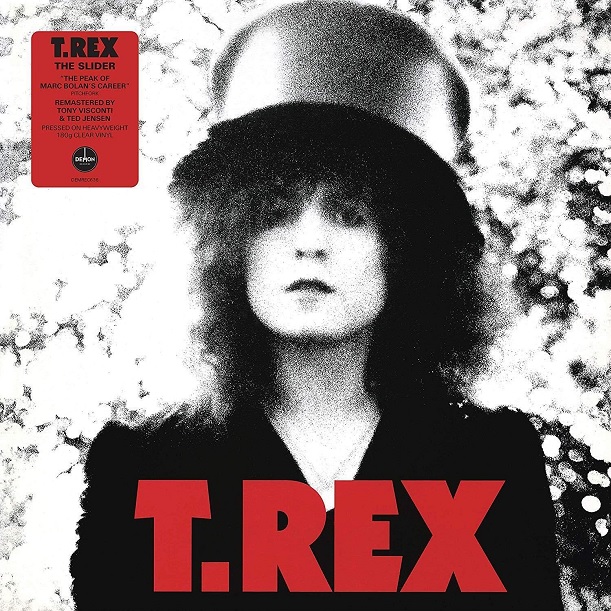
Tony Visconti has claimed that he, rather than Ringo Starr, took the famous photographs of Marc Bolan wearing the top hat that became associated with the cover of The Slider. The question of who actually took the photographs has been debated for years.
--
MARC BOLAN AND T. REX
Links
Buy
Marc Bolan and T. Rex Japanese Vinyl - direct link @ ebay.co.uk
(Lenin is a participant in the eBay (EPN) affiliate program)
--
BOLAN HAD TO BUILD T. REX AROUND ONE HIT
After "Ride a White Swan" became a hit, Marc Bolan realised that T. Rex could not reproduce the record on stage with the existing line-up. He first added bass, then decided he needed a drummer as well. Bolan later recalled that once the complete band played together, he suddenly realised he had created the group he had been looking for.
--
STEVE CURRIE JOINED ALMOST IMMEDIATELY
When Marc Bolan decided that T. Rex needed a bass player, he said that Steve Currie was found only a day later. The line-up then grew rapidly as Bolan continued reshaping the band around the increasingly electric sound.
--
BOLAN MISSED THE HAND DRUMS
When Mickey Finn moved from hand percussion to a conventional drum kit, Marc Bolan missed the looser, funkier feel of the hand drums. Bolan later said that this was one of the reasons he decided T. Rex needed another drummer.
--
THE FIRST ELECTRIC T. REX ALBUM WAS STILL PARTLY ACOUSTIC
Although the 1970 T. Rex album marked a major change in sound, Marc Bolan continued using acoustic guitar alongside electric guitar. Tony Visconti described it as essentially a Tyrannosaurus Rex record made slicker and with a drum kit added.
--
UNICORN WAS THE FIRST ALBUM VISCONTI PLAYED ON
Tony Visconti had produced the earlier Tyrannosaurus Rex records, but Unicorn was the first of them on which he actually performed. He played piano on "Cat Black (The Wizard's Hat)", adding another instrument to the duo's sparse sound.
--
UNICORN WAS RECORDED WITH ELECTRIC GUITAR
Despite Tyrannosaurus Rex's reputation as an entirely acoustic act, Marc Bolan used electric guitar on Unicorn. Tony Visconti later called the album his favourite Tyrannosaurus Rex record and said it contained the beginnings of the fuller T. Rex sound.
--
T. REX RECORDED TANX IN FRANCE
The basic sessions for Tanx took place at the Château d'Hérouville's Strawberry Studios in France. Tony Visconti later recalled that the band recorded 17 songs there in only three days, with the overdubs and mixing completed afterwards.
--
THE TANX SESSIONS WERE INCREDIBLY FAST
Tony Visconti said that T. Rex recorded 17 songs in three days while working on Tanx. The speed was remarkable even by T. Rex standards, and the musicians were able to complete the basic performances before the additional arrangements were added later in London.
--
BOLAN PLAYED SLIDE GUITAR THROUGHOUT TANX
Before Tanx was released, Marc Bolan said that he played slide guitar on every track of the album. He also planned to use saxophones during solos and a pianist prominently throughout the record, showing how far T. Rex had moved from the acoustic Tyrannosaurus Rex days.
--
BORN TO BOOGIE WAS FILMED AT LENNON'S HOUSE
One of the most famous sequences in Born to Boogie was filmed at John Lennon's Tittenhurst Park estate. The Mad Hatter's Tea Party sequence was shot there in April 1972, with Marc Bolan, Ringo Starr and other guests taking part.
--
ELTON JOHN PLAYED PIANO WITH T. REX
Elton John joined Marc Bolan and T. Rex for a studio jam filmed for Born to Boogie at Apple Studios in London. Ringo Starr played drums, while Elton played piano, creating an unusual three-star combination that was captured on film.
--
THE BORN TO BOOGIE SESSION WAS NOT PLANNED LONG IN ADVANCE
Tony Visconti later recalled that some of the Born to Boogie scenes were decided on only a day beforehand. He even had to travel from South Wales to take part in the filming of the Mad Hatter's Tea Party sequence.
--
RINGO'S FIRST T. REX FILM SESSION WAS CHAOTIC
Tony Visconti remembered the filming of the T. Rex concert sequences for Born to Boogie as chaotic. During the first concert, a problem with the bass amplifier resulted in roadies pulling out his cables and leaving him without a bass sound for several minutes.
--
T. REX'S AUDIENCE HAD CHANGED COMPLETELY
Tony Visconti recalled that the early Tyrannosaurus Rex albums repeatedly sold around 20,000 copies, largely to an underground audience. Once T. Rex became a hit-making electric band, teenage fans transformed the scale of Bolan's audience almost overnight.
--
BOLAN THOUGHT THE KIDS WANTED SOMETHING DIFFERENT
Marc Bolan later explained that many of the young people coming to see T. Rex after "Ride a White Swan" had never heard his older Tyrannosaurus Rex material. He recognised that the audience wanted the newer electric sound and used that as a reason to keep expanding the band.
--
MARC BOLAN AND T. REX
Links
Buy
Marc Bolan and T. Rex Japanese Vinyl - direct link @ ebay.co.uk
(Lenin is a participant in the eBay (EPN) affiliate program)
--
MARC WAS BOLAN'S OWN TV SHOW
Marc was a children's music television series hosted by Marc Bolan and broadcast on ITV in 1977. The programme was produced by Granada Television and combined performances by Bolan with appearances from other musicians and guests.
--
THE SHOW WAS AIMED AT A YOUNG AUDIENCE
Marc was designed primarily for children and teenagers, but Bolan treated the programme as an extension of his own musical world rather than a conventional children's show. He performed his own songs and introduced a mixture of established and emerging artists.
--
DAVID BOWIE APPEARED ON MARC
David Bowie was one of the major guests on Marc. The two friends performed together on the programme in 1977, making the appearance particularly notable because it brought together two of the most important figures from the British glam-rock era.
--
THE JAM APPEARED ON THE SHOW
The Jam were among the younger acts who appeared on Marc. Their appearance reflected Bolan's interest in the new generation of British musicians emerging during the punk and new-wave period.
--
GENESIS ALSO APPEARED
Genesis appeared on Marc in 1977, showing the unusually broad range of music Bolan was prepared to feature. The programme could move from established rock performers to newer acts within the same series.
--
THE SHOW WAS FILMED IN FRONT OF A LIVE AUDIENCE
Marc was recorded with a studio audience, giving the programme a more energetic atmosphere than a conventional children's television show. Bolan interacted directly with the young audience and encouraged them to respond to the performances.
--
MARC WAS BROADCAST ON SATURDAY MORNINGS
The programme was transmitted on Saturday mornings during 1977. This put Marc Bolan directly in front of a younger television audience at a time when his musical career was undergoing a revival.
--
BOLAN DIED DURING THE RUN OF MARC
Marc Bolan died on 16 September 1977, while the television series was still being broadcast. Episodes recorded before his death continued to be shown afterwards, giving the programme an unexpected final chapter in his career.
--
THE FINAL EPISODE WAS BROADCAST AFTER HIS DEATH
The final episode of Marc was transmitted after Bolan's death. The programme therefore became the last television series directly associated with him, ending only days after the car accident that killed him.
--
MARC HELPED BRING NEW MUSIC TO YOUNGER VIEWERS
One of the unusual things about Marc was Bolan's willingness to give television exposure to musicians who were not necessarily obvious choices for a children's programme. His guest list helped connect his established glam-rock audience with the changing British music scene of 1977.
--
MARC BOLAN AND T. REX
Links
Buy
Marc Bolan and T. Rex Japanese Vinyl - direct link @ ebay.co.uk
(Lenin is a participant in the eBay (EPN) affiliate program)
--
Search Keywords
Marc Bolan
T. Rex
Icons
MARC BOLAN AND T. REX
Links
Buy
Marc Bolan and T. Rex Vinyl - direct link @ ebay.co.uk
(Lenin is a participant in the eBay (EPN) affiliate program)
Marc Bolan and T. Rex Fascinating Facts
Adam and the Ants Fascinating Facts
Porcupine Tree Fascinating FactsDanny Thompson Fascinating Facts
Talking Heads Fascinating Facts
Sting & The Police Fascinating Facts
Jean-Michel Jarre Fascinating Facts
Led Zeppelin Fascinating Facts
Peter Gabriel Fascinating Facts
Holger Czukay Fascinating Facts
Anton Corbijn Fascinating Facts
Human League Fascinating Facts
Dexys Midnight Runners Fascinating Facts
Roxy Music / Bryan Ferry Fascinating Facts
Elvis Presley Fascinating Facts
Scott Walker Fascinating Facts
Michael Brook Fascinating Facts
Penguin Cafe Orchestra Fascinating Facts
David Bowie Rarities (Shipped From UK)
Cocteau Twins Fascinating Facts
Roxy Music / Bryan Ferry Fascinating Facts
Ryuichi Sakamoto Fascinating Facts
Haruomi Hosono Fascinating Facts
Yukihiro Takahashi Fascinating Facts
Hector Zazou Fascinating Facts
Frank Auerbach Fascinating Facts