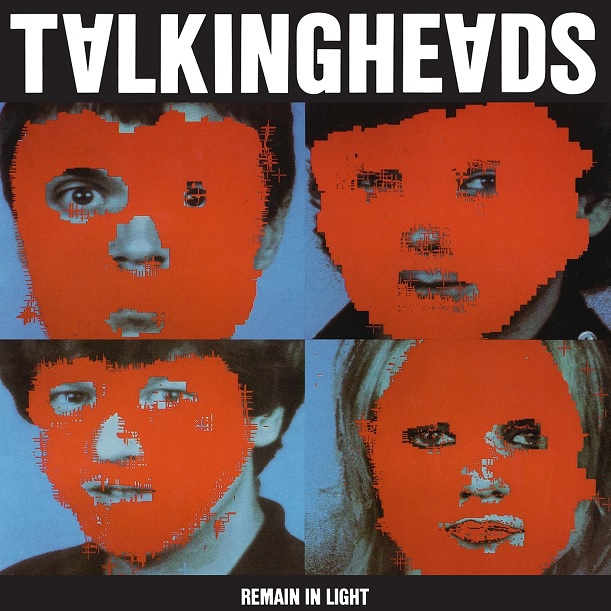
TALKING HEADS
Links
Buy
Talking Heads Vinyl - direct link @ ebay.co.uk
(Lenin is a participant in the eBay (EPN) affiliate program)
Talking Heads Fascinating Facts
Human League Fascinating Facts
Danny Thompson Fascinating Facts
Porcupine Tree Fascinating Facts
Adam and the Ants Fascinating Facts
Ultravox Fascinating FactsMarc Bolan and T. Rex Fascinating Facts
Sting & The Police Fascinating Facts
Jean-Michel Jarre Fascinating Facts
Peter Gabriel Fascinating Facts
Holger Czukay Fascinating Facts
Anton Corbijn Fascinating Facts
Dexys Midnight Runners Fascinating Facts
Roxy Music / Bryan Ferry Fascinating Facts
Led Zeppelin Fascinating Facts
Elvis Presley Fascinating Facts
Scott Walker Fascinating Facts
Michael Brook Fascinating Facts
Penguin Cafe Orchestra Fascinating Facts
David Bowie Rarities (Shipped From UK)
Visage / Steve Strange Fascinating Facts
Tears For Fears Fascinating Facts
Queen / Freddie Mercury Fascinating Facts
Cocteau Twins Fascinating Facts
Ryuichi Sakamoto Fascinating Facts
Haruomi Hosono Fascinating Facts
Yukihiro Takahashi Fascinating Facts
Hector Zazou Fascinating Facts
Frank Auerbach Fascinating Facts
Talking Heads
Artist
Talking Heads
Content
All the fascinating facts
More
Bitesized
Year
1970s to Present Day
Random and bite-sized facts on all things on the mythical band that was Talking Heads. Totally random but totally fascinating if you're into it. Do you know Talking Heads now?
--
REMAIN IN LIGHT: THE ALBUM THAT WAS BUILT FROM LOOPS
Talking Heads arrived at Compass Point Studios in the Bahamas without finished songs. Instead, they recorded long instrumental jams and built the music by selecting, repeating and combining sections of those performances.
--
“FELA'S RIFF” WAS NEVER FINISHED
“Fela's Riff” was an unfinished instrumental from the Remain in Light sessions. It was named for Fela Kuti and features Adrian Belew's treated guitar winding around a hypnotic rhythm. Jerry Harrison later described the unfinished tracks as a glimpse of what the band had left behind in the Bahamas.
--
THEY DELIBERATELY DIDN'T WRITE SONGS FIRST
The band wanted to capture the first thing that happened when they played together, rather than rehearsing material until it became polished. Jerry Harrison said they were trying to preserve the innocence of those first performances.
--
THE MUSIC COULD BE BUILT FROM ONE CHORD
Many of the Bahamas jams were deliberately modal, with the musicians playing around a single key rather than moving through conventional chord changes. Different combinations of recorded parts could suggest different harmonies.
--
THE CONSOLE BECAME PART OF THE COMPOSITION
Jerry Harrison later explained that the record was effectively composed using the mixing console's mute buttons. The musicians could play continuously while different parts were switched in and out to construct the final arrangements.
--
ADRIAN BELEW WAS ASKED TO “FREAK OUT”
Adrian Belew had first met Talking Heads on the Fear of Music tour. When he later joined the Remain in Light sessions, he was encouraged to let loose with the strange, highly processed guitar sounds that became one of the album's most distinctive textures.
--
ROBERT PALMER WAS IN THE STUDIO TOO
Robert Palmer contributed percussion to the Remain in Light sessions. He was recording at Compass Point around the same period and became one of the additional musicians helping to shape the album's dense rhythmic sound.
--
NONA HENDRYX ADDED THE BACKING VOCALS
Nona Hendryx, formerly of Labelle, was brought in for backing vocals after Jerry Harrison had worked with her at Sigma Sound Studios. Her voice became part of the album's increasingly crowded and unconventional vocal palette.
--
THE ALBUM'S AFRICAN INFLUENCE WASN'T SIMPLY IMITATION
David Byrne has said the band were listening to African music including Fela Kuti and King Sunny Adé, but weren't trying to simply copy it. Their aim was to deconstruct what they were hearing and arrive somewhere of their own.
--
THEY CALLED THEMSELVES “HUMAN SAMPLERS”
Instead of relying on computer sampling, which was still primitive, the band created loops by recording musicians playing repeated parts and then selecting the sections they wanted. David Byrne later described the process as being “human samplers”.
--
THE BREAK BETWEEN THE BAHAMAS AND NEW YORK CHANGED THE RECORD
The band took a three-week break when Brian Eno had another commitment. When they reconvened in New York, Jerry Harrison said the momentum and atmosphere of the relaxed Bahamas sessions had changed, and the album might have sounded very different if they had continued there without the interruption.
--
TALKING HEADS
Links
Buy
Talking Heads Japanese Vinyl - direct link @ ebay.co.uk
(Lenin is a participant in the eBay (EPN) affiliate program)
--
STOP MAKING SENSE WAS SHOT OVER THREE NIGHTS
Jonathan Demme filmed Stop Making Sense at Hollywood's Pantages Theater over three nights in December 1983. The footage wasn't simply one concert filmed from beginning to end — Demme and editor Lisa Day assembled the finished film from the performances.
--
THE FILM STARTS WITH ALMOST NOTHING
Stop Making Sense begins with David Byrne alone on an otherwise empty stage, playing Psycho Killer with a portable drum machine. One musician joins him at a time until the stage gradually fills with the complete band.
--
THE BAND FINANCED THE FILM THEMSELVES
Talking Heads put up most of the money for Stop Making Sense themselves. Production records put the budget at around $1.2 million, an unusually large financial commitment for a concert film at the time.
--
THE WORKING TITLE WAS “ELECTRIC GUITAR”
Stop Making Sense wasn't always called Stop Making Sense. Production records show that the film's working title was Electric Guitar before the final title was settled on.
--
THE TITLE CAME FROM “GIRLFRIEND IS BETTER”
The title Stop Making Sense comes from a line in Talking Heads' song Girlfriend Is Better. The lyric itself wasn't originally written as a title for a concert film — Demme and the band simply found the phrase perfect for what they were making.
--
THE SOUND WAS RECORDED DIGITALLY
Stop Making Sense used early digital recording technology for its 24-track stereo sound. Production records describe it as the first film to use direct-to-film digital re-recording technology.
--
THE SHOW WAS DESIGNED TO BUILD SLOWLY
The performance was deliberately structured so that the band grew one musician at a time. Bernie Worrell, Steve Scales, Alex Weir and the backing singers gradually joined Byrne, Weymouth, Frantz and Harrison, turning the opening minimalism into a huge ensemble.
--
THE SUIT WASN'T JUST A COSTUME
David Byrne later explained that he wanted his head to look smaller, so the easiest solution was to make his body look bigger. He also connected the exaggerated shape with the physicality of music and the way the body can understand music before the mind does.
--
THE BAND REJECTED EXTRA STUDIO FOOTAGE
Jonathan Demme considered filming additional performance material on a recreated Pantages stage. The band rejected the idea because they felt performing without a real audience would lose some of the energy that made the concert work.
--
THE FILM WASN'T A CONVENTIONAL MUSIC DOCUMENTARY
There are no interviews with the band explaining the songs and no backstage documentary material. Demme and the band chose to let the performance itself tell the story, with the gradually expanding stage becoming part of the film's structure.
--
“CITIES” WAS LEFT OUT OF THE ORIGINAL FILM
When the film's soundtrack was expanded for its 2023 release, two performances that had never previously appeared on the soundtrack were added: Cities and Big Business / I Zimbra. They had been performed during the filmed shows but were absent from the original release.
--
TALKING HEADS
Links
Buy
Talking Heads Japanese Vinyl - direct link @ ebay.co.uk
(Lenin is a participant in the eBay (EPN) affiliate program)
--
TALKING HEADS MADE THEIR DEBUT AT CBGB
Talking Heads played their first gig under that name at CBGB on 5 June 1975, opening for the Ramones. David Byrne, Chris Frantz and Tina Weymouth were still a three-piece at this point; Jerry Harrison wouldn't join until 1977.
--
THEY PLAYED CBGB AS A THREE-PIECE
There was no Jerry Harrison, no keyboards and no second guitarist when Talking Heads first appeared at CBGB. The early sound was built entirely around Byrne's guitar and vocals, Tina Weymouth's bass and Chris Frantz's drums.
--
THEY WERE ALREADY A LITTLE DIFFERENT FROM CBGB'S PUNK BANDS
A contemporary 1975 New Musical Express report described Talking Heads as “oddball” for CBGB, noting that they weren't really following the dominant punk style of the club. The writer instead heard echoes of the cooler, more restrained side of the Velvet Underground.
--
TINA WEYMOUTH STOOD OUT IMMEDIATELY
That same 1975 NME report singled out Tina Weymouth as the most arresting figure in the band. She had only taken up bass after the trio moved to New York and couldn't find another bassist.
--
THEY PLAYED CBGB AGAIN AND AGAIN
The first show wasn't a one-off. Talking Heads returned repeatedly to CBGB throughout 1975, building their audience there before they had even released a record. By the following year they were regular enough at the club to have several runs of shows.
--
THE EARLY CBGB SHOWS WERE FILMED
Talking Heads were among the bands filmed at CBGB in 1975 by Metropolis Video, whose recordings became an unusually valuable visual record of New York's emerging underground scene. Some of the earliest surviving Talking Heads footage comes from this period.
--
THE RAMONES CONNECTION CAME RIGHT AT THE START
The band didn't ease into the New York scene from the sidelines. Their very first Talking Heads show put them on the same bill as the Ramones, right at the club that was becoming the centre of the city's new underground music scene.
--
TALKING HEADS
Links
Buy
Talking Heads Japanese Vinyl - direct link @ ebay.co.uk
(Lenin is a participant in the eBay (EPN) affiliate program)
--
TINA WEYMOUTH HAD NEVER PLAYED BASS BEFORE TALKING HEADS
Tina Weymouth only picked up the bass a few months before Talking Heads' first gig. Chris Frantz had been unable to find a bassist after the three moved to New York, so he persuaded Weymouth to learn the instrument herself.
--
SHE LEARNED BASS BY LISTENING TO SUZI QUATRO
Frantz encouraged Weymouth to learn bass by listening to Suzi Quatro records. She had taught herself guitar from Bob Dylan songbooks, but initially thought becoming the band's bassist was unrealistic.
--
DAVID BYRNE GAVE HER ONE BASS LESSON
Weymouth later recalled that David Byrne gave her a single half-hour lesson covering 12-bar blues and basic I-IV-V chord progressions. Everything else came from listening, watching rehearsals and playing live.
--
SHE BOUGHT A 1963 FENDER PRECISION
Weymouth eventually chose a 1963 Fender Precision bass. She rejected the idea that her small stature meant she needed a short-scale instrument, preferring the sound and feel of the Precision.
--
SHE PAID FOR IT FIVE DOLLARS AT A TIME
Weymouth bought the Precision by putting five dollars a week towards it at We Buy Guitars on 48th Street. She said the bass cost $250, which was five times her weekly pay.
--
HER BASS PLAYING WAS SHAPED BY DAVID BYRNE'S GUITAR
Weymouth had to learn how to hear bass lines against Byrne's unconventional guitar playing rather than simply following conventional chord patterns. She developed her parts by listening closely to what the rest of the band was doing.
--
SHE WAS OFTEN BARELY ABLE TO HEAR HERSELF LIVE
As Talking Heads expanded into a larger live band, Weymouth found it increasingly difficult to hear her bass on stage. She eventually learned to rely on the physical feel of the instrument and the vibrations rather than simply listening to herself through the monitors.
--
SHE WANTED SPACE IN THE MUSIC
Weymouth has said she was influenced by the sparse approach of Stax musicians such as Steve Cropper and Booker T. Jones. For her, leaving space between notes could make a bassline sound bigger rather than weaker.
--
SHE STARTED THE ONCE IN A LIFETIME BASSLINE WITH CHRIS FRANTZ
Weymouth developed the bassline for Once in a Lifetime with drummer Chris Frantz. She has described the JBs and the Stax rhythm section as important influences on the way they approached the groove.
SHE AND FRANTZ FORMED TOM TOM CLUB
When Talking Heads took a break in the early 1980s, Weymouth and Frantz began working on music that became Tom Tom Club. Their first album produced Genius of Love and Wordy Rappinghood and allowed them to explore the dance music that had increasingly influenced their work.
--
TALKING HEADS
Links
Buy
Talking Heads Japanese Vinyl - direct link @ ebay.co.uk
(Lenin is a participant in the eBay (EPN) affiliate program)
--
BYRNE MET CHRIS FRANTZ AT ART SCHOOL
David Byrne met Chris Frantz while both were students at the Rhode Island School of Design. They eventually formed a band called the Artistics, which became the starting point for Talking Heads.
--
HE WAS STUDYING CONCEPTUAL ART
At RISD, Byrne studied conceptual art rather than music. The experience had a lasting effect on him: he later said that art school taught him to question what something was supposed to be before deciding what it could become.
--
HE ONCE PLAYED VIOLIN OUTSIDE THE SCHOOL CAFETERIA
When Chris Frantz first encountered Byrne at RISD, Byrne was standing outside the school cafeteria playing violin alongside another student playing accordion. Frantz later remembered thinking that Byrne was a rather strange character.
--
BYRNE HAD A VERY STRANGE EARLY DUO
Before Talking Heads, Byrne performed with fellow RISD student Mark Kehoe in a duo called Bizadi. Their repertoire reportedly mixed 1960s American punk songs with Frank Sinatra.
--
HE WORKED AS A CINEMA USHER
After moving to New York, Byrne worked as a movie-theatre usher. The job allowed him to watch films repeatedly, including Young Frankenstein and California Split, and he later recalled discovering new details by seeing them over and over.
--
HE TAUGHT TINA WEYMOUTH THE BASICS OF BASS
When Talking Heads needed a bassist, Tina Weymouth initially had no experience playing the instrument. Byrne gave her some basic instruction, including the fundamentals of the 12-bar blues, before she developed her own approach.
--
PSYCHO KILLER WAS ONLY HIS SECOND SONG
When Talking Heads began playing CBGB, Psycho Killer was only the second song David Byrne had written. He later said he was glad he didn't simply repeat the formula when it began working for the band.
--
HE WANTED TALKING HEADS TO SOUND LIKE THEMSELVES
Byrne has said that one of his priorities at CBGB was writing something that was genuinely his rather than a version of somebody else's music. Even after Psycho Killer worked, he deliberately wanted the band to move somewhere more original.
HE WAS ALREADY THINKING LIKE AN ARTIST ONSTAGE
Byrne's early performances at CBGB were deliberately matter-of-fact. Rather than behaving like a conventional rock frontman, he introduced songs almost formally, avoiding the usual audience banter and stage theatrics.
--
TALKING HEADS
Links
Buy
Talking Heads Japanese Vinyl - direct link @ ebay.co.uk
(Lenin is a participant in the eBay (EPN) affiliate program)
--
CHRIS FRANTZ WAS THE ONE WHO WANTED TO MOVE TO NEW YORK
After forming the Artistics with David Byrne at the Rhode Island School of Design, it was Chris Frantz who pushed for the two of them to move to New York and start a new band. He became the driving force behind getting Talking Heads off the ground.
--
HE CONVINCED TINA WEYMOUTH TO PLAY BASS
When Talking Heads couldn't find a bassist in New York, Frantz persuaded his girlfriend Tina Weymouth to learn the instrument. She had never played bass before and only began in January 1975, just months before the band's first CBGB shows.
--
HE WAS ALREADY A SERIOUS MUSIC FAN AT ART SCHOOL
Frantz later recalled being drawn to David Byrne because of his unusual approach to rhythm guitar. He felt Byrne was coming from somewhere completely different from the rock musicians they were surrounded by, but immediately recognised that he was a very good rhythm player.
--
HE WAS AT CBGB ALMOST EVERY NIGHT
Before Talking Heads had even properly started, Frantz was regularly hanging around CBGB looking for a bass player. Tina Weymouth later recalled that he would go there every night while she and Byrne were still living with him in New York.
--
HE KNEW CBGB WAS IMPORTANT BEFORE EVERYONE ELSE DID
Frantz had already been going to CBGB for about a year when Talking Heads played there. He remembered seeing the scene suddenly attract people from across America and Europe and realised that something unusual was happening.
--
JOHNNY THUNDERS ASKED IF THEY WERE A FEMINIST BAND
After seeing an early Talking Heads show at CBGB, New York Dolls guitarist Johnny Thunders asked Frantz if the band was a feminist group because a woman was playing bass. Frantz's answer was simply: “Yes, we are.”
--
FRANTZ THOUGHT THE DRUMMER SHOULD BE THE TECHNICALLY STRONGEST PLAYER
Tina Weymouth later said that Frantz was the only technically adept musician in the band at the beginning. She credited his consistent, musical drumming with providing the heartbeat that made the inexperienced trio work.
HE HELPED CREATE THE BAND'S EARLY RHYTHMIC IDENTITY
Weymouth has said that Frantz was more than her teacher: his drumming gave her something solid to play against while she was developing her own bass style. Their rhythm section became one of the foundations of Talking Heads' sound.
--
TALKING HEADS
Links
Buy
Talking Heads Japanese Vinyl - direct link @ ebay.co.uk
(Lenin is a participant in the eBay (EPN) affiliate program)
--
JERRY HARRISON WAS ALREADY IN THE MODERN LOVERS
Before joining Talking Heads, Jerry Harrison was the keyboard player in Jonathan Richman's Modern Lovers. He joined the band in 1971 while studying at Harvard and played on the recordings that became their legendary first album.
--
HE LEFT THE MODERN LOVERS AND WENT BACK TO HARVARD
When the original Modern Lovers dissolved in 1974, Harrison returned to Harvard to study architecture. He later described the breakup as something that had left him wary of putting all his hopes into rock music again.
--
HE NEARLY DIDN'T JOIN TALKING HEADS
Talking Heads first approached Harrison in 1976, but he didn't immediately join. He was studying architecture at Harvard and had already spent time touring with singer-songwriter Elliott Murphy. He eventually agreed to join in early 1977.
--
HE COULDN'T AFFORD THE BUS TO NEW YORK
When Harrison finally went to New York to audition for Talking Heads, he was broke. Instead of paying for a bus, he helped his former Modern Lovers bandmate Ernie Brooks move a family's furniture to New York and hitched a ride with them.
--
HE WAS THE FOURTH HEAD
Harrison joined Talking Heads after the trio had already recorded their first single, Love → Building on Fire. His arrival added guitar, keyboards and backing vocals and turned the original three-piece into a quartet.
--
HE HAD ALREADY SEEN TALKING HEADS
When Tina Weymouth invited Harrison to come and see Talking Heads play in Boston, he had already seen the band and had been impressed by what he heard. He was particularly struck by David Byrne's songwriting.
--
HE SAW TELEVISION BEFORE TALKING HEADS
Harrison got an early glimpse of the CBGB scene before Talking Heads had become part of it. He went to see Television rehearse there while his old Modern Lovers bandmate Ernie Brooks was auditioning for their bass position.
--
HE SAW THE MODERN LOVERS AS AN EARLY PUNK BAND
Harrison later described the Modern Lovers as one of the first punk bands, not because of technical virtuosity but because of their directness. He felt that if you had something to say, you simply found a way to say it, without needing elaborate solos or technique.
HE BECAME A PRODUCER AS WELL AS A MUSICIAN
Harrison began producing records while still working with Talking Heads. His later production credits included Violent Femmes, The BoDeans and Live, extending the same experimental approach he had developed inside Talking Heads into other bands' records.
--
TALKING HEADS
Links
Buy
Talking Heads Japanese Vinyl - direct link @ ebay.co.uk
(Lenin is a participant in the eBay (EPN) affiliate program)
--
BRIAN ENO DIDN'T INITIALLY WANT TO MAKE REMAIN IN LIGHT
After producing Talking Heads' first two albums with them, Brian Eno was initially not going to produce Remain in Light. Rhett Davies, who had worked as Eno's engineer on More Songs About Buildings and Food, was originally lined up for the job. Eno changed his mind after hearing the band's early instrumental recordings.
--
ENO MET TALKING HEADS IN LONDON
Brian Eno first met Talking Heads in London in 1977 after their early British shows. John Cale was among the people who helped bring them together, and Eno and David Byrne quickly discovered they shared interests ranging from cybernetics to African music.
--
ENO'S FIRST TALKING HEADS ALBUM WAS MADE IN THE BAHAMAS
More Songs About Buildings and Food was recorded at Compass Point Studios in Nassau in 1978. The move away from New York helped change the band's sound, with Eno concentrating on the interaction between the rhythm section and the studio.
--
ENO TREATED THE STUDIO AS AN INSTRUMENT
Jerry Harrison has said that one of the biggest things Talking Heads learned from Eno was to think of the recording studio itself as an extension of their instruments. They began thinking more deliberately about effects, sounds and the possibilities of recording rather than simply documenting a live band.
--
ENO USED HIS OBLIQUE STRATEGIES WITH THE BAND
Tina Weymouth recalled that Eno used his Oblique Strategies cards with Talking Heads on at least one occasion. By the time they made Remain in Light, she said the band were generating so many ideas that the creative problem was almost how to contain them.
--
“I ZIMBRA” CHANGED THE DIRECTION OF THE BAND
Talking Heads became excited by I Zimbra on Fear of Music and decided it pointed towards the next record. Jerry Harrison has said that Remain in Light grew directly out of that excitement, with the band wanting to explore the rhythmic ideas much further.
--
ENO WASN'T JUST PRODUCING BY REMAIN IN LIGHT
By the time they reached Remain in Light, Eno was much more deeply involved in the band's creative process. Jerry Harrison has described the relationship as evolving from learning how Eno used the studio to the band eventually being able to make their own suggestions and work with those techniques themselves.
THE PARTNERSHIP LASTED THREE ALBUMS
Eno produced three consecutive Talking Heads albums: More Songs About Buildings and Food, Fear of Music and Remain in Light. After that, the band produced Speaking in Tongues themselves, having gained enough confidence from the Eno years to take control of the recording process.
--
TALKING HEADS
Links
Buy
Talking Heads Japanese Vinyl - direct link @ ebay.co.uk
(Lenin is a participant in the eBay (EPN) affiliate program)
--
FEAR OF MUSIC WAS RECORDED IN THE BAND'S REHEARSAL LOFT
Talking Heads recorded the basic tracks for Fear of Music in Chris Frantz and Tina Weymouth's rehearsal loft in Long Island City rather than going into a conventional recording studio. A Record Plant remote truck parked outside the building on two Sundays in April and May 1979, with cables run through the loft window. Jerry Harrison later said the familiar surroundings helped the band feel more comfortable and gave the album its particular atmosphere.
--
THE BAND WANTED TO CAPTURE THE FIRST FEELING OF A SONG
Jerry Harrison later explained that Talking Heads were interested in capturing something they felt was often lost in a conventional studio: the innocence and discovery of playing a song for the first time. Recording in their rehearsal space helped them preserve some of that feeling, rather than making the performances too polished.
--
“I ZIMBRA” POINTED TOWARDS REMAIN IN LIGHT
“I Zimbra” became much more than just the opening track on Fear of Music. Jerry Harrison later said the band were so excited by what they had achieved with the song that they decided its rhythmic direction was where they wanted to go next. That became a major part of the thinking behind Remain in Light.
--
ROBERT FRIPP PLAYED ON “I ZIMBRA”
Robert Fripp contributes guitar to “I Zimbra”, adding a brief but distinctive appearance to one of Fear of Music's most rhythmically unusual tracks. The song also features a much larger percussion ensemble, including Abdou M'Boup, Assane Thiam and Hossam Ramzy, alongside Brian Eno's electronic treatments.
--
“I ZIMBRA” USES A DADA POEM
The lyrics of “I Zimbra” are based on a 1919 Dada sound poem by Hugo Ball, “Gadji beri bimba”. David Byrne and Brian Eno adapted Ball's nonsense syllables into the song, turning them into part of an intensely rhythmic vocal performance rather than a conventional narrative lyric.
--
“DRUGS” WAS ORIGINALLY CALLED “ELECTRICITY”
“Drugs” had already existed in an earlier form under the title “Electricity”. Talking Heads had recorded it during the previous album period, but decided it did not fit the mood of More Songs About Buildings and Food. After being reworked, it eventually found its place on Fear of Music.
--
THE FEAR OF MUSIC COVER WAS ALMOST VERY DIFFERENT
Jerry Harrison originally wanted the Fear of Music sleeve to be made from real black vinyl, reproducing the industrial-looking pattern that eventually appeared on the cover. The idea proved too difficult and expensive to manufacture, so the band instead used embossed cardboard to create the raised texture.
--
THE COVER ACTUALLY CHANGES WITH HEAT
The album's visual concept went beyond its embossed black sleeve. The artwork also included a heat-sensitive photograph created by Jimmy Garcia with the assistance of Dr Philip Strax. The design was nominated for the 1980 Grammy Award for Best Recording Package.
--
JERRY HARRISON SUGGESTED THE TITLE
The title Fear of Music was suggested by Jerry Harrison. Tina Weymouth later recalled that the title fitted the themes of the album as well as the stress and pressure the band were experiencing while making it.
--
THE ALBUM WAS MADE IN ONLY TWO REMOTE RECORDING SESSIONS
The basic tracks recorded in the Long Island City loft were captured during two Sunday sessions, on April 22 and May 6, 1979. The Record Plant's remote recording truck was parked outside the building and connected to the band's rehearsal room, turning their everyday practice space into a temporary recording studio.
--
“FEAR OF MUSIC” WAS A TURNING POINT FOR THE BAND
Talking Heads were already experimenting with rhythm on their earlier records, but Fear of Music pushed those ideas considerably further. Contemporary coverage noted the album's African-influenced rhythms, dense percussion, unusual electronic sounds and increasingly unconventional arrangements, especially on songs such as “I Zimbra”, “Life During Wartime” and “Drugs”.
--
TALKING HEADS
Links
Buy
Talking Heads Japanese Vinyl - direct link @ ebay.co.uk
(Lenin is a participant in the eBay (EPN) affiliate program)
--
Search Keywords
Talking Heads
Brian Eno
Icons
TALKING HEADS
Links
Buy
Talking Heads Vinyl - direct link @ ebay.co.uk
(Lenin is a participant in the eBay (EPN) affiliate program)
Talking Heads Fascinating Facts
Danny Thompson Fascinating Facts
Porcupine Tree Fascinating Facts
Adam and the Ants Fascinating Facts
Nick Drake Fascinating FactsLed Zeppelin Fascinating Facts
Visage / Steve Strange Fascinating Facts
Tears For Fears Fascinating Facts
Queen / Freddie Mercury Fascinating Facts
Marc Bolan and T. Rex Fascinating Facts
Sting & The Police Fascinating Facts
Jean-Michel Jarre Fascinating Facts
Peter Gabriel Fascinating Facts
Holger Czukay Fascinating Facts
Anton Corbijn Fascinating Facts
Human League Fascinating Facts
Dexys Midnight Runners Fascinating Facts
Roxy Music / Bryan Ferry Fascinating Facts
Elvis Presley Fascinating Facts
Scott Walker Fascinating Facts
Michael Brook Fascinating Facts
Penguin Cafe Orchestra Fascinating Facts
David Bowie Rarities (Shipped From UK)
Cocteau Twins Fascinating Facts
Roxy Music / Bryan Ferry Fascinating Facts
Ryuichi Sakamoto Fascinating Facts
Haruomi Hosono Fascinating Facts
Yukihiro Takahashi Fascinating Facts
Hector Zazou Fascinating Facts
Frank Auerbach Fascinating Facts