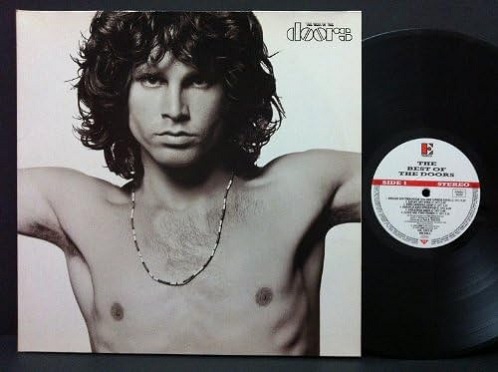
THE DOORS
Links
Buy
The Doors Vinyl - direct link @ ebay.co.uk
(Lenin is a participant in the eBay (EPN) affiliate program)
Porcupine Tree Fascinating Facts
Adam and the Ants Fascinating Facts
OMD Fascinating FactsSiouxsie and the Banshees Fascinating Facts
Visage / Steve Strange Fascinating Facts
Tears For Fears Fascinating Facts
Queen / Freddie Mercury Fascinating Facts
Danny Thompson Fascinating Facts
Talking Heads Fascinating Facts
Marc Bolan and T. Rex Fascinating Facts
Sting & The Police Fascinating Facts
Jean-Michel Jarre Fascinating Facts
Peter Gabriel Fascinating Facts
Holger Czukay Fascinating Facts
Anton Corbijn Fascinating Facts
Dexys Midnight Runners Fascinating Facts
Roxy Music / Bryan Ferry Fascinating Facts
Elvis Presley Fascinating Facts
Scott Walker Fascinating Facts
Michael Brook Fascinating Facts
Penguin Cafe Orchestra Fascinating Facts
David Bowie Rarities (Shipped From UK)
Led Zeppelin Fascinating Facts
Cocteau Twins Fascinating Facts
Ryuichi Sakamoto Fascinating Facts
Haruomi Hosono Fascinating Facts
Yukihiro Takahashi Fascinating Facts
Hector Zazou Fascinating Facts
Frank Auerbach Fascinating Facts
The Doors
Artist
The Doors
Content
All the fascinating facts
More
Bitesized
Year
1960s to Present Day
Random and bite-sized facts on all things on the mythical band The Doors. Totally random but totally fascinating if you're into it. Do you know The Doors now?
--
THE DOORS STARTED OUT AS A FILM-SCHOOL CONNECTION
Jim Morrison and Ray Manzarek met while studying film at UCLA. Their shared interest in cinema was part of the band's DNA from the beginning, and The Doors' earliest public appearances were connected to UCLA's student-film scene rather than the usual rock-club circuit.
--
MOONLIGHT DRIVE WAS THE SONG THAT CHANGED EVERYTHING
When Morrison and Manzarek met again on Venice Beach in 1965, Morrison recited the lyrics to "Moonlight Drive". Manzarek immediately recognised that there was something there. The song became one of the first pieces the newly formed Doors worked on together.
--
MORRISON'S FIRST STUDIO APPEARANCE CAME BEFORE THE DOORS EXISTED
In September 1965, Morrison recorded six of his own songs at World-Pacific Jazz studios, including early versions of "Moonlight Drive", "Break On Through", "End of the Night" and "Summer's Almost Gone". It was his first appearance in front of a recording microphone.
--
THE EARLIEST DOORS RECORDING WAS MADE IN A TINY CLUB
The earliest known recordings of The Doors were made at the London Fog on Los Angeles' Sunset Strip in May 1966. The band were still months away from recording their debut album, and the tapes were not known to exist publicly until they were rediscovered decades later.
--
THE LONDON FOG GAVE THEM ROOM TO EXPERIMENT
The Doors played the London Fog six nights a week, from around 9pm until 2am. The club could have very small audiences, which actually gave the band the freedom to experiment with original material, long instrumental passages and improvisation without worrying too much about what a crowd expected.
--
THEIR EARLY SETS WERE HEAVIER ON BLUES THAN YOU MIGHT EXPECT
The surviving London Fog tapes reveal a young Doors playing songs associated with Muddy Waters, Big Joe Williams, Wilson Pickett and Little Richard. Before they became psychedelic-rock icons, they were spending hours every night learning how to work as a club band.
--
STRANGE DAYS WAS ALREADY IN THEIR SET IN 1966
The Doors were already playing "Strange Days" at the London Fog in 1966, long before it became the title track of their second album. The surviving performance is therefore a rare glimpse of the song while it was still being developed onstage.
--
YOU MAKE ME REAL ALSO EXISTED YEARS BEFORE MORRISON HOTEL
"You Make Me Real" was another song that The Doors were already performing at the London Fog. It wouldn't appear on a studio album until Morrison Hotel in 1970, making the 1966 performance an unusually early version of a song that took years to reach a record.
--
THE DOORS DIDN'T HAVE A BASS PLAYER
The band's unusual sound was partly forced on them by their lineup. Ray Manzarek played the bass parts with his left hand on a Fender keyboard bass while using his right hand on the Vox Continental organ. It meant The Doors could operate without a conventional bass guitarist.
--
MANZAREK'S BASS PARTS HELPED DEFINE THE DOORS SOUND
Manzarek's keyboard-bass approach allowed him to provide the rhythmic foundation while simultaneously playing the organ lines that became one of the band's most recognisable sounds. What began partly as a practical solution became a major part of their identity.
--
ROBBY KRIEGER BROUGHT FLAMENCO INTO THE BAND
Robby Krieger had a background in flamenco and folk guitar rather than the conventional blues-rock approach of many electric guitarists of the period. He carried that fingerstyle technique into The Doors, helping give the band's guitar work a very different character.
--
KRIEGER DIDN'T USE A PICK
Krieger's distinctive guitar playing was produced with his fingers rather than a conventional guitar pick. His flamenco background helped shape the technique, and it remained an important part of the unusual sound he brought to The Doors.
--
MORRISON INITIALLY PERFORMED WITH HIS BACK TO THE AUDIENCE
Robby Krieger recalled that Morrison initially turned his back on audiences when The Doors began performing. The explanation was surprisingly simple: the musicians had rehearsed in a circle so they could see each other, and Morrison carried that habit onto the stage before eventually turning around.
--
MOONLIGHT DRIVE WAS ALMOST ON THE FIRST ALBUM
"Moonlight Drive" was one of the first songs The Doors tried recording for their debut album. Robby Krieger later recalled that the initial version sounded too mysterious and dark, so they rearranged it and eventually placed the new version on Strange Days instead.
--
THE FIRST DOORS ALBUM WAS RECORDED IN JUST FOUR AND A HALF DAYS
Bruce Botnick, the engineer who recorded the band's first five albums, recalled that The Doors' debut was recorded and mixed in roughly four and a half days. The band were already playing most of the material live, so many of the arrangements had effectively been worked out before they entered the studio.
--
THE DEBUT WAS BASICALLY A LIVE BAND CAPTURED ON RECORD
Botnick later said that the first album largely captured what The Doors sounded like onstage. They were already a heavily gigging band and had spent a huge amount of time playing and refining the songs before recording them.
--
THE BAND HAD ENOUGH MATERIAL FOR THREE ALBUMS
When The Doors first entered Sunset Sound, they already had enough material for their first three albums. Morrison and Krieger were constantly writing, while the band's intensive live schedule meant that many of the songs had already been arranged through performance.
--
STRANGE DAYS WAS THEIR FIRST EIGHT-TRACK RECORDING
The Doors moved to eight-track recording for Strange Days, giving them considerably more room for experimentation. It helped the band move beyond simply reproducing their live sound and start using the studio as another musical instrument.
--
THE STRANGE DAYS MOOG WAS ONE OF ROCK'S EARLIEST
The strange processed voice on "Strange Days" came from one of the earliest Moog synthesizers. Engineer Bruce Botnick fed Morrison's vocal through the Moog so that his voice could be manipulated from the keyboard, then added delay and a tape-repeat effect.
--
THE MOOG WAS USED ON MORRISON'S VOICE RATHER THAN JUST AS A SYNTH
The Moog on "Strange Days" wasn't simply providing another synthesizer part. Botnick created a system that allowed Morrison's recorded voice to be processed through the instrument, producing the eerie electronic vocal effect that appears on the title track.
--
WHEN THE MUSIC'S OVER USED DISTORTION IN A VERY UNUSUAL WAY
For Robby Krieger's guitar on "When The Music's Over", Bruce Botnick deliberately overloaded microphone preamps to create distortion. He pushed the signal from one amplifier into another until the tubes began to distort. Botnick later described the resulting guitar sound as one of the most beautiful he had ever recorded.
--
THE STRANGE DAYS STUDIO WAS ONCE A CAR REPAIR GARAGE
Sunset Sound's Studio One, where The Doors recorded, had originally been a car repair garage. The floor and other surfaces were not perfectly level, but the unusual geometry actually helped create useful acoustic characteristics for recording.
--
MORRISON WAS SURPRISINGLY EASY TO RECORD
Despite his reputation for unpredictability, engineer Bruce Botnick later described Morrison as one of the easiest singers he had ever recorded. He said Morrison had a large, controlled voice and gave full value to each note, with influences including Frank Sinatra and Elvis Presley.
--
MORRISON'S HERO WAS FRANK SINATRA
The contrast between Morrison's rock-star image and his admiration for Frank Sinatra is revealing. Botnick said Morrison's approach to singing was influenced by Sinatra's control and phrasing, as well as by Elvis Presley.
--
THE DOORS WERE EXPERIMENTING BEFORE THEY WERE FAMOUS
The London Fog tapes show that the band were already mixing blues covers, original songs, extended instrumental passages and improvisation before they had even signed to Elektra. Their experimental reputation therefore wasn't something invented after they became successful.
--
THE LONDON FOG TAPES WERE RECORDED BY A FRIEND
The May 1966 performance was recorded by Nettie Peña, a friend of the band, using a quarter-inch reel-to-reel recorder borrowed from her father. She also photographed the group that night, making the surviving material an unusually intimate document of The Doors before fame.
--
THE EARLIEST TAPES WERE HIDDEN FOR DECADES
The London Fog recordings weren't part of the established Doors archive for decades. Their eventual discovery provided the earliest known surviving audio of the complete band and offered a rare opportunity to hear them before the recording of their debut.
--
THE BAND'S EARLY SOUND WAS ALREADY A STRANGE MIX
The Doors brought together musicians with very different backgrounds: Manzarek's jazz and classical keyboard interests, Krieger's flamenco and blues influences, John Densmore's jazz-based drumming and Morrison's poetry and fascination with cinema. The combination was unusual even before the psychedelic effects were added.
--
THE FIRST ALBUM'S SPEED WAS PARTLY DOWN TO YEARS OF REHEARSAL
The remarkable speed of the debut sessions wasn't because the band were rushing blindly. They had already been playing constantly, and Botnick recalled that the musicians knew the arrangements well enough for the studio sessions to concentrate on capturing them rather than building every song from scratch.
--
THE DOORS USED THE STUDIO AS AN INSTRUMENT
By the time they made Strange Days, The Doors were no longer simply trying to reproduce their stage performances. Backwards instruments, unusual tape effects, early synthesizer technology and manipulated vocals became part of the music, helping turn the recording studio into another member of the band.
--
THE DOORS
Links
Buy
The Doors Japanese Vinyl - direct link @ ebay.co.uk
(Lenin is a participant in the eBay (EPN) affiliate program)
--
THE DOORS' FIRST RECORDED SONG WAS INDIAN SUMMER
"Indian Summer" was recorded at Sunset Sound on 19 August 1966, before the sessions for the band's debut album properly got underway. Robby Krieger later recalled that it was the first song The Doors ever recorded in a real studio. The band regarded the session partly as a chance to get used to recording, and the track was eventually held back until Morrison Hotel in 1970.
--
INDIAN SUMMER WASN'T RE-RECORDED FOR MORRISON HOTEL
When "Indian Summer" finally appeared on Morrison Hotel, The Doors didn't record a new version. They used the original 1966 performance and simply added reverb. The result gives us an unusually early recording of Jim Morrison's voice alongside the finished band's later sound.
--
THE WAITING FOR THE SUN ALBUM DIDN'T CONTAIN ITS TITLE TRACK
The Doors named their third album Waiting for the Sun even though the song "Waiting for the Sun" wasn't finished to their satisfaction. They eventually returned to the song during the Morrison Hotel sessions, and it finally appeared on that album in 1970.
--
CELEBRATION OF THE LIZARD WAS SUPPOSED TO TAKE UP AN ENTIRE SIDE
Jim Morrison originally envisaged "The Celebration of the Lizard" as a huge piece that would occupy the entire second side of Waiting for the Sun. The Doors attempted to record the complete work in the studio but couldn't produce a version they were happy with. Only "Not to Touch the Earth" made the original album.
--
THE FULL CELEBRATION OF THE LIZARD WAS PRINTED ON THE ALBUM
Even though the complete studio performance didn't make Waiting for the Sun, the full lyrics of "The Celebration of the Lizard" were printed inside the original album's gatefold sleeve. Fans could therefore read the enormous piece that the band had failed to fit onto the record.
--
THE UNKNOWN SOLDIER WAS RECORDED IN A NEW STUDIO THE BAND HELPED CREATE
During the Waiting for the Sun sessions, a new studio space was being built at Sunset Sound. Engineer Bruce Botnick recalled that the band recorded "The Unknown Soldier" in the new room, which had been constructed with a large recording space and a new control room.
--
THE DOORS HAD ALREADY WRITTEN TWO ALBUMS' WORTH OF MATERIAL BEFORE WAITING FOR THE SUN
John Densmore later recalled that during the band's early period they had accumulated roughly two albums' worth of material. By the time they reached Waiting for the Sun, however, touring and recording had eaten through much of Morrison's existing songbook and they suddenly found themselves needing to create new material in the studio.
--
WAITING FOR THE SUN WAS THE ONLY DOORS STUDIO ALBUM TO REACH NUMBER ONE
Despite the enormous success of albums such as The Doors, Strange Days and Morrison Hotel, Waiting for the Sun was the only Doors studio album to reach number one on the US Billboard album chart during Jim Morrison's lifetime.
--
THE SOFT PARADE TOOK THE BAND INTO A VERY DIFFERENT RECORDING WORLD
The Soft Parade involved extensive brass and string arrangements, making the recording process much more complicated than the band's earlier albums. Robby Krieger later recalled that the amount of arranging and studio work was one reason Morrison Hotel felt like such a relief afterwards.
--
JOHN DENSMORE TAPED HIS WALLET TO HIS SNARE DRUM
During The Soft Parade sessions, producer Paul Rothchild was obsessing over the exact sound of Densmore's drums. Densmore later recalled experimenting with different ways of changing the snare sound, including taping his wallet to the edge of the drum.
--
GEORGE HARRISON VISITED THE SOFT PARADE SESSIONS
George Harrison dropped into the Elektra sessions while The Doors were recording The Soft Parade. Ray Manzarek remembered being particularly pleased to see Harrison and was impressed by the atmosphere of the studio and its wooden recording rooms.
--
ROTHCHILD AND MORRISON HELPED ASSEMBLE THE SOFT PARADE
The title track wasn't simply recorded as one straightforward performance. Producer Paul Rothchild and Morrison worked through Morrison's notebooks, selecting verses and fitting them into the developing structure of "The Soft Parade".
--
ROBBY KRIEGER WROTE TOUCH ME
One of The Doors' biggest later singles, "Touch Me", was written by Robby Krieger rather than Jim Morrison. It began life as a Krieger composition and was transformed into the elaborate recording that appeared on The Soft Parade with brass, strings and a featured saxophone solo by Curtis Amy.
--
ROADHOUSE BLUES USED TWO GUEST MUSICIANS
"Roadhouse Blues" sounds like a stripped-down Doors performance, but two outside musicians helped create its final sound. Blues guitarist Lonnie Mack played bass, while John Sebastian of the Lovin' Spoonful contributed harmonica.
--
LONNIE MACK WASN'T REALLY A BASS PLAYER
Lonnie Mack was known primarily as a pioneering electric guitarist, but he played bass on "Roadhouse Blues". Robby Krieger later recalled that Mack had not really played bass before being brought into the session, yet came up with the distinctive bass line that became part of the track.
--
JOHN SEBASTIAN WAS ALMOST AN ACCIDENTAL HARMONICA PLAYER ON ROADHOUSE BLUES
John Sebastian happened to be around the studio when The Doors were working on "Roadhouse Blues". The band discovered that he was an excellent harmonica player and brought him into the recording. He was credited under the name G. Puglese.
--
MORRISON HOTEL WAS A DELIBERATE RETURN TO THE BLUES
After the elaborate production of The Soft Parade, The Doors deliberately moved back towards a simpler, blues-based sound on Morrison Hotel. Robby Krieger later described the album as a kind of release after the demands of the previous record.
--
L'AMERICA WAS ORIGINALLY CONNECTED WITH A FILM
"L'America", eventually released on L.A. Woman, had an earlier connection with Michelangelo Antonioni's film Zabriskie Point. Ray Manzarek later recalled that The Doors had recorded the piece with the film in mind, although Antonioni ultimately didn't use it.
--
THE DOORS' FINAL ALBUM WAS RECORDED IN THEIR OWN WORKSHOP
For L.A. Woman, The Doors abandoned the conventional studio environment and moved recording equipment into their rehearsal workshop at 8512 Santa Monica Boulevard. The room was familiar territory for the band, and the relaxed surroundings helped produce the rawer sound they wanted.
--
THE WORKSHOP HAD A JUKEBOX AND A PINBALL MACHINE
The room where L.A. Woman was recorded was hardly a glamorous recording studio. Accounts of the sessions describe a cramped workshop containing instruments, cables, empty bottles, magazines, a jukebox and a pinball machine. The Doors effectively turned their own rehearsal room into a recording studio.
--
MORRISON RECORDED HIS L.A. WOMAN VOCALS IN A BATHROOM
Jim Morrison's vocals for L.A. Woman were recorded in the workshop's bathroom rather than a conventional vocal booth. The cramped and informal surroundings were part of the album's deliberately raw approach.
--
L.A. WOMAN WAS THE FIRST DOORS ALBUM WITHOUT PAUL ROTHSCHILD AS PRODUCER
Longtime producer Paul Rothchild bowed out during the early stages of L.A. Woman. He wasn't convinced by the new material, famously regarding the band's direction as too much like "cocktail music". Bruce Botnick subsequently co-produced the album with the band.
--
ROTHCHILD'S DEPARTURE CHANGED THE WAY THE DOORS RECORDED
Rothchild had become known for demanding huge numbers of takes and spending enormous amounts of time perfecting individual sounds. On L.A. Woman, The Doors deliberately went in the opposite direction. They wanted the performances to retain mistakes, spontaneity and the feeling of a band playing together.
--
JIM MORRISON USED HIS STAGE MICROPHONE FOR THE FIRST TIME IN THE STUDIO
During the L.A. Woman sessions, Morrison recorded his vocals with the Electro-Voice 676G microphone he normally used onstage. Bruce Botnick had previously recorded him with studio microphones such as the Neumann U47, U67 and AKG C12A.
--
MORRISON USUALLY SANG LIVE WITH THE BAND
Bruce Botnick recalled that Morrison often recorded his vocals live with the rest of The Doors rather than adding them later. According to Botnick, it was unusual for the band to need a second vocal after they had captured the right performance.
--
L.A. WOMAN WAS MADE WITH A VERY DIFFERENT ATTITUDE TO THE SOFT PARADE
John Densmore later compared L.A. Woman with the band's earliest work. Instead of spending hours chasing technically perfect performances, The Doors decided to trust their instincts and keep the rough edges. The result was a much more spontaneous, blues-heavy record.
--
THE DOORS' JAZZ CONNECTION RAN DEEPER THAN IT SOUNDED
Robby Krieger later explained that jazz improvisation was an important part of the band's musical thinking. He and John Densmore regularly went to Los Angeles jazz clubs to hear musicians such as Miles Davis and Roland Kirk, and that influence fed into the way the two musicians interacted during Doors performances.
--
LIGHT MY FIRE BORROWED A JAZZ IDEA
Robby Krieger later explained that the instrumental section of "Light My Fire" was built around the same chord sequence used in John Coltrane's version of "My Favorite Things". The Doors were taking a very jazz-like approach to improvisation even while making a huge rock hit.
--
THE END WAS RECORDED IN ONLY TWO TAKES
The epic "The End" sounds like a performance that must have taken an enormous amount of studio work, but the Library of Congress notes that the version on The Doors was completed in only two takes. The finished recording runs for more than eleven minutes.
--
THE DOORS' LAST ALBUM BROUGHT THEM BACK TO THEIR BEGINNINGS
There was a strange circularity to L.A. Woman. After several increasingly elaborate albums, The Doors returned to the raw blues, improvisation and spontaneous playing that had characterised their earliest club performances. John Densmore later described it as the band coming full circle.
--
THE DOORS
Links
Buy
The Doors Japanese Vinyl - direct link @ ebay.co.uk
(Lenin is a participant in the eBay (EPN) affiliate program)
--
THE LONDON FOG WAS THEIR REAL TRAINING GROUND
The Doors' four-month residency at the London Fog in 1966 was where they really developed as a working band. They played as many as four sets a night, and because they didn't yet have enough original material, more than half their repertoire consisted of blues and rock'n'roll standards.
--
THE LONDON FOG TAPES ALMOST FEEL LIKE A TIME CAPSULE
The earliest known recordings of The Doors were made at the London Fog in May 1966 by their friend Nettie Peña. The tapes weren't known to exist for decades before being rediscovered and officially released in 2016.
--
THE EARLY DOORS WERE MUCH MORE OF A BLUES BAND THAN YOU MIGHT EXPECT
The London Fog recordings include versions of "Baby Please Don't Go", "I'm Your Hoochie Coochie Man" and "Lucille", alongside early Doors material. Their early live repertoire shows just how deeply blues and R&B were embedded in the band's sound before they became famous for their psychedelic originals.
--
THE DOORS NEARLY DISAPPEARED BEFORE THEY WERE DISCOVERED
After their London Fog residency ended, The Doors were turned down at four auditions at another Sunset Strip club, Bido Lito's, and briefly played only a few nights at the Brave New World in Hollywood. Their fortunes changed when Whisky a Go Go talent booker Ronnie Haran heard them on the final night of their London Fog residency.
--
THE MATRIX RECORDINGS WERE ONCE THOUGHT TO BE LOST
When The Doors played five sparsely attended shows at San Francisco's Matrix club in March 1967, the performances were recorded by co-owner Peter Abram. The original tapes were later thought to be lost, before being rediscovered and used for the later official releases.
--
THE MATRIX SHOWS WERE RECORDED ONLY WEEKS AFTER THE DEBUT
The Doors played the Matrix on March 7–11, 1967, only weeks after their debut album was released. The recordings capture the band just as they were moving from a club act into one of America's biggest new rock groups.
--
THE ORIGINAL MATRIX TAPES SOUNDED VERY DIFFERENT FROM THE FIRST RELEASES
The Matrix recordings issued in 2008 were made from third-generation tapes. When the original masters were eventually recovered, engineer Bruce Botnick remastered them, revealing a substantially better-quality document of the band's early live performances.
--
THE FIRST ALBUM WAS RECORDED ASTONISHINGLY QUICKLY
The Doors' debut album was recorded and mixed in just four-and-a-half days. Engineer Bruce Botnick said the band arrived with most of the material already worked out because they had been gigging constantly, so the sessions were largely about capturing what they already did onstage.
--
THE BAND HAD ENOUGH MATERIAL FOR THREE ALBUMS
When The Doors first entered Sunset Sound, they already had enough material for their first three albums. Botnick recalled that Morrison and Krieger were constantly writing and that the band had already developed much of the material through regular live performances.
--
STRANGE DAYS USED ONE OF THE EARLIEST MOOG SYNTHESIZERS
For the title track of "Strange Days", engineer Bruce Botnick processed Jim Morrison's voice through a Moog synthesizer. Morrison's vocal was fed into the instrument so that Botnick could alter it by playing notes on the keyboard, before adding delay and tape effects.
--
THE DOORS DIDN'T TRY TO FIX EVERYTHING IN THE STUDIO
Bruce Botnick said the band and producer Paul Rothchild were more interested in preserving the feel of a performance than correcting every mistake. Some imperfections were deliberately left on the recordings because the atmosphere and performance mattered more than technical perfection.
--
THE L.A. WOMAN SESSIONS WERE ALMOST THE OPPOSITE OF THEIR EARLY STUDIO WORK
For "L.A. Woman", The Doors abandoned the conventional studio environment and recorded much of the album in their rehearsal workshop at 8512 Santa Monica Boulevard. The cramped room was filled with equipment, a jukebox and a pinball machine, giving the sessions a much more informal atmosphere.
--
JIM MORRISON SANG IN A BATHROOM
During the "L.A. Woman" sessions, Morrison used the workshop's adjoining bathroom as a vocal booth. Its tiled walls created a natural acoustic effect, and he sang into his familiar Electro-Voice 676-G stage microphone.
--
ELVIS PRESLEY'S BASS PLAYER PLAYED ON L.A. WOMAN
The Doors famously had no regular bass player onstage, but for "L.A. Woman" engineer Bruce Botnick suggested Jerry Scheff, who had been playing bass with Elvis Presley. Scheff's contribution helped give the album the live, heavy low-end sound the band wanted.
--
L.A. WOMAN WAS A RETURN TO THE BAND'S ROOTS
The "L.A. Woman" sessions deliberately moved away from the increasingly elaborate studio approach of some of the band's earlier records. John Densmore later described the album as bringing The Doors back to something like their original garage-band spirit.
--
THE DOORS' EARLY AND LATE RECORDINGS SHARE SOMETHING IMPORTANT
At the London Fog in 1966, The Doors were still developing their identity by playing long sets of blues and R&B in a rough club environment. Five years later, they deliberately returned to a similarly raw approach for "L.A. Woman". In between, they had become one of the most adventurous studio bands of the era.
--
THE DOORS
Links
Buy
The Doors Japanese Vinyl - direct link @ ebay.co.uk
(Lenin is a participant in the eBay (EPN) affiliate program)
--
THE STRANGE DAYS SESSIONS WERE FULL OF EXPERIMENTS
The Doors used backwards drums and backwards piano during the "Strange Days" sessions. The new eight-track setup encouraged them to experiment with sounds they couldn't have achieved as easily on the debut.
--
SUNSET SOUND HAD ONCE BEEN A CAR REPAIR GARAGE
The Sunset Sound Studio where The Doors made their early albums had originally been a car repair garage. Its unusual sloping floor and non-parallel surfaces turned out to be useful acoustically, helping create the distinctive sound of the room.
--
THE DOORS DIDN'T NEED A LOT OF STUDIO FIXING
Bruce Botnick recalled that The Doors generally recorded as a unit and that very little fixing was done afterwards. If there was a mistake that didn't damage the feel of a performance, they would often leave it alone.
--
JOHN DENSMORE'S DRUM SOUND COULD INVOLVE A WALLET
Bruce Botnick recalled that Densmore would sometimes put his wallet on the snare drum during recording. The band and engineer were constantly changing small details such as drum tuning and microphone placement to suit individual songs.
--
MORRISON'S VOCAL RANGE SURPRISED THE ENGINEER
Bruce Botnick described Morrison as an unusually controlled singer who could move from a quiet croon to a scream very quickly. He also said Morrison's major vocal influences included Frank Sinatra and Elvis Presley.
--
THE BAND HEARD SGT. PEPPER DURING THE STRANGE DAYS PERIOD
Before the "Strange Days" sessions began, Bruce Botnick obtained an acetate of The Beatles' "Sgt. Pepper's Lonely Hearts Club Band" and played it to The Doors and Paul Rothchild. Botnick later recalled that it encouraged them to push their own studio experimentation further.
--
THE SOFT PARADE HAD A HIDDEN DOORS RECORDING
The 50th anniversary edition of "The Soft Parade" revealed an hour-long surviving studio jam called "Rock Is Dead". The band can be heard moving through different styles of rock and roll before eventually arriving at the idea of rock's death.
--
RAY MANZAREK SANG ON AN EARLY ROADHOUSE BLUES
One of the studio rehearsals released with "The Soft Parade" material contains an early version of "Roadhouse Blues" with Ray Manzarek, rather than Jim Morrison, on lead vocals. The song would eventually become one of Morrison's best-known performances on "Morrison Hotel".
--
MORRISON HOTEL WAS COMPLETED IN ONLY A FEW WEEKS
After the elaborate production of "The Soft Parade", The Doors made "Morrison Hotel" in a much more direct style. The album was completed in only a few weeks and was deliberately conceived as a return to the band's rock and blues roots.
--
MORRISON HOTEL WAS ACTUALLY DIVIDED INTO TWO SIDES WITH DIFFERENT NAMES
The first side of "Morrison Hotel" was titled "Hard Rock Cafe", while the second was titled "Morrison Hotel". The album took its final name from the actual downtown Los Angeles hotel shown on the cover photograph.
--
INDIAN SUMMER WAS YEARS OLDER THAN THE ALBUM
"Indian Summer" had actually been recorded as early as August 1966, before The Doors made their debut album. The recording was eventually used on "Morrison Hotel" in 1970, meaning a song from the band's earliest studio period ended up on their fifth album.
--
LONNIE MACK PLAYED BASS ON MORRISON HOTEL
Blues guitarist Lonnie Mack played bass on two tracks from "Morrison Hotel". He was also a recording artist on Elektra and later joined The Doors for live performances, playing lead guitar while Robby Krieger moved to rhythm guitar.
--
THE DOORS' DEBUT IS MUCH MORE THAN A PSYCHEDELIC ROCK RECORD
The Library of Congress described the unusual combination at the heart of The Doors: a jazz keyboardist, a flamenco guitarist, a jazz drummer and a poet vocalist. That mixture of backgrounds was a major reason the band's sound was so difficult to categorise.
--
BREAK ON THROUGH STARTS WITH A BOSSA NOVA RHYTHM
The opening rhythm of "Break On Through" isn't straight-ahead rock. John Densmore begins the song with a brisk bossa nova-influenced beat before the track shifts into the heavier rock sound that became one of The Doors' signatures.
--
THE END WAS COMPLETED IN JUST TWO TAKES
"The End", one of The Doors' most ambitious recordings, was completed in only two takes. The final version runs for around twelve minutes and developed from a much simpler song the band had originally performed in their early club days.
--
THE DOORS' DEBUT EVENTUALLY ENTERED THE NATIONAL RECORDING REGISTRY
The Doors' debut album was added to the U.S. Library of Congress National Recording Registry in 2014. The Library described it as an unusually consistent debut and highlighted the band's fusion of rock, blues, jazz and classical influences.
--
THE DOORS
Links
Buy
The Doors Japanese Vinyl - direct link @ ebay.co.uk
(Lenin is a participant in the eBay (EPN) affiliate program)
--
THE DOORS WORKSHOP WAS TINY
The rehearsal space where The Doors recorded "L.A. Woman" was only about 18 by 25 feet. The four musicians played together in the room without headphones, with Jim Morrison holding his microphone and singing alongside the band.
--
THE BAND'S L.A. WOMAN SETUP CREATED ALMOST NO HEADPHONE SEPARATION
Because The Doors recorded "L.A. Woman" together in the small workshop without headphones, there was plenty of opportunity for sound from one instrument to leak into another microphone. Bruce Botnick was surprised by how little leakage there actually was on the finished recordings.
--
MARC BENNO GAVE ROBBY KRIEGER MORE FREEDOM
Rhythm guitarist Marc Benno was brought in for the "L.A. Woman" sessions alongside bassist Jerry Scheff. Having Benno handle rhythm guitar meant Robby Krieger could concentrate on his lead playing without having to overdub his parts later.
--
L.A. WOMAN WAS BUILT AROUND THE GROOVE
Bruce Botnick said the band approached the "L.A. Woman" sessions very differently from their earlier, more painstaking recordings. Rather than repeatedly stopping and starting to achieve technical perfection, they wanted the musicians to keep playing and preserve the natural groove of the performances.
--
THE TITLE TRACK TOOK THREE SEPARATE PARTS TO BECOME ONE SONG
Bruce Botnick later explained that "L.A. Woman" was recorded in three sections because the band couldn't capture the entire complicated arrangement in one go. The finished performance was edited together to sound like one continuous piece.
--
THE L.A. WOMAN SESSIONS CONTAINED 40 MINUTES OF ATTEMPTS AT THE TITLE TRACK
The surviving studio reels contain around 40 minutes of The Doors working on "L.A. Woman". The recordings reveal how the apparently loose final performance was actually developed through repeated attempts and changes in arrangement.
--
THERE WAS A HYACINTH HOUSE DEMO FROM 1969
An early demo of "The Wasp (Texas Radio and the Big Beat)"? No — one of the genuinely surprising surviving recordings from the later period is an early "Hyacinth House" demo made at Robby Krieger's home studio in 1969, more than a year before the finished version appeared on "L.A. Woman".
--
RIDERS ON THE STORM WAS ALMOST A COMPLETELY DIFFERENT RECORDING
The rain and thunder on "Riders on the Storm" weren't recorded specifically for the song. Bruce Botnick used sound-effects recordings that Elektra already had, including rain and thunder recorded in New York City, and played them while mixing.
--
THE THUNDER WASN'T SYNCHRONISED IN ADVANCE
Botnick didn't carefully place every thunderclap against the music. He played the effects tape during the stereo mix and recorded it as the mix progressed. By chance, the thunder landed in places that worked remarkably well with the performance.
--
MORRISON WHISPERED UNDER HIS OWN VOCAL
One of the final touches on "Riders on the Storm" was a second vocal by Jim Morrison, recorded as a whisper underneath his main vocal. The effect is so quiet that many listeners don't notice it until they know it's there.
--
RIDERS ON THE STORM WAS MIXED AFTER MORRISON LEFT FOR PARIS
Jim Morrison left Los Angeles for Paris while the final work on "L.A. Woman" was still being completed. He wasn't present for the mixing of "Riders on the Storm", leaving the other Doors and Bruce Botnick to finish the track.
--
THE SOFT PARADE WAS A MUCH LONGER RECORDING PROJECT
"The Soft Parade" was made over a considerably longer period than The Doors' first albums. Sessions stretched from late 1968 into 1969, with the elaborate horn and string arrangements contributing to the album's very different sound.
--
GEORGE HARRISON VISITED THE SOFT PARADE SESSIONS
George Harrison visited The Doors while they were recording "The Soft Parade" at Elektra. Ray Manzarek remembered being particularly pleased to have Harrison turn up and hear what the band were doing.
--
ROTHCHILD COULD MAKE THEM DO DOZENS OF TAKES
Paul Rothchild's perfectionism was legendary during The Doors' recording sessions. Robby Krieger recalled that Rothchild could insist on extremely large numbers of takes, something that the band eventually found increasingly frustrating.
--
THE DOORS RECORDED THEIR ALBUMS ON EIGHT-TRACK
Bruce Botnick has explained that all of The Doors' studio and live albums were recorded on eight-track, 15-ips analogue tape. Despite the band's reputation for elaborate studio experimentation, they were working with a relatively limited number of recording tracks by later standards.
--
THE FIRST ALBUM'S STRANGE SOUND WASN'T CREATED BY MODERN STUDIO TECHNOLOGY
The Doors' debut was made with comparatively basic recording technology, but the musicians' unusual combination of backgrounds gave it an unmistakable character. The Library of Congress describes the lineup as a jazz keyboardist, flamenco guitarist, jazz drummer and poet vocalist.
--
THE DOORS
Links
Buy
The Doors Japanese Vinyl - direct link @ ebay.co.uk
(Lenin is a participant in the eBay (EPN) affiliate program)
--
THE FIRST DOORS ALBUM WAS MADE ON FOUR-TRACK
The Doors' debut album was recorded using a four-track tape machine at Sunset Sound. The limited number of tracks meant that instruments often had to be grouped together rather than recorded separately, making the album's spacious sound even more impressive.
--
ROTHCHILD DIDN'T WANT ROBBY KRIEGER USING HIS EFFECTS
Producer Paul Rothchild deliberately kept Robby Krieger's guitar effects to a minimum on The Doors' debut album. He was particularly opposed to using effects such as wah-wah, preferring Krieger's natural guitar sound.
--
MOONLIGHT DRIVE WAS RECORDED BEFORE THE DEBUT ALBUM
"Moonlight Drive" was recorded during the August 1966 sessions at Sunset Sound, but it didn't make The Doors' debut album. Two different versions were recorded during those sessions before the song was eventually reworked for "Strange Days".
--
INDIAN SUMMER WAS ALSO RECORDED DURING THOSE SESSIONS
"Indian Summer" was recorded at Sunset Sound on August 19, 1966, during the period when The Doors were preparing their debut. It was left unused for years before appearing on "Morrison Hotel" in 1970.
--
THE DOORS HAD ALREADY RECORDED DEMOS BEFORE THEIR FIRST ALBUM
In 1965, The Doors made a series of demos at World Pacific Studios in Los Angeles. The recordings included early versions of "Summer's Almost Gone", "End of the Night", "My Eyes Have Seen You" and other songs that would later be developed for their albums.
--
THE 1965 DEMOS SHOW HOW EARLY SOME DOORS SONGS EXISTED
Some songs that appeared on the first two Doors albums were already being recorded in demo form in 1965, before the band had even signed to Elektra. "End of the Night", "My Eyes Have Seen You" and "Summer's Almost Gone" were among them.
--
WAITING FOR THE SUN HAD A MATERIAL PROBLEM
By the time The Doors began work on "Waiting for the Sun", they had used much of the material Jim Morrison had accumulated for their first two albums. Months of touring, recording and publicity had left them with considerably less new material to work with.
--
THEY WANTED AN ENTIRE SIDE OF AN ALBUM FOR ONE PIECE
"Celebration of the Lizard" was originally intended to occupy the entire second side of "Waiting for the Sun". The band attempted to record the complete piece, but were unhappy with the results and eventually released only "Not to Touch the Earth" from it on the album.
--
THE FULL LIZARD LYRICS WERE STILL PRINTED ON THE ALBUM
Although the complete studio performance of "Celebration of the Lizard" was rejected, The Doors still printed Morrison's complete lyrics for the piece inside the original "Waiting for the Sun" gatefold sleeve. The album therefore advertised a work that wasn't actually present in full on the record.
--
THE BAND RECORDED THE LIZARD PIECE WITHOUT ROTHCHILD
Ray Manzarek later recalled that The Doors went into a smaller studio with engineer Bruce Botnick to attempt a recording of "Celebration of the Lizard" without producer Paul Rothchild present. They made only one or two attempts and decided the performance wasn't working.
--
THE UNKNOWN SOLDIER TOOK AN EXTRAORDINARY NUMBER OF TAKES
"The Unknown Soldier" became one of the most heavily worked-on tracks from the "Waiting for the Sun" sessions. Contemporary accounts of the recording process put the number of takes at around 130, illustrating how far the band had moved from the rapid sessions that produced their debut.
--
TWO WAITING FOR THE SUN SONGS WERE ACTUALLY OLDER
"Summer's Almost Gone" and "We Could Be So Good Together" were both recorded during the sessions for "Strange Days" in 1967 but weren't used on that album. They were subsequently carried over to "Waiting for the Sun".
--
THE DOORS WERE RECORDING NEXT TO FRANK ZAPPA
Much of "Waiting for the Sun" was recorded at TTG Studios in Hollywood. Frank Zappa was recording at the same studio during this period, putting two of the era's most adventurous Los Angeles groups under the same roof.
--
WAITING FOR THE SUN WAS THEIR ONLY AMERICAN NUMBER ONE ALBUM
"Waiting for the Sun" reached number one on the Billboard 200 in 1968. It remains the only Doors studio album to reach the top of the US album chart.
--
HELLO I LOVE YOU WAS ALREADY AN OLD SONG
"Hello, I Love You" wasn't written from scratch for "Waiting for the Sun". The Doors had already recorded a demo of the song in 1965, when it was still part of their early repertoire, before returning to it several years later for the album.
--
THE DOORS' DEBUT WAS ALREADY A STRANGE MIX OF MUSICAL WORLDS
The Library of Congress has described the original four members in unusually specific terms: Ray Manzarek as a jazz keyboardist, Robby Krieger as a flamenco-influenced guitarist, John Densmore as a jazz drummer and Jim Morrison as a poet vocalist. That combination helped make the debut unlike most contemporary rock albums.
--
THE DOORS
Links
Buy
The Doors Japanese Vinyl - direct link @ ebay.co.uk
(Lenin is a participant in the eBay (EPN) affiliate program)
--
JIM MORRISON'S FIRST STUDIO VOCAL WAS RECORDED BEFORE THE DOORS EXISTED
In September 1965, six Morrison compositions were recorded as demos at World-Pacific Jazz studios, including "Moonlight Drive", "Summer's Almost Gone", "End of the Night" and "Break On Through". The session was Morrison's first appearance in front of a microphone.
--
THE FIRST MORRISON DEMOS FEATURED A MYSTERY BASS PLAYER
The September 1965 World-Pacific demos featured Ray Manzarek on piano and Jim and Ray Manzarek on guitars, John Densmore on drums and an unidentified female bass player. Her identity has never been firmly established in the official account of the session.
--
THE ORIGINAL WORLD-PACIFIC DEMOS ARE EXTREMELY RARE
The Doors' official archive says that the only copies of the September 1965 World-Pacific recording are held by World-Pacific, John Densmore and Doors historian Billy James. That makes the session one of the rarest surviving documents from the band's formation.
--
THE FIRST DOORS ALBUM WAS RECORDED ON A FOUR-TRACK MACHINE
Bruce Botnick has confirmed that The Doors' debut was recorded on four-track. By the time they made "Strange Days", Sunset Sound had an eight-track machine, giving the band considerably more room for overdubs and experimentation.
--
THE EIGHT-TRACK MACHINE WAS ACTUALLY AN UPGRADED OLD MACHINE
At Sunset Sound, Botnick had converted an Ampex 300 three-track machine to four-track operation by adding Sel-Sync, allowing overdubbing. The studio later moved to eight-track recording for "Strange Days".
--
STRANGE DAYS TOOK TWO AND A HALF WEEKS
The Doors' debut had taken only four-and-a-half days to record and mix, but "Strange Days" took roughly two-and-a-half weeks. Bruce Botnick said the extra time allowed the band to experiment much more in the studio.
--
BOTNICK RECORDED THE DOORS WITH VERY LITTLE PROCESSING
Bruce Botnick said that during the "Strange Days" sessions he generally used very little equalisation or studio processing. He would sometimes place a U47 microphone around eight feet from John Densmore's drum kit and compress it heavily to bring out the room sound.
--
MORRISON DIDN'T ALWAYS NEED A POP SHIELD
During the "Strange Days" sessions Bruce Botnick recorded Jim Morrison with a U47 microphone without using a pop shield. Botnick said Morrison's controlled vocal technique made this possible at the time, although he later had to protect the microphone from moisture during the band's more difficult sessions.
--
SUNSET SOUND BUILT A NEW STUDIO WHILE THE DOORS WERE RECORDING
During the "Waiting for the Sun" period, Sunset Sound built a second studio. Bruce Botnick recalled that the new room was created while The Doors were working there, and the band subsequently used it to record "The Unknown Soldier".
--
THE UNKNOWN SOLDIER WAS RECORDED IN A DIFFERENT ROOM FROM MOST OF THE ALBUM
"The Unknown Soldier" was recorded in Sunset Sound's newly constructed Studio 2, while most of "Waiting for the Sun" was recorded at TTG Studios in Hollywood. It therefore has a slightly different recording history from much of the rest of the album.
--
TTG STOOD FOR TWO TERRIBLE GUYS
The Hollywood studio used for much of "Waiting for the Sun" was TTG Studios. Bruce Botnick joked that the initials stood for "Two Terrible Guys", referring to owners and engineers Ami Hadani and Tom Hidley, although he immediately added that they were anything but terrible.
--
AMI HADANI HAD A VERY UNUSUAL SECOND JOB
TTG engineer Ami Hadani was also a General in the Israeli Air Force. Bruce Botnick recalled that Hadani could occasionally have to leave a recording session suddenly to return to Israel, sometimes disappearing for weeks before coming back to finish the work.
--
THE DOORS WERE WORKING IN A STUDIO WITH A VERY DIFFERENT SOUND
Sunset Sound's Studio One had a deliberately live acoustic character, with brick walls, acoustic tiles and a dedicated echo chamber. Bruce Botnick said the room itself remained essentially unchanged from when he began working there in 1963 until 1968.
--
THE FAMOUS SUNSET SOUND ECHO CHAMBER WAS BUILT INTO THE ROOM
Studio One at Sunset Sound had a door leading directly to its famous echo chamber. The chamber was part of the studio's sound before digital effects existed, allowing engineers to send recorded signals into the space and blend the natural echo back into the recording.
--
THE DOORS' FIRST ALBUM CAPTURED THEIR LIVE SOUND
Bruce Botnick said the debut album was essentially a translation of what The Doors were already doing onstage. The band had been playing constantly at the Whisky a Go Go, so most of the songs had already been thoroughly rehearsed and arranged before entering the studio.
--
THE DOORS COULD RECORD TWO OR THREE SONGS IN A DAY
During the debut sessions, the band sometimes recorded two or three songs in a day and occasionally as many as four. That extraordinary pace was possible because the material had already been developed through their live work.
--
THE MATRIX SHOWS WERE MUCH MORE EXPERIMENTAL THAN THE DEBUT
The March 1967 Matrix recordings include instrumental performances of Miles Davis's "All Blues" and Milt Jackson's "Bag's Groove", alongside Doors songs and blues standards. They show how much jazz and blues material could still appear in the band's live sets even after their debut had been released.
--
THE MATRIX TAPES REVEAL SONGS THAT NEVER MADE THE STUDIO ALBUMS
The Matrix recordings include live versions of "Get Out of My Life Woman", "I'm a King Bee", "Money" and "Who Do You Love", giving a rare picture of the material The Doors were using in clubs that never became regular album tracks.
THE ORIGINAL MATRIX MASTERS WERE FINALLY FOUND
The Matrix recordings had circulated for years from inferior copies, but the original master reels made by Peter Abram were eventually recovered. Bruce Botnick remastered the first-generation tapes, producing a much clearer document of The Doors just weeks after their debut album was released.
--
THE DOORS
Links
Buy
The Doors Japanese Vinyl - direct link @ ebay.co.uk
(Lenin is a participant in the eBay (EPN) affiliate program)
--
Search Keywords
The Doors
Jim Morrison
Icons
THE DOORS
Links
Buy
The Doors Vinyl - direct link @ ebay.co.uk
(Lenin is a participant in the eBay (EPN) affiliate program)
Porcupine Tree Fascinating Facts
Adam and the Ants Fascinating Facts
Visage / Steve Strange Fascinating FactsTears For Fears Fascinating Facts
Queen / Freddie Mercury Fascinating Facts
Danny Thompson Fascinating Facts
Talking Heads Fascinating Facts
Marc Bolan and T. Rex Fascinating Facts
Sting & The Police Fascinating Facts
Jean-Michel Jarre Fascinating Facts
Siouxsie and the Banshees Fascinating Facts
Peter Gabriel Fascinating Facts
Holger Czukay Fascinating Facts
Anton Corbijn Fascinating Facts
Dexys Midnight Runners Fascinating Facts
Roxy Music / Bryan Ferry Fascinating Facts
Elvis Presley Fascinating Facts
Scott Walker Fascinating Facts
Michael Brook Fascinating Facts
Penguin Cafe Orchestra Fascinating Facts
Led Zeppelin Fascinating Facts
David Bowie Rarities (Shipped From UK)
Cocteau Twins Fascinating Facts
Roxy Music / Bryan Ferry Fascinating Facts
Ryuichi Sakamoto Fascinating Facts
Haruomi Hosono Fascinating Facts
Yukihiro Takahashi Fascinating Facts
Hector Zazou Fascinating Facts
Frank Auerbach Fascinating Facts