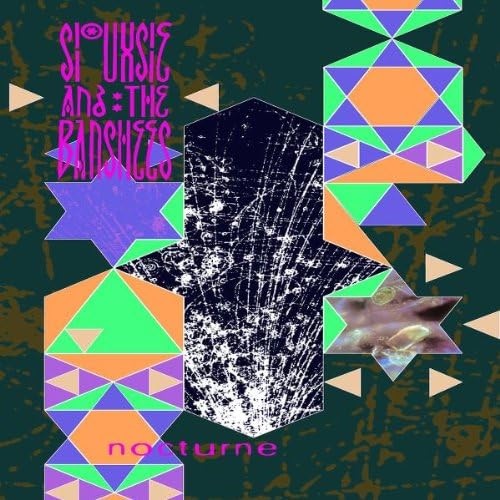
SIOUXSIE & THE BANSHEES
Links
Buy
Siouxsie & The Banshees Vinyl - direct link @ ebay.co.uk
(Lenin is a participant in the eBay (EPN) affiliate program)
Siouxsie and the Banshees Fascinating Facts
Led Zeppelin Fascinating Facts
Human League Fascinating Facts
Visage / Steve Strange Fascinating Facts
Tears For Fears Fascinating Facts
Queen / Freddie Mercury Fascinating Facts
Danny Thompson Fascinating Facts
Talking Heads Fascinating Facts
Porcupine Tree Fascinating Facts
Adam and the Ants Fascinating Facts
Queen / Freddie Mercury Fascinating FactsMarc Bolan and T. Rex Fascinating Facts
Sting & The Police Fascinating Facts
Jean-Michel Jarre Fascinating Facts
Peter Gabriel Fascinating Facts
Holger Czukay Fascinating Facts
Anton Corbijn Fascinating Facts
Dexys Midnight Runners Fascinating Facts
Roxy Music / Bryan Ferry Fascinating Facts
Elvis Presley Fascinating Facts
Scott Walker Fascinating Facts
Michael Brook Fascinating Facts
Penguin Cafe Orchestra Fascinating Facts
David Bowie Rarities (Shipped From UK)
Cocteau Twins Fascinating Facts
Ryuichi Sakamoto Fascinating Facts
Haruomi Hosono Fascinating Facts
Yukihiro Takahashi Fascinating Facts
Hector Zazou Fascinating Facts
Frank Auerbach Fascinating Facts
Siouxsie & The Banshees
Artist
Siouxsie & The Banshees
Content
All the fascinating facts
More
Bitesized
Year
1970s to Present Day
Random and bite-sized facts on all things on the mythical band Siouxsie & The Banshees. Totally random but totally fascinating if you're into it. Do you know Siouxsie & The Banshees now?
--
John McKay and Kenny Morris recorded The Scream in just over a week
The Banshees’ debut album, *The Scream*, was recorded in London in 1978 with guitarist John McKay and drummer Kenny Morris in the line-up. The sessions were completed in a remarkably short period, with the band working quickly to capture the tense, abrasive sound they had developed on stage. Rather than polishing away the rough edges, the recording preserved the space, dissonance and unsettling atmosphere that made the album so distinctive.
--
‘Hong Kong Garden’ was named after a Chinese takeaway
Siouxsie Sioux has explained that ‘Hong Kong Garden’ took its name from a Chinese takeaway in Chislehurst, near where she grew up. The song was partly prompted by racist behaviour she had witnessed around the restaurant. Its bright, almost jaunty musical arrangement contrasts with the anger behind the subject, making it more than simply an exotic-sounding early hit. Released in 1978, it became the band's first major chart success.
--
The Banshees initially struggled to find a record deal
Although the band emerged from the excitement surrounding punk, their first album didn't appear until 1978. Their uncompromising approach and refusal to fit neatly into the expectations of the music business made establishing themselves difficult. When *The Scream* finally arrived, its mixture of jagged guitar, unusual rhythms and Siouxsie's distinctive vocal style marked them out from many of the bands that had followed punk's initial breakthrough.
--
Robert Smith temporarily joined the Banshees after John McKay left
When guitarist John McKay and drummer Kenny Morris abruptly left the band in 1979, Siouxsie and Steven Severin were left with tour commitments and a serious problem. Robert Smith of The Cure stepped in on guitar for the remaining dates, while drummer Budgie joined the group. Smith's temporary involvement eventually became an important footnote in the history of two bands whose music would both become closely associated with the darker side of post-punk.
--
The Banshees recorded a version of The Beatles’ ‘Helter Skelter’
The closing track of *The Scream* was not an original composition but a cover of The Beatles’ ‘Helter Skelter’. The Banshees transformed the song into something darker and more unsettling, fitting it into the atmosphere of their own debut. It was an unusual choice for a band associated with punk's rejection of established rock conventions, and their version sounded far removed from the original's place in the Beatles catalogue.
--
Siouxsie and the Banshees made a full album of cover versions
In 1987, the band released *Through the Looking Glass*, an album devoted entirely to other artists' songs. Their choices ranged from Iggy Pop's ‘The Passenger’ to songs by Roxy Music, Kraftwerk and Billie Holiday. Rather than treating the album as a collection of straightforward reproductions, they reworked the material through the Banshees' own arrangements and atmosphere. It revealed how widely their musical interests extended beyond punk.
--
The band’s version of ‘Dear Prudence’ became one of their biggest UK hits
The Banshees' cover of The Beatles’ ‘Dear Prudence’ was released in 1983 and reached number three on the UK singles chart. It was their highest-charting single in Britain. The recording grew out of the band's interest in taking familiar material and finding something unexpected in it, with their version expanding the original into a more atmospheric, guitar-driven performance.
--
Siouxsie disliked being labelled the Queen of Goth
Although the Banshees became one of the major influences on gothic rock, Siouxsie repeatedly objected to being reduced to that label. She felt that categorising a musician in this way could obscure the other elements of their work. The band's music moved through punk, post-punk, psychedelia, pop and experimental sound, and Siouxsie was keen that their wider range shouldn't be overlooked because of their image or the subculture associated with them.
--
The Banshees and The Creatures allowed Siouxsie to explore different musical ideas
Siouxsie and drummer Budgie formed The Creatures as a separate project alongside their work with the Banshees. The duo's music placed a greater emphasis on percussion and rhythm, giving them a different setting in which to experiment. It wasn't simply a side project created during a break from the main band: The Creatures developed their own albums and identity, allowing Siouxsie and Budgie to pursue ideas that didn't necessarily fit the Banshees' sound.
--
The Banshees split in 1996 after two decades of constant change
Siouxsie and the Banshees officially ended in 1996, after a career that had taken them from the first wave of British punk to sophisticated, atmospheric alternative pop. The line-up changed repeatedly, but Siouxsie and Steven Severin remained the band's central figures throughout its history. Their final years reflected Siouxsie's growing desire to escape the expectations attached to the group and to pursue music without being confined by its established identity.
--
SIOUXSIE & THE BANSHEES
Links
Buy
Siouxsie & The Banshees Japanese Vinyl - direct link @ ebay.co.uk
(Lenin is a participant in the eBay (EPN) affiliate program)
--
Siouxsie Sioux
Siouxsie grew up in Chislehurst, south-east London, and has spoken about feeling like an outsider long before punk arrived. After a serious illness in her teens, she began consciously transforming her appearance, helping create the striking visual identity that became inseparable from her music. Her influence eventually extended well beyond punk, with generations of female singers citing her independence and stage presence as an inspiration.
--
Steven Severin
Severin was one of the two founding members who remained at the heart of the Banshees throughout their original career. He met Siouxsie at the early London punk scene, and the pair began building a band before either had much conventional musical experience. Outside the group, he also developed an interest in film music and experimental sound, working on projects that took him beyond the traditional rock-band format.
--
Budgie
Before joining the Banshees, Budgie had played with Liverpool groups including Big in Japan and the Spitfire Boys, as well as the Slits. He initially joined the Banshees as a replacement drummer during the chaotic 1979 tour, but became a permanent member. His interest in percussion went beyond a conventional drum kit: with Siouxsie, he formed the Creatures, whose music put rhythm and percussion at the centre rather than treating them simply as accompaniment.
--
Kenny Morris
Morris played drums on the Banshees’ first two studio albums, *The Scream* and *Join Hands*. His approach often favoured atmosphere, space and unusual patterns over the standard rock backbeat. The combination of his drumming and John McKay’s guitar helped give the early Banshees their distinctive, unsettling sound.
--
John McKay
McKay joined in 1977 and contributed both guitar and saxophone to the band. The opening guitar figure of “Hong Kong Garden” grew from a melody he had worked out by picking across two strings, rather than relying on conventional chord playing. His guitar sound on *The Scream* and *Join Hands* helped establish the tense, angular style of the early records.
--
John McGeoch
After leaving Magazine, McGeoch joined the Banshees and became a key part of their move towards more intricate and atmospheric guitar music. He played on *Kaleidoscope*, *Juju* and *A Kiss in the Dreamhouse*, using textures and melodic lines rather than simply strumming chords. Siouxsie later described him as her favourite guitarist, praising his ability to translate unusual musical ideas into sound.
--
Robert Smith
Smith’s involvement with the Banshees began in 1979, when he temporarily replaced McKay on guitar after the abrupt departure of McKay and Morris during a tour. He returned in 1982 after McGeoch left and recorded *Hyaena* with the group. The arrangement was unusual because Smith was simultaneously the frontman of the Cure, and his Banshees commitments eventually became difficult to reconcile with his own band.
--
John Valentine Carruthers
Carruthers joined after Smith’s second departure, playing guitar on *The Thorn* and *Tinderbox*. His tenure covered a period when the Banshees were experimenting with denser studio arrangements and new textures. He left in 1987, before the band introduced a new line-up featuring guitarist Jon Klein and multi-instrumentalist Martin McCarrick.
--
Martin McCarrick
McCarrick joined in 1987 and brought a wider instrumental palette to the band, playing keyboards, cello and accordion. His cello was an especially distinctive addition to a group already moving beyond the sound of a conventional guitar-based rock band. He remained with the Banshees until their original run ended in 1996.
--
Jon Klein
Klein became the Banshees’ guitarist in 1987 and played on *Peepshow*, *Superstition* and *The Rapture*. His arrival coincided with a period when the band was making greater use of sampling and unusual studio sounds. In a later interview, Klein recalled that Siouxsie sometimes wanted guitar sounds that barely resembled a guitar at all, challenging him to find new ways of creating them.
--
Knox Chandler
Chandler was the guitarist for the Banshees’ final touring line-up in the 1990s and returned for their 2002 reunion appearances. He joined near the end of the group’s original career, so his role was different from that of McGeoch, whose guitar work had helped define several of the band’s best-known records. Chandler also worked with other artists outside the Banshees, including the Psychedelic Furs.
--
Marco Pirroni
Pirroni played guitar at the Banshees’ first public performance at London’s 100 Club Punk Festival in September 1976. He was part of the group before it had settled into a regular working line-up, and soon moved on. He later became closely associated with Adam and the Ants, co-writing and playing guitar during their breakthrough period.
--
Sid Vicious
Before becoming famous with the Sex Pistols, Sid Vicious played drums at the Banshees’ first performance. The set was an extended, improvised version of “The Lord’s Prayer”, reflecting the band’s beginnings as an experimental punk project rather than a fully rehearsed group. Vicious did not remain in the Banshees and was replaced as the band developed its regular line-up.
--
Peter Fenton
Fenton was one of the early guitarists who helped the Banshees move from their first improvised performance towards a functioning live band. His tenure was brief: he was dismissed in 1977 after a performance in which an impromptu guitar solo clashed with the group’s developing approach. John McKay subsequently took over the guitar role, becoming part of the line-up that recorded the first two albums.
--
SIOUXSIE & THE BANSHEES
Links
Buy
Siouxsie & The Banshees Japanese Vinyl - direct link @ ebay.co.uk
(Lenin is a participant in the eBay (EPN) affiliate program)
--
The Banshees played a 20-minute version of ‘The Lord’s Prayer’ at their first appearance
Siouxsie and the Banshees made their public debut at the 100 Club Punk Festival in London in September 1976. They had no established set list, and their performance consisted of an extended, improvised version of ‘The Lord’s Prayer’. Sid Vicious played drums, Marco Pirroni played guitar and Steve Severin was on bass. It was a chaotic beginning for a band that would eventually make some of the most carefully constructed records of the post-punk era.
--
John McKay and Kenny Morris recorded The Scream in just over a week
The Banshees’ debut album, *The Scream*, was recorded in London in 1978 with guitarist John McKay and drummer Kenny Morris in the line-up. The sessions were completed in a remarkably short period, with the band working quickly to capture the tense, abrasive sound they had developed on stage. Rather than polishing away the rough edges, the recording preserved the space, dissonance and unsettling atmosphere that made the album so distinctive.
--
‘Hong Kong Garden’ was named after a Chinese takeaway
Siouxsie Sioux has explained that ‘Hong Kong Garden’ took its name from a Chinese takeaway in Chislehurst, near where she grew up. The song was partly prompted by racist behaviour she had witnessed around the restaurant. Its bright, almost jaunty musical arrangement contrasts with the anger behind the subject, making it more than simply an exotic-sounding early hit. Released in 1978, it became the band's first major chart success.
--
The Banshees initially struggled to find a record deal
Although the band emerged from the excitement surrounding punk, their first album didn't appear until 1978. Their uncompromising approach and refusal to fit neatly into the expectations of the music business made establishing themselves difficult. When *The Scream* finally arrived, its mixture of jagged guitar, unusual rhythms and Siouxsie's distinctive vocal style marked them out from many of the bands that had followed punk's initial breakthrough.
--
Robert Smith temporarily joined the Banshees after John McKay left
When guitarist John McKay and drummer Kenny Morris abruptly left the band in 1979, Siouxsie and Steven Severin were left with tour commitments and a serious problem. Robert Smith of The Cure stepped in on guitar for the remaining dates, while drummer Budgie joined the group. Smith's temporary involvement eventually became an important footnote in the history of two bands whose music would both become closely associated with the darker side of post-punk.
--
The Banshees recorded a version of The Beatles’ ‘Helter Skelter’
The closing track of *The Scream* was not an original composition but a cover of The Beatles’ ‘Helter Skelter’. The Banshees transformed the song into something darker and more unsettling, fitting it into the atmosphere of their own debut. It was an unusual choice for a band associated with punk's rejection of established rock conventions, and their version sounded far removed from the original's place in the Beatles catalogue.
--
Siouxsie and the Banshees made a full album of cover versions
In 1987, the band released *Through the Looking Glass*, an album devoted entirely to other artists' songs. Their choices ranged from Iggy Pop's ‘The Passenger’ to songs by Roxy Music, Kraftwerk and Billie Holiday. Rather than treating the album as a collection of straightforward reproductions, they reworked the material through the Banshees' own arrangements and atmosphere. It revealed how widely their musical interests extended beyond punk.
--
The band’s version of ‘Dear Prudence’ became one of their biggest UK hits
The Banshees' cover of The Beatles’ ‘Dear Prudence’ was released in 1983 and reached number three on the UK singles chart. It was their highest-charting single in Britain. The recording grew out of the band's interest in taking familiar material and finding something unexpected in it, with their version expanding the original into a more atmospheric, guitar-driven performance.
--
Siouxsie disliked being labelled the Queen of Goth
Although the Banshees became one of the major influences on gothic rock, Siouxsie repeatedly objected to being reduced to that label. She felt that categorising a musician in this way could obscure the other elements of their work. The band's music moved through punk, post-punk, psychedelia, pop and experimental sound, and Siouxsie was keen that their wider range shouldn't be overlooked because of their image or the subculture associated with them.
--
The Banshees and The Creatures allowed Siouxsie to explore different musical ideas
Siouxsie and drummer Budgie formed The Creatures as a separate project alongside their work with the Banshees. The duo's music placed a greater emphasis on percussion and rhythm, giving them a different setting in which to experiment. It wasn't simply a side project created during a break from the main band: The Creatures developed their own albums and identity, allowing Siouxsie and Budgie to pursue ideas that didn't necessarily fit the Banshees' sound.
--
The Banshees split in 1996 after two decades of constant change
Siouxsie and the Banshees officially ended in 1996, after a career that had taken them from the first wave of British punk to sophisticated, atmospheric alternative pop. The line-up changed repeatedly, but Siouxsie and Steven Severin remained the band's central figures throughout its history. Their final years reflected Siouxsie's growing desire to escape the expectations attached to the group and to pursue music without being confined by its established identity.
--
SIOUXSIE & THE BANSHEES
Links
Buy
Siouxsie & The Banshees Japanese Vinyl - direct link @ ebay.co.uk
(Lenin is a participant in the eBay (EPN) affiliate program)
--
He Was Already Part of Liverpool’s Punk Scene
Before joining Siouxsie and the Banshees, Budgie had played with Liverpool band Big in Japan, whose members included musicians who would later become prominent in other groups. The band became a small but influential part of Liverpool’s late-1970s scene, bringing together musicians who went on to very different careers.
--
He Had Played with the Slits
Budgie was also associated with the Slits before becoming the Banshees’ drummer. His experience in the early punk scene meant he was already familiar with the loose, experimental approach that distinguished these bands from more conventional rock groups.
--
His First Banshees Shows Came During a Crisis
Budgie joined the Banshees in 1979 after John McKay and Kenny Morris abruptly left during a tour. Robert Smith temporarily took over on guitar, and the group had to rebuild its live line-up quickly. Budgie's arrival proved much more than a temporary solution: he remained with the band until its original career ended.
--
He Helped Change the Band’s Rhythmic Sound
The Banshees’ music evolved considerably after Budgie joined. His drumming could be forceful without relying on a straightforward rock beat, giving songs room for shifting patterns and atmospheric arrangements. His rhythmic approach became especially important as the band moved from the stark sound of its first albums towards the more layered records of the 1980s.
--
The Creatures Began as a Percussion-led Experiment
Budgie and Siouxsie formed the Creatures in 1981, initially exploring what they could do with voice and percussion rather than building songs around the full Banshees line-up. Their first release, *Wild Things*, came out in 1981. It showed that the pair's musical partnership could work in a much more stripped-back setting.
--
He Played More Than a Standard Drum Kit
The Creatures gave Budgie opportunities to explore percussion beyond the usual rock-kit arrangement. Their recordings incorporated different rhythmic textures and instruments, with percussion often driving the composition rather than merely supporting a melody. This became a defining part of the project’s identity.
--
He and Siouxsie Took the Creatures to Hawaii
The Creatures’ 1983 album *Feast* was recorded in Hawaii. The location and the album’s percussion-focused arrangements helped distinguish it from the Banshees’ work at the time. Rather than simply sounding like a side project, it established a separate musical identity for the duo.
--
The Creatures Continued After the Banshees
When the Banshees ended in 1996, Budgie and Siouxsie continued working together as the Creatures. Their later releases included *Anima Animus* in 1999, which moved towards a more electronic and studio-shaped sound while retaining the duo’s interest in rhythm and atmosphere.
--
He Was Part of the Banshees’ Final Chapter
Budgie was still the band’s drummer when the Banshees released *The Rapture* in 1995. The album included contributions from John Cale, who produced parts of the record and played viola and keyboards. Budgie’s long association with the band meant he had been involved in its transformation from its early punk origins to its later, more elaborate studio sound.
--
His Career Was Closely Linked to Two Distinct Musical Identities
Budgie’s career with the Banshees and the Creatures illustrates two different sides of the same musical partnership. In the Banshees, his drumming supported a changing guitar-led band; in the Creatures, rhythm and percussion became the central focus. The two projects allowed him and Siouxsie to explore different approaches without abandoning their shared musical instincts.
--
SIOUXSIE & THE BANSHEES
Links
Buy
Siouxsie & The Banshees Japanese Vinyl - direct link @ ebay.co.uk
(Lenin is a participant in the eBay (EPN) affiliate program)
--
He Joined Before the Band Had a Record Deal
Kenny Morris became the Banshees’ drummer in 1977, after the group’s chaotic first appearance at the 100 Club Punk Festival. He was part of the line-up that transformed the band from an experimental punk happening into a working group, eventually recording the debut album *The Scream* in 1978.
--
His Drumming Was More About Atmosphere Than Flash
Morris’s playing on *The Scream* helped give the early Banshees their unsettling character. Rather than relying on elaborate fills, he often used repetition, space and emphatic accents to build tension. The result suited songs that could feel closer to sound experiments than conventional rock arrangements.
--
He Played on Two Albums in Less Than a Year
Morris recorded both *The Scream* and *Join Hands* with the Banshees. The albums appeared in 1978 and 1979 respectively, capturing a period when the band was developing quickly and its music was becoming more structured without losing its abrasive edge.
--
He Was Part of the Band’s Abrupt 1979 Break-up on Tour
During the tour for *Join Hands*, Morris and guitarist John McKay left the band suddenly. The departure created an immediate crisis for Siouxsie and Steven Severin, who had to find replacements to continue the tour. Robert Smith stepped in on guitar, while Budgie took over the drums.
--
His Departure Marked a Change in the Band’s Sound
Morris’s exit coincided with a major shift in the Banshees’ working methods. The next album, *Kaleidoscope*, used drum machines and keyboards alongside the new line-up’s playing. The band moved away from the stark, guitar-heavy approach of its first two albums towards a more varied studio sound.
--
He Was Involved in the Earliest Version of “The Lord’s Prayer”
The Banshees’ first public performance in September 1976 centred on an extended, improvised version of “The Lord’s Prayer”. Morris was not yet in the band for that performance; the drummer was Sid Vicious. Morris joined later, as the group developed beyond its original one-off appearance into a touring and recording band.
His Work Remains Most Closely Associated with the Early Banshees
Although his time in the group was relatively short, Morris played on two records that established the band’s early musical identity. *The Scream* and *Join Hands* remain the key documents of the original line-up’s stark, confrontational sound, before the group’s later changes in personnel and instrumentation.--
--
SIOUXSIE & THE BANSHEES
Links
Buy
Siouxsie & The Banshees Japanese Vinyl - direct link @ ebay.co.uk
(Lenin is a participant in the eBay (EPN) affiliate program)
--
He Was Persuaded to Join After a Friend Heard His Home Recordings
McKay was studying art when a friend encouraged him to audition for the Banshees. The friend had heard recordings he had made at home and thought his unconventional approach might suit the group. McKay went to a rehearsal in Putney, played through the set and was told by Siouxsie that he was in. He joined in July 1977.
--
He Was Largely Self-Taught on Guitar
McKay developed his playing without following a conventional guitar-training route. As a youngster, he found it easier to pick out melodies using two strings rather than moving his fingers across the fretboard. He kept using this technique as his style developed, and it became particularly important to the distinctive opening and riff of “Hong Kong Garden”.
--
He Used a Flanger to Help Create the Banshees’ Sound
McKay experimented with a flanger effect to produce the swirling, abrasive guitar textures heard on the early Banshees recordings. He has recalled that he could not afford the Bell Electrolabs unit he initially wanted, so he asked for an MXR flanger before recording the debut album. He later stressed that he did not use the effect on everything, despite the impression it created.
--
He Brought Unusual Chords into Punk Guitar
McKay’s playing went beyond the standard power chords associated with much punk rock. He drew on diminished chords and suspended sevenths, and recalled a friend joking that some of his shapes sounded like “disco chords”. These unfamiliar harmonies helped make *The Scream* sound tense and unpredictable without sacrificing its melodic elements.
--
He Also Played Saxophone
McKay’s contribution to the Banshees was not limited to guitar. He also played saxophone, including on the band’s early recordings. The additional instrument suited the group’s willingness to use sounds outside the usual punk-rock arrangement, even though his guitar work became the defining part of his contribution.
--
He Composed the Music for “Hong Kong Garden”
The memorable guitar melody of “Hong Kong Garden” originated with McKay. His two-string picking approach helped shape the song’s distinctive figure, which was then arranged with the band’s other parts and the track’s famous xylophone motif. Released in 1978, it became the Banshees’ breakthrough single, reaching No. 7 in the UK chart.
--
His Guitar Work Influenced Musicians Far Beyond Punk
McKay’s playing on *The Scream* was later praised by musicians from very different scenes. Geordie Walker of Killing Joke admired the unusual chord structures, while Steve Albini of Big Black singled out the album’s guitar work for its ability to make apparently discordant sounds cohere into songs. Robert Smith also said that playing Banshees material helped him experiment with a denser, more effects-heavy guitar sound.
--
He Left the Band on the Day *Join Hands* Was Released
McKay and drummer Kenny Morris left the Banshees abruptly in September 1979, just as the band was beginning its UK tour for *Join Hands*. McKay later recalled that, after an incident during a record-shop appearance, he and Morris went to a coffee shop and decided they had had enough. The sudden departure forced Siouxsie and Steven Severin to find replacements so the tour could continue.
--
He Continued Making Music Away from the Spotlight
After leaving the Banshees, McKay did not pursue the kind of high-profile career enjoyed by some of his contemporaries. He continued writing and recording music, retaining a collection of home demos that remained unreleased for years. In a 2025 interview, he discussed finally bringing some of this material into a more finished form, offering a rare look at his creative life after the band.
--
SIOUXSIE & THE BANSHEES
Links
Buy
Siouxsie & The Banshees Japanese Vinyl - direct link @ ebay.co.uk
(Lenin is a participant in the eBay (EPN) affiliate program)
--
He Joined While Still a Member of Magazine
McGeoch was still playing with Magazine when the Banshees first approached him. He recorded guitar for “Happy House” before making the permanent move in 1980. The decision was significant for Magazine: bassist Barry Adamson later said the group was left with a huge gap after McGeoch departed.
--
“Happy House” Helped Win Him the Job
When McGeoch was invited to work with the Banshees, he was given room to develop his own guitar part for “Happy House”. Rather than copying John McKay’s earlier approach, he came up with a lighter, more melodic line. Siouxsie and Steven Severin were impressed by how naturally he fitted into the music.
--
He Described Himself as Being in a “Picky” Phase
McGeoch explained that, around the time he joined the Banshees, he was interested in picking individual notes rather than simply strumming chords. That approach helped create the intricate, moving guitar patterns heard on *Kaleidoscope* and *Juju*. It also gave him a way to make guitar parts distinctive without overcrowding the songs.
--
He Could Change the Sound of a Chord While Playing It
McGeoch devised a setup in which an MXR flanger was mounted on a microphone stand. After striking a chord, he could turn the effect’s control with his hand and sweep the sound in real time. This helped him create moving, almost liquid guitar textures that were difficult to reproduce with ordinary strumming alone.
--
He Played Sitars as Well as Guitar
The Banshees’ *Kaleidoscope* sessions made room for instruments outside the usual guitar-band palette, including sitar. McGeoch played the instrument on the album, reflecting the group’s willingness to experiment with timbre rather than treating the guitar as the only source of unusual sounds. The band later joked about the apparent return to psychedelic-era influences.
--
He Helped Turn “Spellbound” into a Guitar Showcase
The guitar work on “Spellbound”, from *Juju*, is one of McGeoch’s most celebrated recordings. Its tightly picked patterns and open-string figures give the song a restless momentum without relying on a conventional heavy-rock riff. The track later helped secure his place in *Mojo* magazine’s 1996 list of the 100 greatest guitarists of all time.
--
He Thought of the Banshees as More Hitchcock Than Hammer Horror
McGeoch resisted the idea that the Banshees simply made gothic horror music. When discussing *Juju*, he described its atmosphere in terms of suspense and psychological tension rather than straightforward horror imagery. The distinction reflected the band’s interest in creating unease through musical detail, not just dark subject matter or theatrical presentation.
--
The Band Worked Out *Juju* on Stage Before Recording It
Unlike the more studio-experimental *Kaleidoscope*, the songs on *Juju* were played live and developed through touring before the album was recorded. McGeoch joined a band whose arrangements were becoming increasingly tight, and the interplay between his guitar and Budgie’s drumming became central to the record’s sound. Steven Severin later described the album as the work of a band that had become a strong, unified four-piece.
--
He Left After Three Banshees Albums
McGeoch played on *Kaleidoscope*, *Juju* and *A Kiss in the Dreamhouse*. By 1982, the demands of touring and personal difficulties had taken their toll, and he left the group after a performance in Madrid. His departure ended a remarkably productive period, during which his inventive guitar work helped shape three albums with distinctly different sounds.
--
SIOUXSIE & THE BANSHEES
Links
Buy
Siouxsie & The Banshees Japanese Vinyl - direct link @ ebay.co.uk
(Lenin is a participant in the eBay (EPN) affiliate program)
--
He Played Two Sets a Night During His First Banshees Tour
When John McKay and Kenny Morris abruptly left the Banshees in September 1979, Robert Smith stepped in on guitar. The Cure were already supporting the Banshees on the tour, so Smith suddenly had to perform with both groups on the same evening. What began as an emergency replacement became a much longer musical association than anyone initially expected.
--
He Had to Learn the Banshees’ Set at Short Notice
Smith was not joining a band with a familiar repertoire: he had to get up to speed with the Banshees’ songs while the tour was already under way. The circumstances were so hurried that his first stint was intended to be temporary. He returned to the group several years later under similarly difficult circumstances, after John McGeoch became unable to continue touring.
--
He Returned to the Banshees in 1982
Smith rejoined after McGeoch’s departure, helping the Banshees complete their touring commitments. He remained for the recording of *Hyaena*, released in 1984. The album was made over an unusually long period, with the members’ other projects and touring commitments repeatedly interrupting the sessions.
--
He Helped Create “Swimming Horses” by Playing Something Unexpected
During a studio session in 1983, Siouxsie and Steven Severin were experimenting with a tune on keyboards. Smith began playing a different melody instead of following their original idea. They encouraged him to continue, Budgie joined on drums, and the basic form of “Swimming Horses” emerged. The recording was later developed with vocals, guitar and bass.
--
He Played Guitar on “Dear Prudence”
The Banshees’ Beatles cover “Dear Prudence” became their highest-charting UK single, reaching No. 3 in 1983. Smith played guitar on the recording, which was made in Stockholm while the band was touring. The single gave the group a major commercial success during a period when its members were juggling several different musical projects.
--
He and Steven Severin Formed The Glove
In 1983, Smith and Severin created The Glove, a separate project that released the album *Blue Sunshine*. It gave them an opportunity to explore psychedelic sounds and studio experimentation outside their main bands. Smith handled much of the singing through a female vocalist, Jeanette Landray, rather than taking the usual frontman role himself.
--
He Was Writing Banshees Music on Piano, Not Just Guitar
During the *Hyaena* sessions, Smith often developed musical ideas on piano. This mattered because the Banshees were not simply adding his guitar to their established sound: his different way of composing influenced how some songs were built. “Swimming Horses” is a particularly clear example of a track that began with a keyboard idea rather than a conventional guitar riff.
His Banshees Career Ended When The Cure Needed Him Back
The overlapping commitments eventually became too difficult to maintain. Smith was also working on The Cure’s *The Top*, and the pressure of balancing the two groups contributed to his departure from the Banshees in 1984. The brief but creatively productive period left its mark on *Hyaena*, an album that sounds different from both the earlier McGeoch records and the Banshees’ later work.
--
SIOUXSIE & THE BANSHEES
Links
Buy
Siouxsie & The Banshees Japanese Vinyl - direct link @ ebay.co.uk
(Lenin is a participant in the eBay (EPN) affiliate program)
--
There Was No Single Reason for the Split
Steven Severin later described the Banshees’ break-up as something that had reached its natural end, while Siouxsie said there were both record-company problems and internal difficulties. Their accounts suggest that the split was the result of several pressures building up over time, rather than one dramatic argument or event.
--
Siouxsie Thought the Band Might Have Ended in 1988
Looking back in an interview with guitarist John McGeoch’s successor, Severin, Siouxsie suggested the Banshees might have been better off stopping around 1988. Instead, they continued for another eight years, releasing just two more studio albums. Her retrospective comments indicate that the problems were not confined to the final months of the group.
--
The Creatures Had Become More Than a Side Project
Siouxsie and drummer Budgie had formed the Creatures in 1981, and the project increasingly gave them a different way to make music together. After the Banshees ended, they continued as the Creatures, releasing *Anima Animus* in 1999. Siouxsie later explained that she missed the spontaneity of making music without knowing in advance how it would turn out.
--
Siouxsie and Budgie Left London for France
In the 1990s, Siouxsie and Budgie moved to the French countryside. Siouxsie later reflected that leaving London and living in another country was part of her desire to escape familiar routines and expectations. Their new life also put physical distance between them and the band's London-centred history, although it was not, by itself, the sole cause of the break-up.
--
Polydor Dropped the Band After *The Rapture*
The Banshees released *The Rapture* in 1995, but Polydor dropped them from its roster soon afterwards. The band continued to tour, with Knox Chandler replacing Jon Klein for their final live dates. Losing their record deal removed an important part of the infrastructure that had supported the group, at a time when its members were already facing internal difficulties.
--
The Final Split Came in 1996
The Banshees officially disbanded in April 1996 after twenty years of activity. Siouxsie and Budgie turned their attention to the Creatures, while Severin pursued independent releases and experimental music. The end of the group did not mean that its members stopped making music; it meant they no longer wanted to continue doing so under the Banshees name.
--
Siouxsie and Severin Stopped Speaking
The split left serious personal damage, not just a defunct musical partnership. In a later interview, Severin said he and Siouxsie stopped talking after the 1996 break-up and began repairing some of their differences only years later. By the time of their reunion, their communication had become difficult enough that they sometimes relied on other people to pass messages between them.
--
The Reunion Was Triggered by a Festival Offer
In 2002, Severin received an offer for the Banshees to play California's Coachella festival. After years apart, the opportunity prompted the original partnership to try again. The group also had practical reasons to reconnect: Siouxsie and Severin had been trying to get their back catalogue properly maintained and remastered, and the conversations involved in that process helped reopen communication.
--
The Reunion Tour Lasted Only a Handful of Shows
The 2002 reunion was called the *Seven Year Itch* tour. Although the initial rehearsals and performances gave some hope that the old tensions might have eased, Siouxsie later said the problems soon returned. She and Budgie felt that the old patterns had not changed, and the reunion did not develop into a new album or a lasting return to the band.
--
The Biography Deepened the Rift
The authorised Banshees biography, written by Mark Paytress, was published around the time of the reunion. Severin later said the book had driven another wedge between him and Siouxsie, rather than resolving the past. Their subsequent relationship remained strained, and later interviews made clear that the 2002 reunion had not repaired the underlying problems.
--
The Band’s End Was Also the End of a Particular Working Relationship
In retrospect, the Banshees’ story was not simply a case of a group losing popularity or running out of ideas. Their final years involved a record-company split, competing creative priorities, and a damaged relationship between two people who had been the band's core since its beginning. The 2002 reunion showed that the catalogue and the audience were still there, but it could not restore the trust needed to make the group work again.
--
Search Keywords
Siouxsie & The Banshees
Siouxsie Sioux
Icons
SIOUXSIE & THE BANSHEES
Links
Buy
Siouxsie & The Banshees Vinyl - direct link @ ebay.co.uk
(Lenin is a participant in the eBay (EPN) affiliate program)
Siouxsie and the Banshees Fascinating Facts
Led Zeppelin Fascinating Facts
Human League Fascinating Facts
Visage / Steve Strange Fascinating Facts
Tears For Fears Fascinating Facts
Queen / Freddie Mercury Fascinating Facts
Danny Thompson Fascinating Facts
Talking Heads Fascinating Facts
Porcupine Tree Fascinating Facts
Adam and the Ants Fascinating Facts
Visage / Steve Strange Fascinating FactsTears For Fears Fascinating Facts
Queen / Freddie Mercury Fascinating Facts
Marc Bolan and T. Rex Fascinating Facts
Sting & The Police Fascinating Facts
Jean-Michel Jarre Fascinating Facts
Peter Gabriel Fascinating Facts
Holger Czukay Fascinating Facts
Anton Corbijn Fascinating Facts
Dexys Midnight Runners Fascinating Facts
Roxy Music / Bryan Ferry Fascinating Facts
Elvis Presley Fascinating Facts
Scott Walker Fascinating Facts
Michael Brook Fascinating Facts
Penguin Cafe Orchestra Fascinating Facts
David Bowie Rarities (Shipped From UK)
Cocteau Twins Fascinating Facts
Roxy Music / Bryan Ferry Fascinating Facts
Ryuichi Sakamoto Fascinating Facts
Haruomi Hosono Fascinating Facts
Yukihiro Takahashi Fascinating Facts
Hector Zazou Fascinating Facts
Frank Auerbach Fascinating Facts