TEARS FOR FEARS
Links
Buy
Tears For Fears Vinyl - direct link @ ebay.co.uk
(Lenin is a participant in the eBay (EPN) affiliate program)
Tears For Fears Fascinating Facts
Queen / Freddie Mercury Fascinating Facts
Danny Thompson Fascinating Facts
Talking Heads Fascinating Facts
Porcupine Tree Fascinating Facts
Adam and the Ants Fascinating Facts
Nick Drake Fascinating FactsLed Zeppelin Fascinating Facts
Visage / Steve Strange Fascinating Facts
Queen / Freddie Mercury Fascinating Facts
Marc Bolan and T. Rex Fascinating Facts
Sting & The Police Fascinating Facts
Jean-Michel Jarre Fascinating Facts
Peter Gabriel Fascinating Facts
Holger Czukay Fascinating Facts
Anton Corbijn Fascinating Facts
Dexys Midnight Runners Fascinating Facts
Roxy Music / Bryan Ferry Fascinating Facts
Elvis Presley Fascinating Facts
Scott Walker Fascinating Facts
Michael Brook Fascinating Facts
Penguin Cafe Orchestra Fascinating Facts
David Bowie Rarities (Shipped From UK)
Cocteau Twins Fascinating Facts
Ryuichi Sakamoto Fascinating Facts
Haruomi Hosono Fascinating Facts
Yukihiro Takahashi Fascinating Facts
Hector Zazou Fascinating Facts
Frank Auerbach Fascinating Facts
Tears For Fears
Artist
Tears For Fears
Content
All the fascinating facts
More
Bitesized
Year
1970s to Present Day
Random and bite-sized facts on all things on the mythical band Tears For Fears. Totally random but totally fascinating if you're into it. Do you know Tears For Fears now?
--
“EVERYBODY WANTS TO RULE THE WORLD” WAS ALMOST LEFT OFF THE ALBUM
Roland Orzabal was initially unimpressed with “Everybody Wants to Rule the World”. The song began with a rhythm inspired by records including Simple Minds' “Waterfront”, but he struggled with the lyrics. Its working title was “Everybody Wants to Go to War”. Producer Chris Hughes kept pushing Orzabal to develop it, and the change to “Everybody Wants to Rule the World” finally gave him a lyric he believed in.
--
“SHOUT” BEGAN WITH A DRUM MACHINE AND TWO CHORDS
Producer Chris Hughes recalled Roland arriving with a simple electronic rhythm and a synthesiser idea for “Shout”. The early version had a drum-machine beat, a bass tone and the repeated phrase “Shout, shout, let it all out”. The song took a long time to develop into its finished recording, even though its central idea was remarkably simple.
--
“I BELIEVE” WAS ORIGINALLY INTENDED FOR ROBERT WYATT
“I Believe” was written with Robert Wyatt in mind, rather than as an obvious Tears for Fears single. Wyatt was known for his distinctive voice and experimental work, and the song's reflective mood suited that direction. The duo ultimately recorded it themselves for “Songs from the Big Chair”, released in 1985.
--
“EVERYBODY WANTS TO RULE THE WORLD” WAS RECORDED QUICKLY
While “Shout” demanded extensive work, “Everybody Wants to Rule the World” came together comparatively quickly. Producer Chris Hughes recalled that the track was recorded in a matter of days, with the arrangement falling into place more easily than some of the album's other songs. Its breezy sound concealed a carefully assembled combination of programmed drums, synthesiser, bass and guitar.
--
THE “SONGS FROM THE BIG CHAIR” MIXING TOOK PLACE IN MUNICH
Tears for Fears went to Union Studios in Munich to mix much of “Songs from the Big Chair”. The band wanted to work on an SSL mixing console, and the move gave them access to the equipment they were looking for. The sessions also took them away from their usual working environment in England while they completed the album's sound.
--
“MOTHERS TALK” HAD TO BE REWORKED
The first version of “Mothers Talk” recorded for “Songs from the Big Chair” was abandoned after the record company disliked it. Producer Chris Hughes returned to the project, and the song was reworked into the version released as a single in 1984. It was one of the tracks that took considerable effort to get right during the album sessions.
--
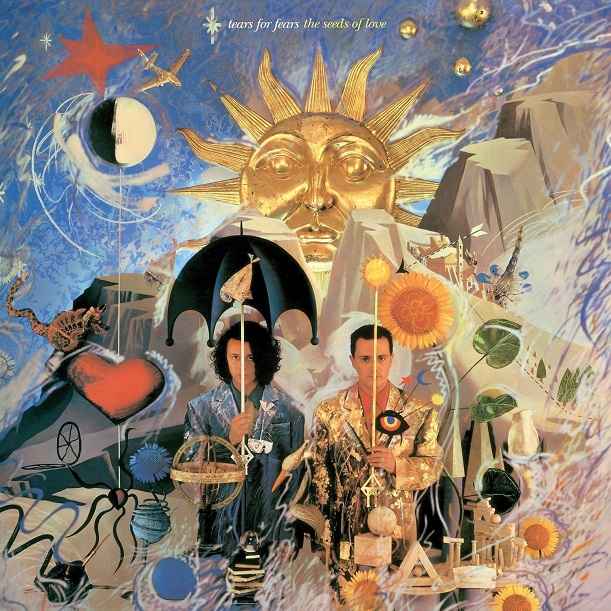
“THE SEEDS OF LOVE” WAS A LONG AND EXPENSIVE PRODUCTION
By the time Tears for Fears made “The Seeds of Love”, Roland Orzabal had become increasingly determined to control the sound of the records. The album took years to make, with extensive studio work and a succession of musical ideas. Orzabal later admitted that he had become difficult to produce because he no longer wanted other people telling him what to do in the studio.
--
“SOWING THE SEEDS OF LOVE” WAS REMIXED FOR MONTHS
Roland Orzabal recalled that the band were happy with a mix of “Sowing the Seeds of Love” just before Christmas 1988. The following day, the record company rejected it. What followed was an extraordinary six months of remixing, despite the original mix needing only a very small change to Curt Smith's chorus vocal before it was rejected.
--
“WOMAN IN CHAINS” FEATURES OLETA ADAMS
American singer and pianist Oleta Adams performs the prominent guest vocals on “Woman in Chains”, from “The Seeds of Love”. Tears for Fears had encountered Adams while she was performing in a hotel bar in Kansas City. Orzabal was impressed by her voice and invited her to work with the band, leading to one of their best-known vocal collaborations.
--
“THE HURTING” DREW ON PRIMAL THERAPY
Tears for Fears' 1983 debut album was strongly influenced by the ideas of American psychologist Arthur Janov, whose primal therapy encouraged people to confront buried emotional pain. Roland Orzabal and Curt Smith drew on those themes in songs about childhood, fear and emotional distress. The album's title track and “Mad World” helped establish the psychological intensity that distinguished the duo's early work.
--
TEARS FOR FEARS
Links
Buy
Tears For Fears Japanese Vinyl - direct link @ ebay.co.uk
(Lenin is a participant in the eBay (EPN) affiliate program)
--
MAD WORLD WAS ALMOST A B-SIDE
“Mad World” was originally earmarked as the B-side to “Pale Shelter”. Producer Chris Hughes and A&R man David Bates heard its potential and pushed for it to be released as a single instead. It reached No. 3 in the UK, becoming the breakthrough hit the band needed.
--
THE ALBUM'S TITLE TRACK HAD AN UNUSUAL INSPIRATION
Roland Orzabal wrote the guitar riff for “The Hurting” after Curt Smith described a performance by Bristol band Electric Guitars. The track was later sampled for Band Aid’s “Do They Know It’s Christmas?” — something Smith joked was amusing because Tears for Fears hadn’t been invited to take part.
--
“PALE SHELTER” CAME FROM AN ART BOOK
Orzabal had the verse of “Pale Shelter” for some time but couldn’t find a chorus. The breakthrough came when he spotted the title “Pale Shelter” beside a Henry Moore work in a book about painting. The title gave him the missing idea, and the song was completed.
--
“IDEAS AS OPIATES” BORROWED ITS TITLE FROM A BOOK
The title came from a chapter in Arthur Janov’s 1980 book Prisoners of Pain. The song also contained an unusual harmonic clash: Orzabal recalled that when the band played its combination of major and minor thirds during a John Peel session, an engineer stopped the tape, assuming they’d made a mistake.
--
“SUFFER THE CHILDREN” STARTED WITH DAVID LORD
An early version of “Suffer the Children” was recorded with producer David Lord at Crescent Studios in Bath. Orzabal recalled that Lord added about three layers of keyboards and the song was quickly done. Graduate drummer Andy Marsden also played on this early recording, which became the band’s debut single in 1981.
--
THE BAND WANTED A VERY PARTICULAR DRUM SOUND
Looking back at the album, Orzabal cited Peter Gabriel’s third solo album as a reference point. Tears for Fears deliberately favoured an ambient drum sound and avoided hi-hats and cymbals, alongside their use of the Roland CR-78 drum machine. That combination helped give The Hurting its distinctive, spacious atmosphere.
--
IAN STANLEY HELPED THEM LEARN THE TECHNOLOGY
Keyboard player Ian Stanley was more important to the album’s early development than its final recording sessions. Smith explained that Stanley taught the duo the practical side of recording and music technology, while his own studio gave them room to experiment with synthesizers and programming.
--
“CHANGE” WAS ORIGINALLY FOR SOMEONE ELSE TO SING
Orzabal initially wrote “Change” for his wife to sing. Smith heard more potential in the song and took over the vocal. Orzabal later called its lyrics relatively lightweight compared with the album’s darker material, but recognised that a song with a simpler pop feel helped balance the record.
--
“THE PRISONER” WAS INSPIRED BY PETER GABRIEL
Orzabal said “The Prisoner” drew on Peter Gabriel’s third solo album, particularly Gabriel’s technique of whispering behind the main vocal to make it more unsettling. Tears for Fears used a similar effect to heighten the track’s dark, tense atmosphere.
--
THE FINAL TRACK WAS ABOUT ORZABAL'S FATHER
“Start of the Breakdown” was chosen to close the album partly because its music seems to fall apart towards the end. But the song had a deeply personal subject, too: Orzabal said its lyrics referred to his father’s nervous breakdown when he was two or three years old.
--
TEARS FOR FEARS
Links
Buy
Tears For Fears Japanese Vinyl - direct link @ ebay.co.uk
(Lenin is a participant in the eBay (EPN) affiliate program)
--
THE ALBUM WAS RECORDED IN A HOUSE
After the exhausting sessions for The Hurting, Roland Orzabal bought a recording console and installed it in keyboard player Ian Stanley’s house near Bath. They built a 24-track studio themselves, adding soundproofing and working in familiar surroundings instead of being under the clock in a commercial studio.
--
“LISTEN” WAS ALREADY LYING AROUND
Although Songs from the Big Chair was released in 1985, “Listen” began as an Ian Stanley demo made while the band were recording The Hurting. Roland Orzabal later said the album felt like eight separate songs rather than the single, connected statement of their debut.
--
“THE WORKING HOUR” CAME TOGETHER IN HALF AN HOUR
In an interview included with the original album-era material, Orzabal said “The Working Hour” was thrown together during rehearsals for the band’s previous tour. He said it came together in about half an hour, and that the arrangement stayed largely the same afterwards.
--
“EVERYBODY WANTS TO RULE THE WORLD” WAS A LATE ADDITION
Orzabal was initially reluctant about “Everybody Wants to Rule the World”. Producer Chris Hughes kept arguing for it, and the track was recorded in roughly four or five days near the end of the album sessions. That was remarkably quick compared with the months spent developing “Shout”.
--
“SHOUT” STARTED AS A CHORUS WITHOUT VERSES
Orzabal first imagined “Shout” as a repeated chorus in the spirit of “Give Peace a Chance”. The band eventually decided the repetition needed a verse. The song then grew into a much longer production, with producer Chris Hughes recalling that the original recording ran to around seven minutes before being edited down.
--
THE TITLE CAME FROM A FILM ABOUT MULTIPLE PERSONALITIES
The album title was inspired by the television film Sybil, about a woman with multiple personalities. The “big chair” was the place where Sybil felt safe. The title also suited Orzabal’s sense that the record was a collection of distinct songs rather than one continuous concept like The Hurting.
--
“THE BIG CHAIR” CONTAINS DIALOGUE FROM SYBIL
The short instrumental “The Big Chair” uses dialogue sampled from the 1976 film Sybil. It functions as a brief interlude on the album, directly connecting the record’s title to the film that inspired it.
--
“THE WORKING HOUR” HAS A SAXOPHONE CONNECTION
The track features saxophone from Mel Collins, the experienced session musician known for work with King Crimson and many other artists. The arrangement also includes grand piano from Andy Davis and percussion from Jerry Marotta, giving the song a more organic, expansive sound than the band’s earlier synth-led material.
--
“MOTHERS TALK” HAD TO BE REWORKED
The first version of “Mothers Talk” was produced by Jeremy Green, but the band were unhappy with the results. Chris Hughes was brought back to rework it. The single’s eventual success helped establish the more muscular, rhythm-focused sound that carried through Songs from the Big Chair.
--
“THE WORKING HOUR” WAS ALSO A STATEMENT ABOUT WORK
Orzabal described the lyric “We are paid by those who learn by our mistakes” as part of the song’s wider criticism of exploitation and the imbalance between those who do the work and those who profit from it. It gave the album a political edge alongside its more personal themes.
--
TEARS FOR FEARS
Links
Buy
Tears For Fears Japanese Vinyl - direct link @ ebay.co.uk
(Lenin is a participant in the eBay (EPN) affiliate program)
--
THE BAND ALMOST HAD A DIFFERENT NAME
Before settling on Tears for Fears, Roland Orzabal and Curt Smith briefly considered the name History of Headaches. Smith later recalled that the name Tears for Fears came from Arthur Janov’s book Prisoners of Pain.
--
HE STARTED OUT IN A MOD-LEANING BAND
Before Tears for Fears, Orzabal and Smith were members of Graduate, a Bath band with a mod-influenced image and sound. Their 1980 single “Elvis Should Play Ska” gives a good idea of how different their musical starting point was from the synth-driven records that followed.
--
HE WAS EXPERIMENTING WITH RECORDING AS A TEENAGER
Orzabal and Smith developed their early songs in Ian Stanley’s home studio. Stanley’s equipment gave them access to recording and keyboard technology that helped them move beyond the guitar-based sound of Graduate and build the more electronic approach heard on The Hurting.
--
HE WROTE SONGS ON A PROPHET-5
Orzabal has recalled writing much of Songs from the Big Chair using a Sequential Circuits Prophet-5 synthesizer and a LinnDrum LM-2 drum machine. He said the new instruments themselves helped give birth to the music: the songs would not have been the same without them.
--
HE BECAME FASCINATED BY THE SOUND OF EARLY SAMPLERS
Orzabal remembers the arrival of the E-mu Emulator, an early digital sampler that used 8-bit audio. He felt its limited fidelity was part of its appeal: the sounds had a distinctive character that translated well across different speakers, rather than sounding clean and hi-fi.
--
HE HAS DESCRIBED HIS WRITING AS A KIND OF MEDITATION
In a Tape Op interview, Orzabal described being able to generate ideas quickly when he reaches a slightly meditative state. He also said that this can produce strange, dark fragments and “gobbledygook” rather than finished songs; he sees those raw ideas as part of his creative process.
--
HE AND CURT SMITH HAVE VERY DIFFERENT WRITING HABITS
Orzabal has described himself as someone who can throw out ideas rapidly, while Smith tends to listen and think before responding. Orzabal said that a group songwriting experiment involving several writers at once did not suit Smith, which was one reason they later scrapped part of an album and started again.
--
HE ONCE MADE AN ALBUM HE JOKINGLY CALLED “THE MUSICAL”
During early work on the album that eventually became The Tipping Point, Orzabal and his collaborators tried a more bombastic direction influenced by Queen. He joked that the project was “Tears for Fears, The Musical”. The songs from that attempt were ultimately abandoned.
--
“NO SMALL THING” BEGAN WITH TWO ACOUSTIC GUITARS AND AN IPHONE
After years of experimenting with outside writers and different approaches, Orzabal and Smith met at Smith’s Los Angeles home in early 2020. They recorded themselves playing acoustic guitars on an iPhone and began writing “No Small Thing”. Orzabal later described that session as the point when Smith became interested in making a new Tears for Fears album again.
--
HE HAS BEEN OPEN ABOUT THE LIMITS OF HIS OWN SONGS
Orzabal has said that he and Smith have never believed they have made the perfect record. He sees the band’s continuing search for unfamiliar sounds and approaches as central to their longevity, rather than trying to reproduce the formula of their biggest hits.
--
TEARS FOR FEARS
Links
Buy
Tears For Fears Japanese Vinyl - direct link @ ebay.co.uk
(Lenin is a participant in the eBay (EPN) affiliate program)
--
HE WAS THE LEAD SINGER BEFORE ROLAND WAS
Curt Smith and Roland Orzabal started playing together as teenagers, when Smith was the lead singer and Orzabal played guitar and sang backing vocals. As Orzabal grew more confident as a vocalist, the two began sharing lead duties — giving Tears for Fears two distinct voices rather than one frontman.
--
HE GREW UP ON A COUNCIL ESTATE IN BATH
Smith grew up in Snow Hill, an area of Bath that he remembered as a very different place from the city’s picturesque tourist centre. He has spoken about a poor upbringing and how growing up with limited money taught him independence.
--
“MAD WORLD” CONNECTED WITH HIS OWN ANGER
Smith has said that singing “Mad World” came naturally because he related to the emotions in Orzabal’s lyrics. His father had been absent for much of his childhood and died when Smith was 17. He recalled feeling angry with his father at the time, although he only understood the emotional impact more fully later in life.
--
HE WAS PARTICULARLY FUSSY ABOUT HIS BASS SOUND
During the recording of The Hurting, Smith tried several basses, including Yamaha, Aria Pro and Alembic instruments, because he struggled to get the round, deep sound he wanted. He eventually settled on a Steinberger L2, which he had originally bought for live performance but also used in the studio.
--
HE DIDN’T WANT THE HURTING TO BECOME TOO COMMERCIAL
Smith later recalled that the band often found themselves arguing with their producer and record company over the balance between commercial appeal and lyrical substance. He and Orzabal wanted the emotional content to remain central, even when others around them wanted a more obvious pop sound.
--
HE WAS THE VOICE ON ALL THREE HURTING SINGLES
Although Tears for Fears developed into a band with two lead vocalists, Smith sang the lead on all three singles from The Hurting: “Mad World”, “Pale Shelter” and “Change”. Orzabal later explained that they generally chose the singer whose voice best suited each song, rather than dividing the vocals according to a fixed rule.
--
HE BECAME A STAY-AT-HOME DAD IN LOS ANGELES
During the long period when Tears for Fears were inactive, Smith spent much of his time raising his children in Los Angeles while his wife Frances Pennington pursued her career. He joked that when his daughter was asked what her parents did, she said her mother went to the office and her father went to the gym.
--
HE HAS ACTED IN AMERICAN TELEVISION
Smith has taken acting roles in American television, including appearances in the comedy-mystery series Psych. During a visit to Vancouver for filming, he went to a karaoke bar and sang “Everybody Wants to Rule the World”. He later recalled that nobody recognised him as the original singer.
--
HE DIDN’T WANT TO LIVE OFF EIGHTIES NOSTALGIA
Smith has pushed back against the idea that music from the 1980s is automatically better than music made today. He argues that listeners tend to remember the good records and forget the weaker ones, rather than the decade itself being inherently superior. He has also pointed to younger artists covering and sampling Tears for Fears as evidence that music can travel between generations.
--
HE AND ROLAND RECONNECTED THROUGH A SIMPLE ACOUSTIC DEMO
When the pair began working together again on what became The Tipping Point, they recorded themselves playing acoustic guitars on an iPhone at Smith’s home in Los Angeles. That simple session helped them rediscover the songwriting connection that had been obscured by years of working apart and experimenting with outside collaborators.
--
TEARS FOR FEARS
Links
Buy
Tears For Fears Japanese Vinyl - direct link @ ebay.co.uk
(Lenin is a participant in the eBay (EPN) affiliate program)
--
HE GAVE TEARS FOR FEARS FREE ACCESS TO HIS HOME STUDIO
When Roland Orzabal and Curt Smith met Stanley on the Bath music scene, he offered them free use of his eight-track home recording facility. The demos they made there helped the duo secure their record deal. It was a practical contribution that helped launch the band before they had the money to build a professional studio setup.
--
HE WAS PART OF THE CORE CREATIVE TEAM BEHIND THE BIG CHAIR
Producer Chris Hughes recalled that the day-to-day work on Songs from the Big Chair was largely carried out by Hughes, Stanley, Orzabal and engineer Dave Bascombe. Curt Smith would come in for vocals and other input, but Stanley was involved in building arrangements and developing the tracks, not simply adding keyboard parts to finished songs.
--
HE HELPED TURN “SHOUT” INTO A FULL SONG
Hughes recalled that Stanley had heard Orzabal playing an early version of “Shout” on a small drum machine and synthesizer. Stanley urged Hughes to hear it. That early sketch already contained the repeated “Shout, shout” hook, but the finished track grew considerably through the band's studio work.
--
HE CO-WROTE “EVERYBODY WANTS TO RULE THE WORLD”
Stanley received a songwriting credit on “Everybody Wants to Rule the World” alongside Orzabal and Chris Hughes. His contribution reflects how the band's biggest songs often emerged from collaborative studio work, rather than from one songwriter arriving with a complete composition.
--
HE ALSO WORKED ON THE BAND'S FIRST ALBUM
Stanley contributed keyboards and programming to The Hurting, as well as to Songs from the Big Chair. His role therefore stretched across the band's transition from the tightly focused, psychologically themed debut to the broader and more elaborate sound of their international breakthrough album.
--
HE MADE A KARATE KID CONNECTION WITH ROLAND ORZABAL
In 1986, Stanley and Orzabal worked together under the name Mancrab on “Fish for Life”, a track associated with the soundtrack to The Karate Kid Part II. It was a side project that took them beyond the Tears for Fears name while drawing on the same musical partnership.
--
HE LEFT DURING THE MAKING OF THE SEEDS OF LOVE
Stanley was involved in the early work on The Seeds of Love, but departed before the album was completed. Accounts of the split describe disagreements over the band's musical direction and Orzabal's growing control of the project. Stanley had expected a continuation of the synth-led approach of Songs from the Big Chair, while the new album moved towards a more expansive, organic sound.
--
HE BECAME A SOUGHT-AFTER RECORD PRODUCER
After leaving Tears for Fears, Stanley built a substantial production career. His credits include a-ha's East of the Sun, West of the Moon, records by Lloyd Cole and the Commotions, and work with the Human League and Howard Jones. He moved from helping shape one band's sound to working behind the scenes with other established artists.
--
HE WORKED WITH TORI AMOS
Stanley's production credits include work with Tori Amos, adding an artist with a very different musical identity to the list of performers he worked with after his Tears for Fears years. His career wasn't confined to the synth-pop sound with which he first became known.
--
HE REUNITED WITH MEMBERS OF THE OLD TOURING BAND
In 2009, Stanley formed Headshells with former Tears for Fears drummer Manny Elias, saxophonist Will Gregory and bassist Lee Gorman. The project played a live show in Clitheroe, bringing together musicians associated with the band's 1980s period, although it did not develop into a continuing group.
--
TEARS FOR FEARS
Links
Buy
Tears For Fears Japanese Vinyl - direct link @ ebay.co.uk
(Lenin is a participant in the eBay (EPN) affiliate program)
--
Manny Elias received a songwriting credit on “The Working Hour” from Songs from the Big Chair. His contribution went beyond simply playing drums, with a musical part he contributed becoming an important element of the finished track.
--
American drummer Jerry Marotta was also brought in for the recording of “The Working Hour”. According to engineer Dave Bascombe, Manny plays the drums heard in the introduction, using Marotta's drum kit.
--
“Head Over Heels” took a different route in the studio. Dave Bascombe recalled that the band experimented with Manny's drumming before deciding to programme the drums instead, illustrating how carefully the group constructed the album's arrangements.
--
Manny's absence from the final arrangement of certain studio tracks shouldn't be mistaken for a lack of ability. Dave Bascombe praised him as a great live performer while explaining that the band's studio recordings sometimes required a different approach.
--
Manny worked with Tears for Fears across both The Hurting and Songs from the Big Chair. Although the band's public identity increasingly focused on Roland Orzabal and Curt Smith, the musicians around them helped establish the group's early sound.
--
The songwriting credit for “The Working Hour” is a reminder that Manny's role could extend beyond playing the parts he was given. His contribution became part of the composition itself, on an album often discussed primarily in terms of Roland, Curt and keyboard player Ian Stanley.
--
Much of Songs from the Big Chair was recorded at Ian Stanley's house rather than in a conventional commercial studio. Producer Chris Hughes recalled that drums were recorded in different parts of the property, including a small room and a large lounge.
--
“Shout” began as a much simpler idea than the enormous production that eventually became a worldwide hit. Chris Hughes recalled Roland demonstrating the song using a drum machine and a small synthesiser before the band spent months developing the arrangement.
--
Parts of Songs from the Big Chair were developed in surprisingly informal surroundings. Chris Hughes remembered working on music while sitting on a sofa, with recordings taking place in domestic rooms rather than exclusively in purpose-built studios.
--
Tears for Fears is often remembered chiefly as the partnership between Roland Orzabal and Curt Smith, but the early albums relied on a wider circle of musicians. Manny's work on the first two records, his live performances and his songwriting contribution to “The Working Hour” make him an important part of that story.
--
TEARS FOR FEARS
Links
Buy
Tears For Fears Japanese Vinyl - direct link @ ebay.co.uk
(Lenin is a participant in the eBay (EPN) affiliate program)
--
Manny Elias was credited not only with drums on The Hurting, but also with programming. His role in the band's early sound therefore extended into the electronic construction of the music, at a time when Tears for Fears were combining live playing with programmed rhythms.
--
Manny shares a songwriting credit on “The Way You Are”, the 1983 single that followed The Hurting. The track credits all four members of the group's classic early line-up: Manny Elias, Roland Orzabal, Curt Smith and Ian Stanley.
--
“The Working Hour” is one of the clearest examples of Manny receiving a specific arrangement credit. On Songs from the Big Chair, he is credited with the drum arrangement as well as drums, distinguishing his contribution from that of a session musician simply performing an established part.
--
Manny played drums on “Mad World”, but his recorded contribution also included programming. The original album credits list him among the musicians involved in the track's programming, alongside Chris Hughes, Roland Orzabal and Ian Stanley.
--
On “Pale Shelter”, Manny was involved in both the drum performance and the programming. The combination is worth noting because the song's distinctive rhythmic character came from a production process that blended a drummer's playing with electronic construction.
--
Manny's contribution to The Hurting extended across the album rather than being confined to its best-known singles. The album's credits list him on drums and programming, while the record's sound also drew on the work of producer Chris Hughes, co-producer Ross Cullum and keyboard player Ian Stanley.
--
On Songs from the Big Chair, Manny is credited with drums on “Everybody Wants to Rule the World”. Neil Taylor supplied the guitar parts, including the guitar solo, while Curt Smith played bass and Ian Stanley played keyboards. The familiar hit was therefore built around a clearly defined contribution from each musician.
--
Manny's recorded work on Songs from the Big Chair included “Broken”, where he played drums alongside Curt Smith on bass, Ian Stanley on keyboards and Neil Taylor on the guitar solo. The track offers a useful reminder that the album's more introspective material was just as much a band performance as its major singles.
--
“I Believe” features Manny on drums, with Will Gregory contributing saxophone. Roland Orzabal performs the lead vocal and grand piano, while Ian Stanley plays keyboards. The song was dedicated to Robert Wyatt, the former Soft Machine drummer and experimental musician admired for his distinctive musical approach.
--
Manny's time as an official member of Tears for Fears ended in 1986. By the time work on The Seeds of Love developed into a new phase for the band, the original line-up had changed considerably. His recorded legacy remained firmly established on the first two studio albums, which helped define the group's early identity.
--
TEARS FOR FEARS
Links
Buy
Tears For Fears Japanese Vinyl - direct link @ ebay.co.uk
(Lenin is a participant in the eBay (EPN) affiliate program)
--
The video for “Shout” was filmed on a remarkably modest budget of around £14,000. Director Nigel Dick shot footage around the Dorset countryside, including the famous limestone arch at Durdle Door, before switching to scenes of the band performing in front of family members and friends.
--
The crowd joining Tears for Fears in the “Shout” video wasn't simply a collection of anonymous extras. The audience included members of the band's own families and friends, who join in with the song's increasingly communal chorus. It gave the video the atmosphere of a gathering rather than a conventional staged pop performance.
--
Curt Smith later admitted that he found some of Tears for Fears' eighties videos embarrassing. Looking back at “Shout”, he particularly remembered the braids in his hair, which became a source of amusement for his children. The group's serious musical image didn't stop its members laughing at their own mid-eighties styling.
--
The video for “Everybody Wants to Rule the World” was intended to capture the feeling of an American road trip. Curt Smith drives a vintage Austin-Healey 3000 through the Californian desert, with the open road and wide landscapes reflecting the song's breezy, rolling rhythm.
--
The “Everybody Wants to Rule the World” video shoot was far from the relaxed road trip it appears to be. Curt Smith later recalled that director Nigel Dick was in tears on the second night, struggling with the practical problems of the production. Smith even remembered Dick having to clean the Austin-Healey himself when nobody else would do it.
--
Curt Smith had to get up at four in the morning to film the sunrise scenes for “Everybody Wants to Rule the World”. He recalled sleeping in a camper bus in the middle of nowhere for a couple of nights while the crew worked on the desert footage. The video's sun-drenched freedom required some distinctly uncomfortable hours behind the scenes.
--
The roadside dinosaurs seen in “Everybody Wants to Rule the World” are real. They belong to the Cabazon Dinosaurs attraction in California, which also appears in the film's roadside sequences. The location gives the video one of its strangest visual details: an otherwise serious pop song unfolding against an unmistakably kitsch American tourist landmark.
--
“Everybody Wants to Rule the World” was almost an afterthought during the making of Songs from the Big Chair. Curt Smith explained that the band felt the album needed something lighter to balance the forceful “Shout” and “Head Over Heels”. He also recalled that the song used fewer recorded tracks than any other Tears for Fears recording up to that point.
--
Ian Stanley played a crucial role in the early development of Tears for Fears by offering Roland Orzabal and Curt Smith the use of his home recording studio. The pair had been working with limited resources, and Stanley's eight-track setup gave them somewhere to develop their demos. He subsequently became the group's keyboard player and an important creative collaborator.
--
The original idea for “Shout” was much more stripped down than the huge production that became a worldwide hit. Producer Chris Hughes recalled Roland demonstrating it with a drum machine, a small synthesiser and a simple programmed beat. The band then spent months building the song into the expansive recording heard on Songs from the Big Chair.
--
The success of Songs from the Big Chair helped make Tears for Fears major stars in America, but the band's approach to its videos was not always glamorous. The clips for “Shout” and “Everybody Wants to Rule the World” combined distinctive locations, memorable imagery and performances that helped the group connect with MTV audiences, even when the shoots themselves were plagued by practical difficulties.
--
TEARS FOR FEARS
Links
Buy
Tears For Fears Japanese Vinyl - direct link @ ebay.co.uk
(Lenin is a participant in the eBay (EPN) affiliate program)
--
The guitar riff on “Everybody Wants to Rule the World” came from an experiment rather than a carefully planned composition. Roland Orzabal has explained that he tuned the guitar's low E string down to D and began working out the riff that became one of Tears for Fears' most recognisable musical signatures.
--
“Everybody Wants to Rule the World” was the final song recorded for Songs from the Big Chair. Producer Chris Hughes recalled that the recording came together remarkably quickly, taking less than two weeks after months of painstaking work on the rest of the album.
--
The band initially thought “Everybody Wants to Rule the World” was simply the lighter song their album needed, rather than an obvious hit single. Curt Smith later explained that they wanted something less musically dense than “Shout” and “Head Over Heels”. Its relaxed, rolling rhythm was central to the idea.
--
The phrase “Everybody Wants to Rule the World” has a connection to The Clash. In a 1989 interview, Roland Orzabal identified the line as coming from the world of The Clash's Sandinista!, explaining that its meaning depended partly on the irony with which it was delivered.
--
“Head Over Heels” was filmed in Toronto, even though Tears for Fears were already well established in Britain. Director Nigel Dick later explained that the group had enjoyed far less success in most of America at that stage, and the video was part of the effort to establish them with US audiences.
--
The planned Hammersmith Odeon concert video that would have accompanied the group's early American push had to be abandoned when Roland Orzabal developed a throat infection. Director Nigel Dick recalled that the cancellation came at the last moment, after preparations had already been made for the shoot.
--
Oleta Adams became part of the Tears for Fears story because Roland Orzabal and Curt Smith remembered seeing her perform in a hotel bar in Kansas City in 1985. They didn't meet her that night, but several years later they returned to find her, eventually bringing her into the recording sessions for The Seeds of Love.
--
When Tears for Fears began work on The Seeds of Love, the pair deliberately wanted a wider range of musicians involved. In a 1989 interview, Curt Smith explained that they wanted the album to benefit from the ideas and personalities of other players, rather than making it solely a Roland-and-Curt production.
--
Tears for Fears' name reflects the group's early interest in primal therapy, the psychological approach associated with American therapist Arthur Janov. Roland Orzabal and Curt Smith were interested in the relationship between childhood experiences and adult emotions, a theme that also informed the material on their debut album, The Hurting.
--
Although “Everybody Wants to Rule the World” sounds effortless, the production was unusually spare by the band's standards. Curt Smith recalled that it used fewer recording tracks than any of their previous recordings. Producer Chris Hughes also described how quickly it came together, a striking contrast with the long, meticulous sessions that characterised much of Songs from the Big Chair.
--
Search Keywords
Tears For Fears
The Hurting
Icons
TEARS FOR FEARS
Links
Buy
Tears For Fears Vinyl - direct link @ ebay.co.uk
(Lenin is a participant in the eBay (EPN) affiliate program)
Tears For Fears Fascinating Facts
Queen / Freddie Mercury Fascinating Facts
Danny Thompson Fascinating Facts
Talking Heads Fascinating Facts
Porcupine Tree Fascinating Facts
Adam and the Ants Fascinating Facts
Visage / Steve Strange Fascinating FactsLed Zeppelin Fascinating Facts
Tears For Fears Fascinating Facts
Queen / Freddie Mercury Fascinating Facts
Marc Bolan and T. Rex Fascinating Facts
Sting & The Police Fascinating Facts
Jean-Michel Jarre Fascinating Facts
Peter Gabriel Fascinating Facts
Holger Czukay Fascinating Facts
Anton Corbijn Fascinating Facts
Dexys Midnight Runners Fascinating Facts
Roxy Music / Bryan Ferry Fascinating Facts
Elvis Presley Fascinating Facts
Scott Walker Fascinating Facts
Michael Brook Fascinating Facts
Penguin Cafe Orchestra Fascinating Facts
David Bowie Rarities (Shipped From UK)
Cocteau Twins Fascinating Facts
Roxy Music / Bryan Ferry Fascinating Facts
Ryuichi Sakamoto Fascinating Facts
Haruomi Hosono Fascinating Facts
Yukihiro Takahashi Fascinating Facts
Hector Zazou Fascinating Facts
Frank Auerbach Fascinating Facts