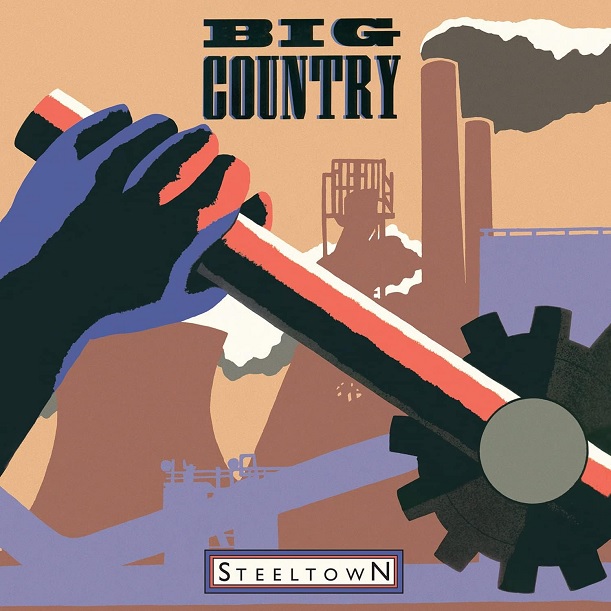
BIG COUNTRY
Links
Buy
Big Country Vinyl - direct link @ ebay.co.uk
(Lenin is a participant in the eBay (EPN) affiliate program)
Led Zeppelin Fascinating Facts
Human League Fascinating Facts
Visage / Steve Strange Fascinating Facts
Siouxsie and the Banshees Fascinating Facts
Tears For Fears Fascinating Facts
Queen / Freddie Mercury Fascinating Facts
Danny Thompson Fascinating Facts
Talking Heads Fascinating Facts
Porcupine Tree Fascinating Facts
Adam and the Ants Fascinating Facts
Queen / Freddie Mercury Fascinating FactsMarc Bolan and T. Rex Fascinating Facts
Sting & The Police Fascinating Facts
Jean-Michel Jarre Fascinating Facts
Peter Gabriel Fascinating Facts
Holger Czukay Fascinating Facts
Anton Corbijn Fascinating Facts
Dexys Midnight Runners Fascinating Facts
Roxy Music / Bryan Ferry Fascinating Facts
Elvis Presley Fascinating Facts
Scott Walker Fascinating Facts
Michael Brook Fascinating Facts
Penguin Cafe Orchestra Fascinating Facts
David Bowie Rarities (Shipped From UK)
Cocteau Twins Fascinating Facts
Ryuichi Sakamoto Fascinating Facts
Haruomi Hosono Fascinating Facts
Yukihiro Takahashi Fascinating Facts
Hector Zazou Fascinating Facts
Frank Auerbach Fascinating Facts
Big Country
Artist
Big Country
Content
All the fascinating facts
More
Bitesized
Year
1960s to Present Day
Random and bite-sized facts on all things on the mythical band Big Country. Totally random but totally fascinating if you're into it. Do you know Big Country now?
--
Big Country began with home recordings on a four-track machine
After leaving The Skids, Stuart Adamson began developing new material with guitarist Bruce Watson using a four-track TEAC recorder. They experimented with instrumentals, drum-machine rhythms and different guitar sounds before the songs became the foundations of Big Country’s early music.
--
The band’s earliest songs were often written without lyrics
Bruce Watson recalled that many Big Country songs began as instrumentals. The pair would work on the music, then Stuart would take a tape away and develop the melodies and lyrics. That process helped create the band’s distinctive combination of ringing guitars and Stuart’s vivid, impressionistic words.
--
Big Country briefly had a different rhythm section
The first version of the band included drummer Clive Parker and other local musicians before Stuart Adamson decided to rebuild the lineup. Bassist Tony Butler and drummer Mark Brzezicki were brought in during 1982, forming the rhythm section associated with the band’s classic recordings.
--
Rick Buckler of The Jam played on an early Big Country demo
Before the familiar lineup was settled, the early recordings included Rick Buckler, drummer with The Jam. Producer John Leckie also worked with Stuart and Bruce during this formative period, helping them turn their home-recorded ideas into more developed demos.
--
The band’s first gig under the Big Country name was in Dunfermline
Big Country made their debut under that name at the Glen Pavilion in Dunfermline on 4 February 1982. The band had previously rehearsed and developed their material locally, so their first show was a home-town beginning rather than a launch in London.
--
An early support tour with Alice Cooper ended quickly
Big Country were given a support slot on Alice Cooper’s Special Forces tour in 1982, but the arrangement did not last. The band struggled to connect with Cooper’s audience and were dropped from the bill after only a few dates. The experience came while they were still trying to establish their identity and lineup.
--
“Harvest Home” was the first song the classic lineup played together
Tony Butler recalled that “Harvest Home” was the first song played by the lineup featuring Stuart Adamson, Bruce Watson, Butler and Mark Brzezicki. The musicians had very little live experience together at that point, but the track became Big Country’s debut single in September 1982.
--
John Peel had championed Stuart Adamson long before Big Country
Before Big Country, Peel had supported Adamson’s previous band, The Skids, including their independently released early work. He invited The Skids to record several BBC sessions between 1978 and 1980, giving Adamson a connection with one of the UK’s most influential radio broadcasters before his second band took off.
--
“Steeltown” was recorded at ABBA’s Polar Studios
Big Country began recording their second album, “Steeltown”, at Polar Studios in Stockholm in August 1984. The studio was associated with ABBA, and the album’s darker subject matter and more industrial sound marked a clear shift from the expansive optimism often associated with their debut.
--
Kate Bush sang on “The Seer”
Kate Bush contributed vocals to the title track of Big Country’s 1986 album “The Seer”. The collaboration added a different vocal colour to the band’s sound, while the album itself reached number two on the UK chart.
--
BIG COUNTRY
Links
Buy
Big Country Japanese Vinyl - direct link @ ebay.co.uk
(Lenin is a participant in the eBay (EPN) affiliate program)
--
Stuart Adamson was born in Manchester but grew up in Fife
Although he became closely associated with Scottish music, Adamson was born in Manchester on 11 April 1958. His family returned to Scotland when he was still a baby, and he grew up in the Fife mining community of Crossgates, which helped shape his strong identification with working-class Scottish life.
--
His first guitar lessons came from a BBC television programme
As a boy, Adamson followed “Hold Down a Chord”, a BBC guitar course presented by John Pearse. He had borrowed his uncle Drew’s acoustic guitar and taught himself songs, including “Danny Boy”, before developing the distinctive electric-guitar style that would later define The Skids and Big Country.
--
Before music took over, he trained as an environmental health officer
Adamson studied environmental health after leaving school. The training involved subjects such as sanitation, water testing and environmental pollution. He eventually left that career path to pursue music, after forming a covers band and becoming increasingly involved in Dunfermline’s local music scene.
--
His first band was called Tattoo
Before The Skids, Adamson formed a covers band called Tattoo with drummer Iain “Eetchie” Law and guitarist Jock “Paddy” McMonagle. They played youth clubs and some small Highland dates. It was an early step towards a career that would later take him from local venues to international stages.
--
Seeing The Damned helped push him towards punk
Adamson’s musical interests included rock ’n’ roll, country and folk, but seeing The Damned perform in Edinburgh in 1976 helped turn his attention towards punk. The experience encouraged him to abandon his original career plans and commit himself to forming a band of his own.
--
“Charles” was an early song about an ordinary working man
The Skids’ debut single, “Charles”, released in 1978, was written by Adamson. Its subject was a factory worker whose life is dominated by his job before he is ultimately betrayed by it. The focus on ordinary people struggling against forces beyond their control would remain a recurring thread in Adamson’s songwriting with Big Country.
--
The phrase “Wide Open” became a kind of motto for The Skids
During an early journey to London, the band passed a road sign for Wide Open, a hamlet in Northumberland. The phrase was written on Adamson’s guitar and came to represent ideas the band valued, including open-mindedness, adventure and independence.
--
The Edge regarded Adamson as an important influence
U2 guitarist The Edge has spoken about how much The Skids inspired him when U2 were starting out. He particularly admired the force of their sound, which stood out against much of the music being released at the time. Adamson’s approach to guitar would later become just as recognisable in Big Country.
--
Adamson and Bruce Watson began Big Country with a Portastudio
After leaving The Skids, Adamson and Bruce Watson worked on new material using a modest Portastudio at Townhill Community Centre in Dunfermline. They experimented with guitar effects, rhythmic patterns and instrumental ideas. Those early recordings became the starting point for the sound of Big Country’s debut album, “The Crossing”.
--
He often wrote the music before adding words and vocals
Many Big Country songs began as instrumental sketches developed by Adamson and Watson. Adamson would then take recordings away and work on the lyrics, vocal melodies and finished song. The process helped turn their initial guitar experiments into songs with strong melodic hooks and evocative words.
--
BIG COUNTRY
Links
Buy
Big Country Japanese Vinyl - direct link @ ebay.co.uk
(Lenin is a participant in the eBay (EPN) affiliate program)
--
Bruce Watson was born in Canada
Although he became one of the defining guitarists in a band closely associated with Scotland, Bruce Watson was born in Canada. He grew up in Fife and became friends with Stuart Adamson before the two began developing the music that would become Big Country.
--
Bruce Watson’s guitar role was different from Stuart Adamson’s
Watson’s playing was not simply a second version of Adamson’s. The two developed contrasting parts, with Adamson often providing flowing melodic lines and Watson adding rhythmic drive and texture. That interplay became one of the defining features of Big Country’s sound.
--
Watson played more than conventional guitar parts
Across Big Country recordings, Watson used a range of stringed instruments and effects, including mandolin and sitar, to add different textures. The band’s sound was built from layered instrumental details rather than relying on a single guitar effect to create its distinctive character.
--
Tony Butler and Mark Brzezicki already worked together before Big Country
Before joining Big Country, Butler and Brzezicki had played together in the band On the Air. They had developed a reputation as a dependable session rhythm section, sometimes described as “Rhythm for Hire”. Their musical connection meant Stuart Adamson and Bruce Watson gained a well-established bass-and-drums partnership rather than having to build one from scratch.
--
Tony Butler turned down an invitation to join The Pretenders
Butler was offered the chance to join The Pretenders but chose to commit to Big Country instead. He did, however, play on Pretenders recordings, including “My City Was Gone” and “Back on the Chain Gang”. His warm-up bass riff was incorporated into “My City Was Gone”.
--
Butler’s bass playing became part of the band’s melodic identity
Rather than simply following the guitar chords, Butler often played bass lines with their own shape and momentum. Combined with Brzezicki’s energetic drumming, this gave songs such as “In a Big Country” a powerful rhythmic foundation without losing their melodic character.
--
Mark Brzezicki was an established session drummer before Big Country
Brzezicki had already worked with Pete Townshend before joining Big Country, playing on Townshend’s 1980 album “Empty Glass”. His experience in the studio helped make him a sought-after drummer, and his work with Big Country became one part of a career that also included sessions and touring with other major artists.
--
Brzezicki later played with The Cult
Big Country was not Brzezicki’s only high-profile band. He also worked with The Cult, including during the period around their 1989 album “Sonic Temple”. It showed how readily his powerful, precise drumming could fit into a heavier rock setting quite different from Big Country’s layered guitar sound.
--
The band’s checked shirts were Stuart Adamson’s idea
Tony Butler recalled that Adamson wanted the members to wear checked shirts and Italian army trousers as part of Big Country’s visual identity. Adamson also introduced tartan scarves, which he attached to the guitars. The look reinforced the band’s Scottish associations even though its members had varied backgrounds.
--
Tony Butler became Big Country’s lead singer after Adamson’s death
When the surviving original members reunited for Big Country’s 25th anniversary in 2007, Butler took on lead vocals for the first time in the band’s live shows. It was a substantial change for a musician who had spent the group’s classic years as its bassist and backing vocalist.
--
BIG COUNTRY
Links
Buy
Big Country Japanese Vinyl - direct link @ ebay.co.uk
(Lenin is a participant in the eBay (EPN) affiliate program)
--
Stuart Adamson deliberately wanted “East of Eden” to sound unlike Big Country’s usual singles
Although the song still has the band’s distinctive guitar sound, Adamson wanted to avoid making another track that immediately sounded like a typical Big Country single. He described it as a song about searching for hope and inspiration, written against the backdrop of unemployment and anger in Britain’s dockyards and factories.
--
Steve Lillywhite immediately recognised the unusual groove of “East of Eden”
Producer Steve Lillywhite recalled that the rhythm caught his attention straight away. It was different from the band’s more familiar approach, and he quickly felt it had the potential to make a strong single. The track reached number 17 in the UK singles chart in October 1984.
--
“East of Eden” was inspired by more than John Steinbeck’s novel
The title invites comparisons with John Steinbeck’s novel, but Adamson’s comments point towards contemporary social conditions as an important part of the song’s background. He was writing while industrial communities were facing unemployment, anger and uncertainty. The song’s search for hope gave it a more questioning tone than a straightforward protest song.
--
The B-side of “East of Eden” was a Roxy Music song
The original UK single paired “East of Eden” with “Prairie Rose”, a song from Roxy Music’s 1974 album “Country Life”. It was an interesting choice of cover for a band whose own sound was often described through its Scottish influences and ringing guitars.
--
The 12-inch single offered an extended version of “East of Eden”
The 12-inch release included an extended version running for around six minutes, alongside a shorter version and “Prairie Rose”. This gave the song more room to develop than the standard single edit, making the release worth seeking out for collectors interested in alternate versions.
--
The “East of Eden” video was filmed in Glasgow
The promotional video was directed by Mike Brady and filmed in Glasgow. The choice of location connected the single visually with the industrial Scottish landscape and urban environment that formed part of the wider context of “Steeltown”.
--
“Steeltown” was made while the band were reading news from home
Big Country recorded the album at Polar Studios in Stockholm in 1984. Although they were working abroad, the members kept up with events in Britain by reading newspapers over breakfast. Tony Butler later recalled that the miners’ strike, industrial decline and the political atmosphere at home inevitably affected the album’s outlook.
--
Stuart Adamson used a two-pence coin to create a guitar sound on “Tall Ships Go”
Adamson explained that a distinctive guitar part on “Tall Ships Go” came from striking the strings with a two-pence coin. It was a variation on an older technique: during his time with The Skids, he had used a sixpence instead of a conventional plectrum on “The Saints Are Coming”.
--
Big Country’s first album sessions were largely abandoned
The band initially recorded their debut album with producer Chris Thomas, but the sessions did not develop as they had hoped. They later began working with Steve Lillywhite, who helped shape “The Crossing”. Three recordings from the earlier period — “Harvest Home”, “Balcony” and “Flag of Nations (Swimming)” — were retained and released as part of the early single history.
--
“Steeltown” went straight to number one in the UK
Released on 19 October 1984, “Steeltown” reached number one in the UK album chart, replacing U2’s “The Unforgettable Fire” at the top. Its success showed that Big Country could follow the commercial breakthrough of “The Crossing” with a darker and more politically conscious album.
--
BIG COUNTRY
Links
Buy
Big Country Japanese Vinyl - direct link @ ebay.co.uk
(Lenin is a participant in the eBay (EPN) affiliate program)
--
Big Country’s first BBC session was recorded only months after the band formed
Big Country recorded their first BBC session for John Peel’s Radio 1 colleague Peter Jensen in 1982. The songs included “Harvest Home”, “Heart and Soul” and “Angle Park”. Bruce Watson later recalled that the musicians had to set up and play almost live, without the luxury of the time they had during album sessions.
--
Some early Big Country songs began as ideas Stuart Adamson had written for The Skids
When Adamson left The Skids, he already had musical ideas that had not found their way into that band’s recordings. Some became part of Big Country’s early repertoire, alongside material Bruce Watson had originally intended for his own group, Eurosect.
--
The band’s original lineup rehearsed in a disused furniture warehouse
Before the classic lineup settled into place, the original members rehearsed intensively in a disused furniture warehouse in Dunfermline. The band spent months working on the material, trying to turn the early home demos into a convincing live sound.
--
“Harvest Home” was the song that convinced Adamson he had found the right lineup
Tony Butler and Mark Brzezicki were initially brought in as session musicians to play on a Big Country demo. They recorded “Harvest Home” with Adamson and Watson without an extended rehearsal, and the result was so convincing that Adamson asked them to join the group.
--
Steve Lillywhite only had a short window to work on the debut album at first
Lillywhite was working with U2 when Big Country’s management approached him. He initially became involved for a brief period, choosing “Fields of Fire” as a potential single. When U2’s schedule changed, Lillywhite became available for a longer stretch and was able to work on “The Crossing”.
--
Bruce Watson had written material for a band called Eurosect
Before Big Country took shape, Watson was developing music with his own project, Eurosect. Some of those compositions were later adapted for Big Country, showing that the band’s early repertoire was a meeting of two musicians’ ideas rather than Adamson’s songwriting alone.
--
Big Country’s early BBC performances were intentionally close to their live sound
Watson explained that the band had little time to build up tracks in the BBC studio, so they largely set up and played together. Those recordings are particularly valuable because they capture the early lineup before the fuller studio production of “The Crossing” had established the sound most listeners associate with them.
--
The band’s later archive includes instrumental demos that never became finished songs
Big Country’s archival releases include demos and unfinished recordings from the 1990s, including material that was never developed into full studio tracks at the time. Bruce Watson has said that some of the band’s B-sides and unreleased ideas were strong enough to deserve more attention than they received when first recorded.
--
“Eastworld” began with a drum-machine pattern borrowed from The Glitter Band
Bruce Watson recalled that he and Adamson programmed the drums for “Eastworld” at REL Studios in Edinburgh, using a rhythm lifted from The Glitter Band’s “Angel Face”. The plan was for drummer Simon Phillips to replace the programmed part, but the track was shelved for a time and eventually appeared as the B-side of “Alone”.
--
Big Country sometimes performed acoustic sets in the 1990s
The band experimented with acoustic performances during the period around “The Buffalo Skinners” and “Why the Long Face”. They later performed both acoustic and electric sets for “Without the Aid of a Safety Net”, a live recording made at Glasgow’s Barrowland Ballroom in December 1993.--
BIG COUNTRY
Links
Buy
Big Country Japanese Vinyl - direct link @ ebay.co.uk
(Lenin is a participant in the eBay (EPN) affiliate program)
--
“Eastworld” was recorded without a live drummer
Bruce Watson recalled that “Eastworld” was recorded at REL Studios in Edinburgh, with him and Stuart Adamson programming the drums themselves. The rhythm was borrowed from The Glitter Band’s “Angel Face”. Simon Phillips was expected to replace the programmed part, but the song was shelved and eventually surfaced as the B-side of “Alone”.
--
Bruce Watson thought some of the band’s B-sides deserved more attention
Looking back at the band’s archive, Watson described certain B-sides as “little gems” that had been forgotten or not developed properly. One example was “Eastworld”, which began as a studio experiment rather than a major album track and later became a favourite for Watson to perform with other musicians.
--
The original “Without the Aid of a Safety Net” omitted several songs from the concert
Big Country recorded the show at Glasgow’s Barrowland Ballroom on 29 December 1993. The original 1994 release contained only part of the performance; an expanded edition later restored additional tracks, including “Winter Sky”, “Tracks of My Tears”, “All Go Together” and “Rockin’ in the Free World”.
--
Bruce Watson wrote a mock explorer’s diary for the live album reissue
The expanded edition of “Without the Aid of a Safety Net” includes Watson’s humorous account of the freezing Scottish weather during the band’s December 1993 shows. He describes the journey to Glasgow as though it were a doomed polar expedition, complete with sledges, supplies and a tongue-in-cheek reference to Ernest Shackleton.
--
The band recorded more than one show during the same three-night Scottish run
The Glasgow Barrowland performance was not the only concert recorded during the band’s late-December 1993 Scottish dates. Shows in Newcastle on 30 December and Aberdeen on 31 December were also recorded, and material from Aberdeen was used in later expanded releases of the live concert archive.
--
“Eastworld” later became part of Bruce Watson’s live repertoire
Watson said he continued playing “Eastworld” after Big Country’s original era, including with The Casbah Club, the group he formed with Mark Brzezicki, Bruce Foxton and Simon Townshend. Its afterlife is unusual for a song that originally appeared as a B-side rather than a headline single.
--
“Without the Aid of a Safety Net” was recorded by a mobile studio
The Barrowland show was captured using the Manor Mobile recording unit, with the live recording mixed later at Roundhouse Studios in London. The expanded release documents the original concert in full, rather than recreating it from separate studio recordings.
--
The band’s live version of “Tracks of My Tears” came from their 1993 concert
Big Country included a version of Smokey Robinson and the Miracles’ “Tracks of My Tears” in the Barrowland set. It appeared on the expanded live release, revealing a soul standard sitting alongside the band’s own guitar-driven material.
--
“The Buffalo Skinners” included a reworked version of “Ships”
The 2021 vinyl reissue of “The Buffalo Skinners” included a reworking of “Ships”, as well as a reworking of “We’re Not in Kansas”, a demo of “Buffalo Skinners” and the US mix of “The One I Love”. The extras reveal how the band revisited and reshaped songs around the album’s release.
--
“Without the Aid of a Safety Net” was released under a different title in 1997
When the live album was reissued in March 1997, it appeared under the title “The Greatest Hits Live”. The same concert recording was therefore sold to listeners under two different names, which can cause confusion when searching second-hand listings and discographies.
--
BIG COUNTRY
Links
Buy
Big Country Japanese Vinyl - direct link @ ebay.co.uk
(Lenin is a participant in the eBay (EPN) affiliate program)
--
Big Country’s new “Eastworld” album revisits songs that never reached finished form
In 2026, Big Country announced “Eastworld”, an album of ten newly recorded versions of songs originally written or co-written by Stuart Adamson, Tony Butler and Bruce Watson. Some had previously circulated as demos or sketches, but had never received full studio treatments. Watson said the songs deserved to be developed further rather than left in the archive.
--
The band’s BBC archive captures them at several different stages of their career
The collection “At the BBC” spans performances from the band’s early years through to 1990. One striking detail is that the set includes a 1989 BBC performance of “East of Eden” lasting nearly six minutes, considerably longer than the familiar studio version.
--
Big Country played an extraordinary 85-date tour for “The Seer”
The 1986 tour supporting “The Seer” ran for 85 dates, taking the band across the Netherlands, the United States and Europe before culminating in two shows at Wembley Arena. The schedule illustrates how quickly they moved from their early club and theatre years to major international touring.
--
Elton John crossed paths with Big Country during the “Steeltown” period
Bruce Watson recalled that he and Stuart Adamson briefly watched Elton John perform while the band were in Stockholm recording “Steeltown”. The two were so homesick that they left before the set had finished and headed for the airport, later celebrating their return to Dunfermline at a local nightclub.
--
“The Seer” was recorded with producer Robin Millar
After working with Steve Lillywhite on their first two albums, Big Country recorded “The Seer” with Robin Millar. Adamson later said he was delighted with the sessions, particularly the way the production brought out more space, atmosphere and subtlety in the band’s sound. Kate Bush’s appearance on the title track was one of the album’s best-known features.
--
“The Great Divide” was one of the songs revisited in the band’s archive
The original “Steeltown” album included “The Great Divide”, a track that later appeared on compilation and remastered releases. The song’s continuing presence in the band’s retrospective collections shows how the album’s less obvious tracks remained part of their recorded legacy beyond the better-known singles.
--
Big Country’s early single “Harvest Home” had a long life beyond its original release
“Harvest Home” was the band’s debut single in 1982. It later appeared on collections including “Through a Big Country”, and the band also performed it for BBC sessions. The song therefore exists in several useful versions for listeners tracing how their sound evolved from the earliest lineup into the more polished album recordings.
--
The title track of “Steeltown” became a statement about industrial decline
Bruce Watson later linked the album’s darker mood to the political and economic climate of the mid-1980s, particularly the miners’ strike and the closure of dockyards. The band were enjoying commercial success while people they knew back home were losing their jobs, a contrast that fed into the record’s socially conscious themes.
--
BIG COUNTRY
Links
Buy
Big Country Japanese Vinyl - direct link @ ebay.co.uk
(Lenin is a participant in the eBay (EPN) affiliate program)
--
Kate Bush Rebuilt the Vocal Arrangement on “The Seer”
Kate Bush’s contribution to Big Country’s “The Seer” went well beyond adding backing vocals. Bruce Watson later recalled that she spent around five hours working on the track and effectively rearranged its vocal parts. The band were watching from the control room, amazed at what she was doing. Watson was also disappointed when the album’s final remix pushed her vocals further back than they had been in producer Robin Millar’s original mix.
--
“The Seer” Was Originally Meant to Sound More Spacious
When Big Country began work on their third album, they wanted to move away from the dense, instantly recognisable sound of their earlier records. Robin Millar helped them pursue something airier, with more space for melody. The band were pleased with his mixes, but the record company eventually brought in Walter Turbitt to remix the album. Mark Brzezicki later recalled that the band were horrified by some of the changes.
--
Big Country Considered Recording “Steeltown” in the Bahamas
Before heading to Sweden for “Steeltown”, the band considered Compass Point Studios in the Bahamas. The studio had hosted major artists including Grace Jones and Robert Palmer, but the plan was abandoned partly because of the August heat. Instead, the band went to Polar Studios in Stockholm, where Tony Butler remembered being struck by the atmosphere and its reputation as a place where hit records were made.
--
The Swedish Crayfish Season Made an Impression on Steve Lillywhite
The “Steeltown” sessions began in Stockholm during the traditional opening of Sweden’s crayfish season. Producer Steve Lillywhite remembered the band taking part in crayfish parties with beer and schnapps. Bruce Watson apparently threw himself into the festivities enthusiastically, although Lillywhite recalled that he became ill and then carried on drinking. It’s a very different picture from the sombre industrial atmosphere that runs through the finished album.
--
“Steeltown” Was Written Under Pressure
The band had only a short break after touring and recording “The Crossing” before they were back at work on the next album. They had also been interrupted by preparations for Elton John’s Wembley Stadium concert in the summer of 1984. Once in Stockholm, they were writing and developing material while working in an expensive studio and feeling the pressure to follow a hugely successful debut. Tony Butler later said that a lot of the material took shape during the Stockholm sessions.
--
“Tall Ships Go” Had an Unusual Percussion Detail
In discussions about “Steeltown”, Big Country’s members have recalled the small, unconventional sounds that went into the record. “Tall Ships Go” is associated with Stuart Adamson’s coin-on-guitar introduction and Mark Brzezicki using an ashtray for percussion. These are tiny details in a record dominated by huge guitars and drums, but they give a glimpse of how the band looked for distinctive sounds in the studio.
--
Bruce Watson’s Favourite “Steeltown” Songs Included “Tall Ships Go”
When discussing the album years later, Bruce Watson singled out “Tall Ships Go” and “Just a Shadow” among his favourite tracks from “Steeltown”. The album was a deliberate move away from the romantic mood of “The Crossing”, and its darker sound has remained a major part of its identity for listeners who prefer Big Country’s more intense side.
--
“Peace in Our Time” Was Pre-Produced in Dunfermline
Big Country’s 1988 album “Peace in Our Time” had a different recording set-up from “Steeltown”. The band did pre-production at Balmule Studios in Dunfermline before recording in California with producer Peter Wolf. Its credits also reveal an expanded musical palette, including Bruce Watson on sitar and mouth organ, alongside the band’s more familiar guitars, bass and drums.
--
Tony Butler Was Particularly Pleased with the Bass Sound on “Steeltown”
In a later track-by-track reflection on “Steeltown”, Butler praised the way the album’s sound brought the band together and said he was especially impressed with the sound of his bass. He also gave Steve Lillywhite credit for the finished record. The album’s powerful sound wasn’t just the result of the twin guitars: the rhythm section was a major part of what gave the songs their weight.
--
Big Country’s First Three Albums Had Distinct Personalities
In a recent interview, Bruce Watson described the band’s first three albums as records that worked together but had very different characters. He characterised “The Crossing” as romantic, “Steeltown” as harder and more confrontational, and “The Seer” as more romantic and mystical. It’s a useful way to understand why the band didn’t simply try to repeat the sound of their breakthrough album.
--
BIG COUNTRY
Links
Buy
Big Country Japanese Vinyl - direct link @ ebay.co.uk
(Lenin is a participant in the eBay (EPN) affiliate program)
--
“All Fall Together” Began with a Drum Jam
“All Fall Together” was recorded for the film “Streets of Fire” at Castle Studios near Edinburgh. Stuart Adamson recalled asking Mark Brzezicki to record a drum part based on something he had been jamming, with the song then built around it. The lyrics took on a doomsday atmosphere that suited the film’s dramatic world.
--
“Winter Sky” Was Once Little More Than a Keyboard Demo
Bruce Watson recalled that he and Stuart Adamson recorded an early version of “Winter Sky” in an Edinburgh studio without a real drum kit or bass guitar. The bass and drums were played on a keyboard, with the track needed quickly as a B-side. Watson later felt it had never been properly developed because Tony Butler and Mark Brzezicki hadn’t been involved. It became one of the older sketches he wanted to revisit with the band.
--
Some Big Country Songs Were Released Before They Were Finished
Bruce Watson has explained that a number of songs released during the band’s career were essentially demos that never received the full-band treatment he thought they needed. The later “Rarities” collections preserved many of these recordings. For the 2026 “Eastworld” project, the band took a different approach: rather than simply polishing the old demos, they recorded new versions and developed the songs further with the full line-up.
--
“Over the Border” Started with a Twelve-String Guitar
Stuart Adamson described “Over the Border” as a song that emerged during a period when the band were between record deals in the United States and their move to Warner Bros. Bruce Watson had a twelve-string guitar part, and Adamson developed it into the chorus. He also admitted that the track, like several songs from that period, still needed work to become a fully realised song. The recording that circulated was a demo made at REL Studios in Edinburgh.
--
“The Crossing” Was Recorded in More Than One London Studio
Big Country spent two weeks at The Manor recording the basic tracks for much of “The Crossing”, before moving to RAK Studios in London for additional guitars and vocals. “Chance” was already fully completed at The Manor, while “The Storm” was recorded entirely at RAK. The album’s sound therefore emerged across different rooms and stages of recording, rather than from one uninterrupted studio session.
--
Stuart Adamson Recognised “In a Big Country” as a Potential Hit Early On
Mark Brzezicki remembered recording a demo of “In a Big Country” in a studio in Croydon. The studio owner was a jazz musician, and Brzezicki recalled a large double bass standing in the corner. When they listened back to the recording, Adamson said he thought they had a hit. The finished single later reached the UK Top 20 and number three in the United States.
--
Chris Briggs Helped Reconnect the Band with Their Early Identity
When Big Country made “The Buffalo Skinners” in 1993, A&R man Chris Briggs returned to work with them. Tony Butler and Bruce Watson both remembered Briggs as an important figure during the “The Crossing” period. They felt his return helped the group regain direction after a difficult stretch with their previous albums and record-company relationships.
--
Mark Brzezicki’s Return Changed the Mood During “Why the Long Face”
When the band began preparing “Why the Long Face” in 1994, Mark Brzezicki was back in the line-up. Bruce Watson and Tony Butler both recalled the atmosphere as happier and more relaxed, with the group enjoying being a four-piece again. The recording process was still complicated by Adamson’s move to the United States and the members living far apart, which meant the sessions had to be arranged in shorter blocks.
--
The BBC Sessions Captured a Different Side of Big Country
Big Country’s first BBC Maida Vale session took place in 1982, when Tony Butler and Mark Brzezicki had only been in the band for a few months. The musicians had little time to build elaborate studio arrangements, so they played together more directly. Bruce Watson later described the recordings as an honest representation of the band at that point in its development. The BBC archive also documents how their sound evolved across the rest of the decade.
--
Search Keywords
Big Country
Stuart Adamson
Icons
BIG COUNTRY
Links
Buy
Big Country Vinyl - direct link @ ebay.co.uk
(Lenin is a participant in the eBay (EPN) affiliate program)
Led Zeppelin Fascinating Facts
Human League Fascinating Facts
Visage / Steve Strange Fascinating Facts
Tears For Fears Fascinating Facts
Queen / Freddie Mercury Fascinating Facts
Danny Thompson Fascinating Facts
Talking Heads Fascinating Facts
Porcupine Tree Fascinating Facts
Adam and the Ants Fascinating Facts
Visage / Steve Strange Fascinating FactsTears For Fears Fascinating Facts
Queen / Freddie Mercury Fascinating Facts
Marc Bolan and T. Rex Fascinating Facts
Sting & The Police Fascinating Facts
Jean-Michel Jarre Fascinating Facts
Siouxsie and the Banshees Fascinating Facts
Peter Gabriel Fascinating Facts
Holger Czukay Fascinating Facts
Anton Corbijn Fascinating Facts
Dexys Midnight Runners Fascinating Facts
Roxy Music / Bryan Ferry Fascinating Facts
Elvis Presley Fascinating Facts
Scott Walker Fascinating Facts
Michael Brook Fascinating Facts
Penguin Cafe Orchestra Fascinating Facts
David Bowie Rarities (Shipped From UK)
Cocteau Twins Fascinating Facts
Roxy Music / Bryan Ferry Fascinating Facts
Ryuichi Sakamoto Fascinating Facts
Haruomi Hosono Fascinating Facts
Yukihiro Takahashi Fascinating Facts
Hector Zazou Fascinating Facts
Frank Auerbach Fascinating Facts